

Energy
Tesla reduces Solar + Powerwall pricing amid CA wildfire power outages

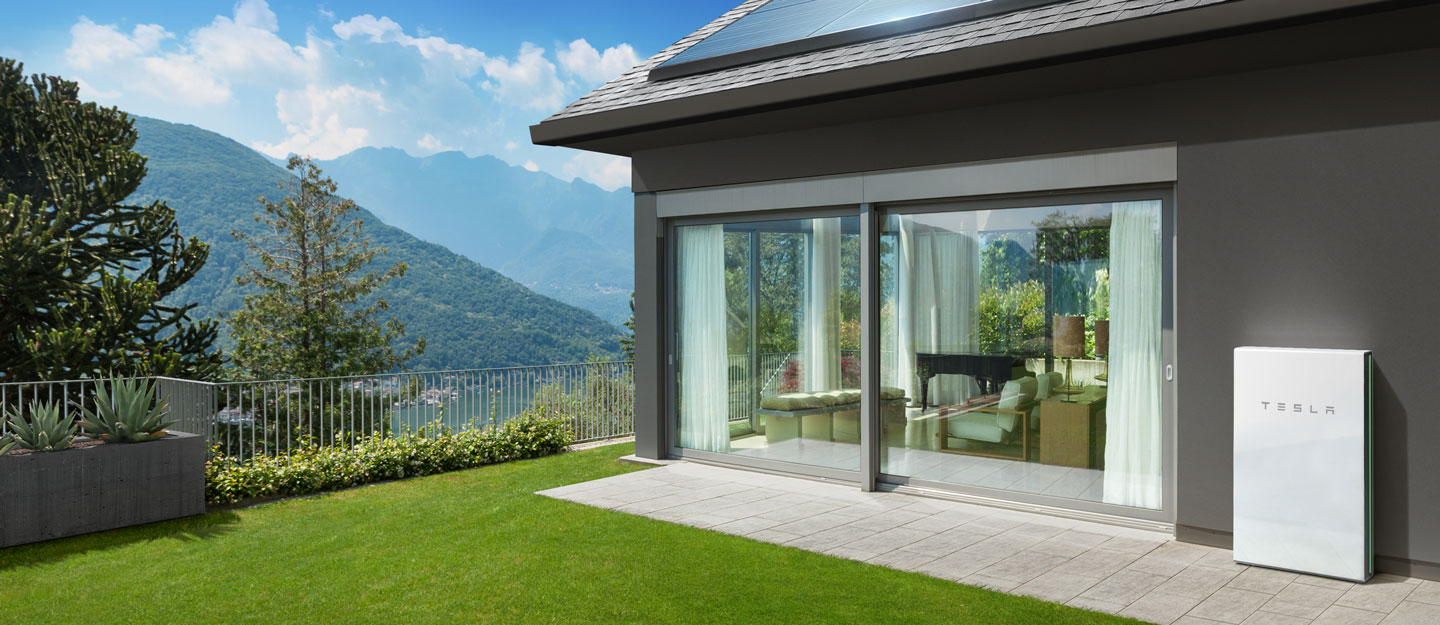
With wildfires blazing through portions of California, Tesla CEO Elon Musk has knocked $1,000 off the price of Solar+Powerwall prices as of today in an effort to provide some assistance to homeowners affected by the power outages resulting from the ongoing fires.
Musk took to Twitter just hours after many residents of Los Angeles were required to evacuate their homes because of wildfires threatening the region. The Tesla CEO tweeted out numerous updates on the advantages of Tesla solar, like its ability to prevent power blackouts in the event of natural disasters. Musk also offered a $1,000 discount to customers in California who are directly affected by the ongoing wildfires.
If you’re directly affected by wildfire power outages, Tesla is reducing Solar+Powerwall prices by $1000 as of today
— Elon Musk (@elonmusk) October 28, 2019
The price reduction for its Solar+Powerwall package stands as another gesture from the electric car maker and its CEO. Musk has always maintained that Tesla’s purpose is not simply to make money. Rather, it is determined to accelerate the world’s adoption of sustainable solutions. Electric cars are one thing, but having homes switch to solar power with a battery-based backup is also a key pillar for this vision.
The value of a solar system and home battery unit is emphasized during times of power outages, such as those affecting parts of CA today. Due to the ongoing fires, particularly the Getty and Kincade Fires, portions of the state have been cut off from power. As noted by a recent CNN report, over a million residents across California currently face multiple days without power. It is these homeowners that stand as potential customers for Tesla’s Solar+Powerwall solutions.
Tesla started pushing its Energy business more this third quarter as the company hit its stride in its Model 3 production, and it showed in the company’s Q3 2019 results. Kunal Girotra, Tesla’s Senior Director, Energy Operations, described this rise in the third-quarter earnings call. “Our solar deployments rose by almost 50% over last quarter, and our energy storage deployments, which include Powerwalls and Powerpacks, grew by 15% to an all-time high of 477 megawatt hours,” he said.
We don’t make much money on this product, so $1000 actually means a lot
— Elon Musk (@elonmusk) October 28, 2019
These improvements came partly as a result of Tesla revamping his residential solar business, launching an affordable rental system that could cost homeowners as low as $50 a month. The company also took the wraps off its new solar solutions for businesses. These updates were accompanied by transparent pricing that gave customers clear expectations about their solar systems.
That being said, Elon Musk has admitted that Tesla does not really turn much of a profit on Solar+Powerwall installations or orders, adding that the $1,000 price reduction is significant. Musk has offered discounts in the past on Tesla’s solar products, including a nationwide price reduction after Pacific Gas and Electric (PG&E) announced mandatory power shutoffs in order to prevent wildfires in Northern California.
The fires in Los Angeles are very reminiscent of last year’s wildfires in the same region. The blazes in 2018 were the worst fires ever recorded in California’s history, destroying over 1.89 million acres of land, according to the California Department of Forestry and Fire Protection.






Energy
Tesla VP hints at Solar Roof comeback with Giga New York push
The comments hint at possible renewed life for the Solar Roof program, which has seen years of slow growth since its 2016 unveiling.


Tesla’s long-awaited and way underrated Solar Roof may finally be getting its moment. During the company’s Q3 2025 earnings call, Vice President of Energy Engineering Michael Snyder revealed that production of a new residential solar panel has started at Tesla’s Buffalo, New York facility, with shipments to customers beginning in the first quarter of 2026.
The comments hint at possible renewed life for the Solar Roof program, which has seen years of slow growth since its 2016 unveiling.
Tesla Energy’s strong demand
Responding to an investor question about Tesla’s energy backlog, Snyder said demand for Megapack and Powerwall continues to be “really strong” into next year. He also noted positive customer feedback for the company’s new Megablock product, which is expected to start shipping from Houston in 2026.
“We’re seeing remarkable growth in the demand for AI and data center applications as hyperscalers and utilities have seen the versatility of the Megapack product. It increases reliability and relieves grid constraints,” he said.
Snyder also highlighted a “surge in residential solar demand in the US,” attributing the spike to recent policy changes that incentivize home installations. Tesla expects this trend to continue into 2026, helped by the rollout of a new solar lease product that makes adoption more affordable for homeowners.
Possible Solar Roof revival?
Perhaps the most intriguing part of Snyder’s remarks, however, was Tesla’s move to begin production of its “residential solar panel” in Buffalo, New York. He described the new panels as having “industry-leading aesthetics” and shape performance, language Tesla has used to market its Solar Roof tiles in the past.
“We also began production of our Tesla residential solar panel in our Buffalo factory, and we will be shipping that to customers starting Q1. The panel has industry-leading aesthetics and shape performance and demonstrates our continued commitment to US manufacturing,” Snyder said during the Q3 2025 earnings call.
Snyder did not explicitly name the product, though his reference to aesthetics has fueled speculation that Tesla may finally be preparing a large-scale and serious rollout of its Solar Roof line.
Originally unveiled in 2016, the Solar Roof was intended to transform rooftops into clean energy generators without compromising on design. However, despite early enthusiasm, production and installation volumes have remained limited for years. In 2023, a report from Wood Mackenzie claimed that there were only 3,000 operational Solar Roof installations across the United States at the time, far below forecasts. In response, the official Tesla Energy account on X stated that the report was “incorrect by a large margin.”
Energy
Tesla China’s Megafactory helps boost Shanghai’s battery exports by 20%: report
Located in the Lingang New Area of the Shanghai Free Trade Zone, the Tesla Megafactory has been running at full throttle since opening in February.

Reports from China have indicated that the Tesla Shanghai Megafactory has become a notable player in China’s booming battery export market.
Located in the Lingang New Area of the Shanghai Free Trade Zone, the Tesla Megafactory has been running at full throttle since opening in February. It produces Tesla Megapack batteries for domestic and international use.
Tesla Shanghai Megafactory
As noted in a report from Sina Finance, the Tesla Shanghai Megafactory’s output of Megapack batteries helped drive a notable rise in lithium battery shipments from the city in the first three quarters of 2025. This is quite impressive as the Megafactory is a rather young facility, though it has been steadily increasing its production capacity.
“The establishment of this benchmark factory has not only driven the rapid development of Shanghai’s energy storage industry but also become a new growth engine for foreign trade exports. Driven by the Tesla energy storage factory’s opening, Shanghai’s lithium battery exports reached 32.15 billion yuan ($4.5 billion) in the first three quarters, a 20.7% increase,” the publication wrote.
Ultimately, the Shanghai Megafactory has proved helpful to the city’s “new three” industries, which are comprised of new energy vehicles, lithium batteries, and photovoltaic systems. Exports of the “new three” products reached 112.17 billion yuan ($15.7 billion), a 6.3% year-over-year increase during the same period. The city’s total trade volume grew 5.4% year-over-year as well, with exports up 11.3%, driven largely by the clean energy sector’s performance.
Energy storage is helping Shanghai
Since opening in February, the Shanghai Megafactory has been firing on all cylinders. In late July, Tesla Energy announced that the new battery factory has successfully produced its 1,000th Megapack unit. That’s quite impressive for a facility that, at the time, had only been operational for less than six months.
Speed has always been a trademark of the Shanghai Megafactory. Similar to Tesla’s other key facilities in China, the Megafactory was constructed quickly. The facility started its construction on May 23, 2024. Less than a year later, the site officially started producing Megapack batteries. By late March 2025, Tesla China noted that it had shipped the first batch of Megapack batteries from the Shanghai plant to foreign markets.
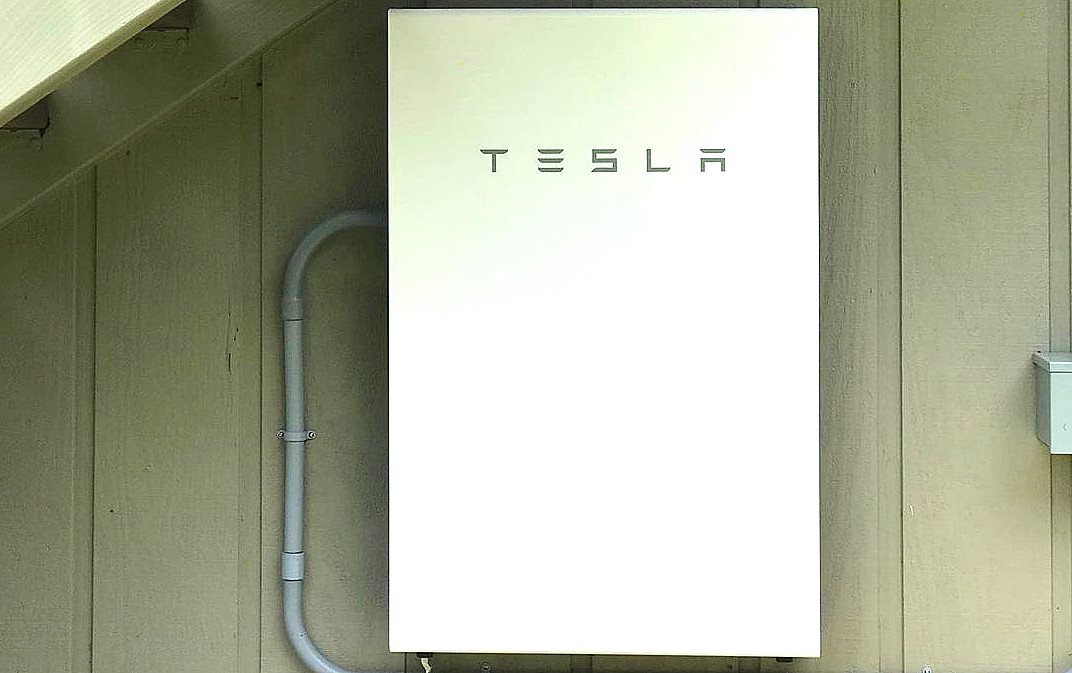
Tesla will recall Powerwall 2 units in Australia after a handful of property owners reported fires that caused “minor property damage.” The fires were attributed to cells used by Tesla in the Powerwall 2.
Tesla Powerwall is a battery storage unit that retains energy from solar panels and is used by homeowners and businesses to maintain power in the event of an outage. It also helps alleviate the need to rely on the grid, which can help stabilize power locally.
Powerwall owners can also enroll in the Virtual Power Plant (VPP) program, which allows them to sell energy back to the grid, helping to reduce energy bills. Tesla revealed last year that over 100,000 Powerwalls were participating in the program.
Tesla announces 100k Powerwalls are participating in Virtual Power Plants
The Australia Competition and Consumer Commission said in a filing that it received several reports from owners of fires that led to minor damage. The Australian government agency did not disclose the number of units impacted by the recall.
The issue is related to the cells, which Tesla sources from a third-party company.
Anyone whose Powerwall 2 unit is impacted by the recall will be notified through the Tesla app, the company said.

Elon Musk just roasted Sam Altman’s Tesla Roadster cancellation

SpaceX successfully launches 100th Starlink mission of 2025

Tesla shares updated timeframe for Cybertruck FSD V14 release


-
 News2 weeks ago
Elon Musk confirms Tesla FSD V14.2 will see widespread rollout
-

 News2 weeks ago
Tesla might be doing away with a long-included feature with its vehicles
-
 News2 weeks ago
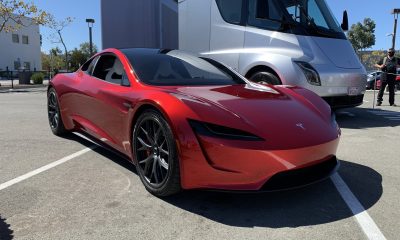
Tesla updates fans on its plans for the Roadster
-
 Elon Musk2 weeks ago
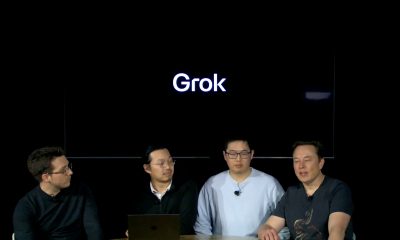
Elon Musk: Grok 5 now has a 10% chance of becoming world’s first AGI
-
 News2 weeks ago
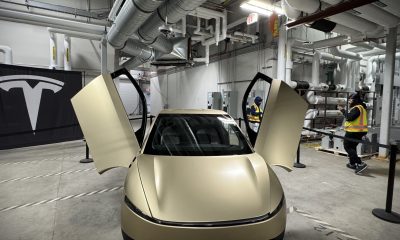
Tesla is ramping up its hiring for the Cybercab production team
-
 News2 weeks ago
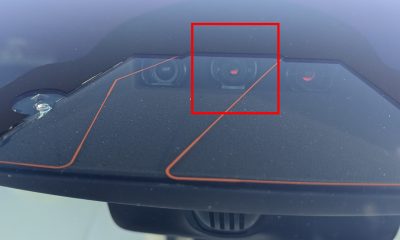
Tesla rolled out a new feature with FSD v14 to fix a major complaint
-
 Elon Musk2 weeks ago
Elon Musk hits back at former Tesla employee who disagrees with pay package
-
 News2 weeks ago
Tesla just made Service even easier and more convenient