
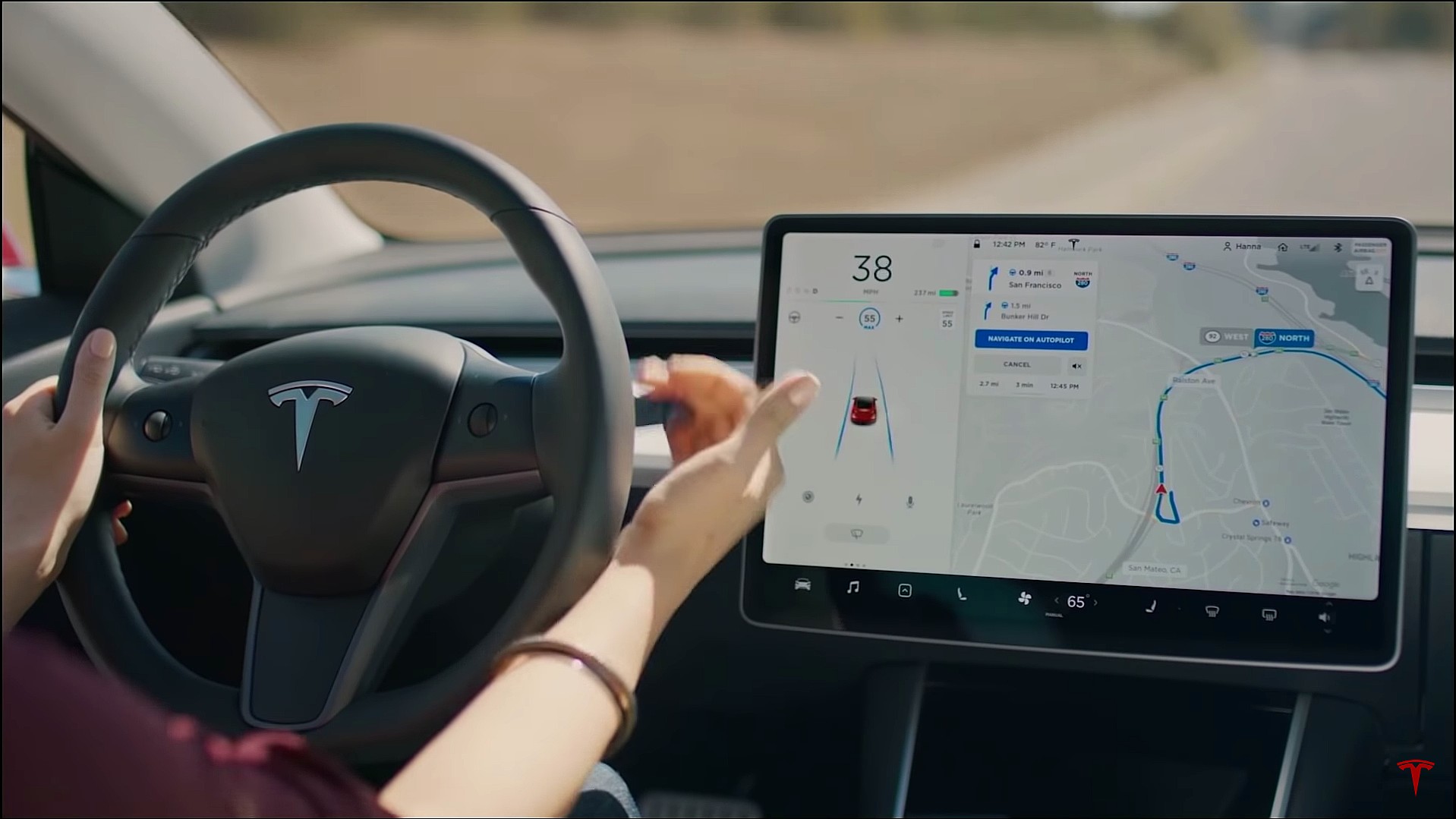

The Insurance Institute for Highway Safety (IIHS) tested Tesla Autopilot safeguards and found that drivers are pretty quick to adapt to the windows of opportunity the suite gives after warning them to pay attention.
The IIHS study sought to determine whether partially automated driving systems and their safeguards increase driver attentiveness. With the rollout of more advanced driver assistance systems (ADAS) and semi-autonomous driving functionalities, the goal is to increase safety.
However, these suites still require the driver to pay attention and be aware of any potential opportunity to take over if needed. These driving systems and features are designed to increase safety but still require the driver’s full attention, hence their semi-autonomous label.
Credit: Tesla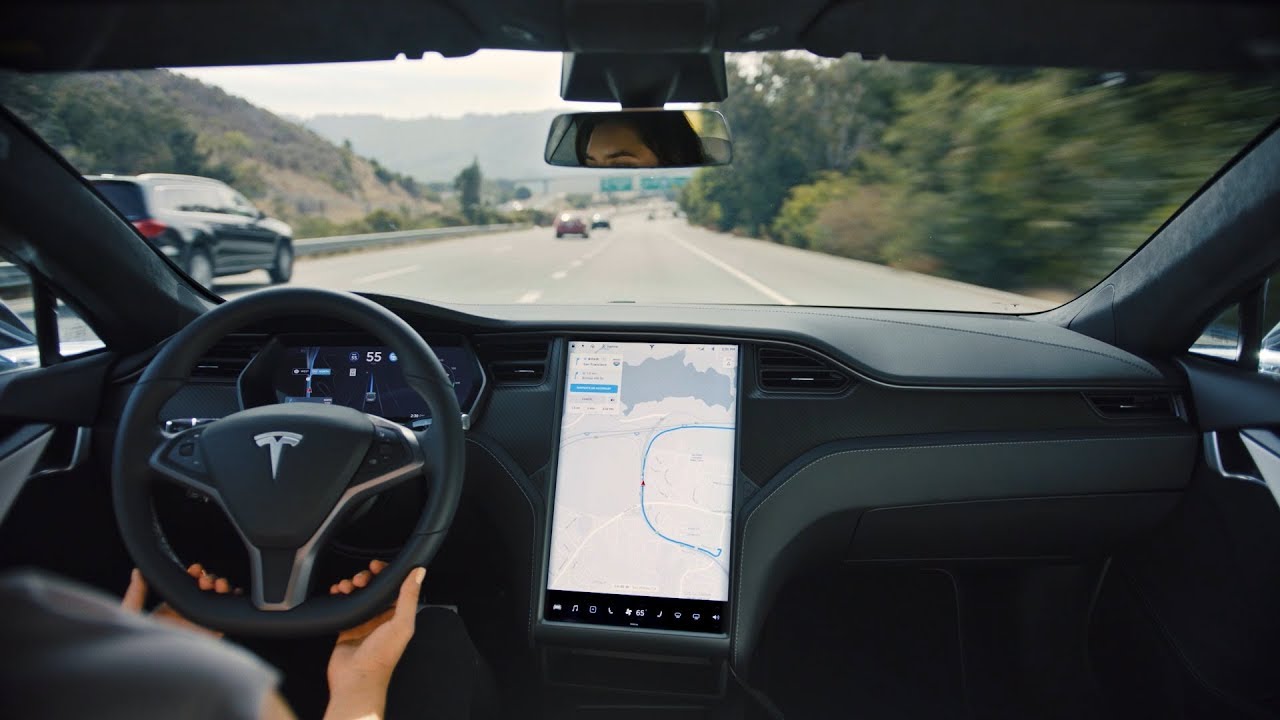
For the study, the IIHS tested both Tesla Autopilot safeguards and those available in Volvo’s Pilot Assist.
The study gave 14 drivers a month with a 2020 Tesla Model 3 and required them to travel on Autopilot, when available, over one month. The IIHS wanted to see how drivers behaved leading up to, during, and after attention reminders prompted by a lack of focus on their end.
The Autopilot study found that drivers could learn safeguard sequences and identify “windows of opportunity” to perform non-driving-related tasks. These vehicles still utilized an Autopilot nag and a torque sensor to monitor whether the driver was paying attention. Failure to keep hands on the steering wheel would result in attention reminders.
Failure to change after the reminders would result in suspension of the Autopilot system, commonly referred to as “Autopilot jail.”
The study found:
“In total, the volunteers drove a little more than 12,000 miles with Autopilot engaged. During that time, they triggered 3,858 attention-related warnings from the partial automation system. About half of those alerts occurred when they had at least one hand on the steering wheel but were apparently not moving it enough to satisfy the torque sensor.”
Most warnings did not go past the initial reminder, and only 72 instances resulted in the driver not responding fast enough to prevent the alerts from escalating.
The study found that while initial warnings increased by 26 percent over the first four weeks, showing drivers were prone to expect it, escalations fell by 64 percent, meaning they did not allow the system to continue warning them.
However, this does not mean that non-driving secondary activities stopped after the first warning. Instead, the study showed something interesting:
“The researchers found that the drivers did nondriving secondary activities, looked away from the road, and had both hands off the wheel more often during the alerts and in the 10 seconds before and after them as they learned how the attention reminders worked. The longer they used the system, the less time it took them to take their hands off the wheel again once the alerts stopped.”
The IIHS admits that the safety impact of the change is hard to measure. While the agency noted that some research shows the longer a driver allows their attention to wander, the more likely they will be involved in an accident, the study also said that “even short lapses of attention become so frequent that the periods of supposed engagement between them have little value.”
The study also said the safeguards can be beneficial to behavior immediately and in the longer term, and other patterns showed potentially unintended consequences:
“The current study has shown that driver interactions with partial automation are dynamic. Some of the changes we observed indicate that system safeguards can beneficially shape behavior both immediately and in the longer term, whereas other patterns revealed potentially unintended consequences. It is important to note that these findings are likely not unique to Tesla’s Autopilot, as many systems on the market have overtly similar safeguard designs. As such, some observations from this study maybe relevant to other driver assistance technology that still requires the driver to be engaged in the driving task.”
IIHS Senior Research Scientist Alexandra Mueller, who led the study, said:
“These results show that escalating, multimodal attention reminders are very effective in getting drivers to change their behavior. However, better safeguards are needed to ensure that the behavior change actually translates to more attentive driving.”
While this study provides evidence that perhaps better safeguards are needed, it is important to note that Tesla has upgraded the in-cabin camera to monitor driver attentiveness.
Tesla activates cabin-facing camera in bid to improve vehicle safety
Additionally, many cars are on the road without these driver assistance and safety features.
Distracted driving is going to occur whether a vehicle is equipped with modern technology or not.
Tesla and other automakers have brought their newest vehicles up to speed in the fight against distracted driving, and perhaps this study showed that warnings could and should come at varying rates to prevent anticipation from drivers.
I’d love to hear from you! If you have any comments, concerns, or questions, please email me at joey@teslarati.com. You can also reach me on Twitter @KlenderJoey, or if you have news tips, you can email us at tips@teslarati.com.





Elon Musk
Elon Musk just roasted Sam Altman’s Tesla Roadster cancellation
“And you forgot to mention act 4, where this issue was fixed and you received a refund within 24 hours.
But that is in your nature.”
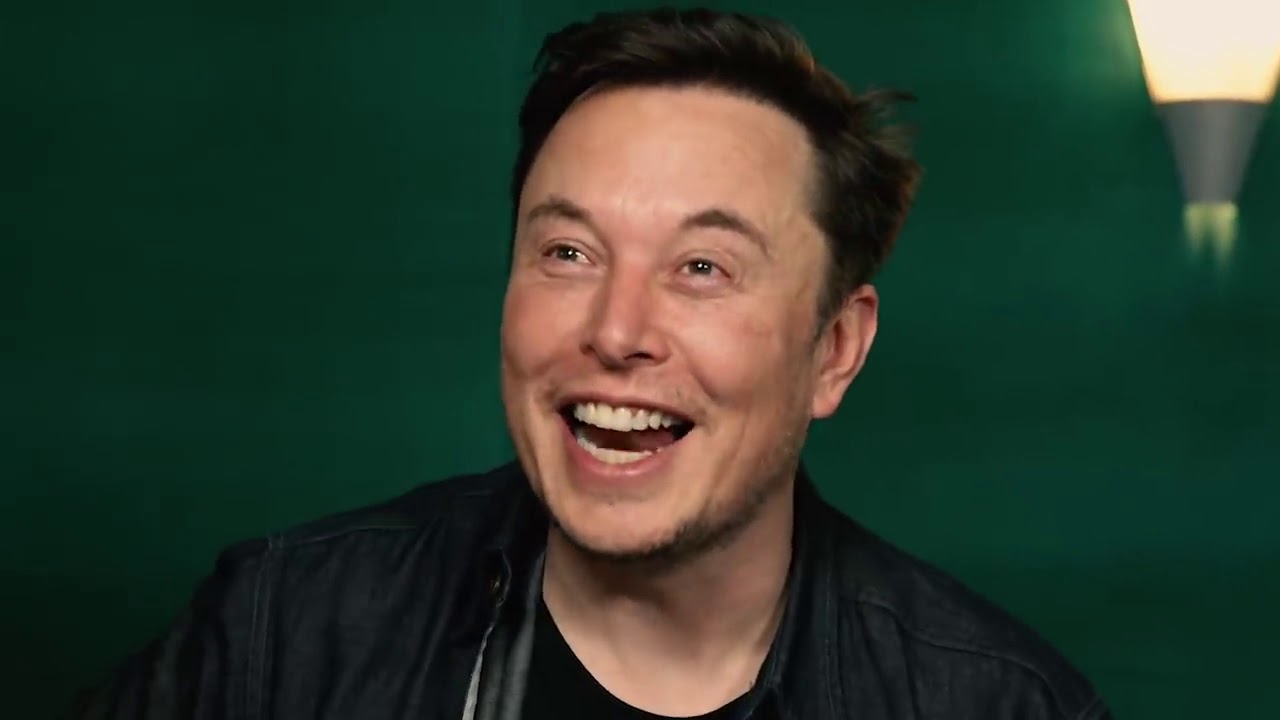
Elon Musk has responded to OpenAI CEO Sam Altman’s decision to cancel his Tesla Roadster reservation, which he revealed on X on Thursday.
We reported on Altman’s decision, which he called “A tale in three acts,” showing his confirmation email from Tesla back in 2018, an email requesting his $50,000 deposit back after canceling his order, and a notification from Google that the email he sent was not delivered.
A tale in three acts: pic.twitter.com/ClRZBgT24g
— Sam Altman (@sama) October 30, 2025
Musk did not take too kindly to the post from his tech rival, first referencing his position with OpenAI, and then confirming that Altman received his reservation deposit back within 24 hours:
And you forgot to mention act 4, where this issue was fixed and you received a refund within 24 hours.
But that is in your nature.
— Elon Musk (@elonmusk) November 1, 2025
OpenAI was started by Musk, Altman, and others back in 2015, and was geared toward being a non-profit company that would develop safe artificial intelligence that would be accessible to people.
However, Musk and Altman did not agree on the future of the company. Musk left, and Altman turned OpenAI into a for-profit company. This led to a variety of lawsuits and some very public spats between the two. Musk has called out Altman for turning the company into a for-profit, which has been his main source of criticism for his former colleague.
The Roadster has been hanging in the balance of Tesla’s manufacturing plans for seven years, but the company has made more indications that it will be unveiled later this year and will have some insane technologies.
Musk said on Friday in an episode of the Joe Rogan Experience Podcast that Tesla is “getting close to demonstrating the prototype.”
He said:
“Whether it’s good or bad, it will be unforgettable. My friend Peter Thiel once reflected that the future was supposed to have flying cars, but we don’t have flying cars. I think if Peter wants a flying car, he should be able to buy one…I think it has a shot at being the most memorable product unveil ever. [It will be unveiled] hopefully before the end of the year. You know, we need to make sure that it works. This is some crazy technology in this car. Let’s just put it this way: if you took all the James Bond cars and combined them, it’s crazier than that.”
Musk hinted that the vehicle could fly and would have “crazy technology” that would put James Bond’s vehicles to shame. It will be interesting to see what Tesla will unveil when the event happens and if it can come through on this mind-blowing teaser.
News
SpaceX successfully launches 100th Starlink mission of 2025
With 100 Starlink missions completed for 2025, space enthusiasts have noted that SpaceX has successfully launched 2,554 Starlink satellites so far this year.

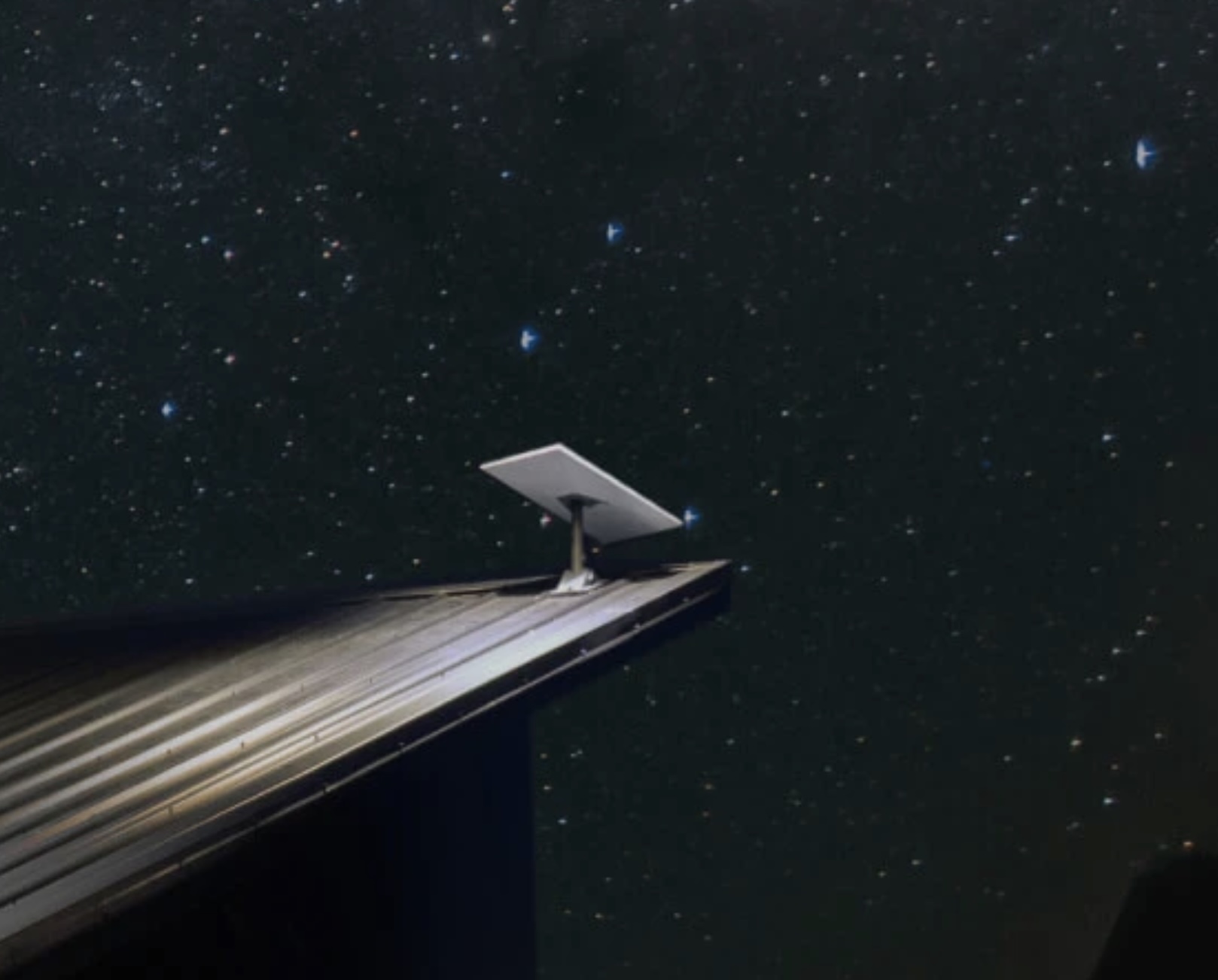
SpaceX achieved its 100th Starlink mission of the year on Friday, October 31, marking another milestone for 2025.
A Falcon 9 rocket carrying 28 Starlink broadband satellites successfully lifted off from Vandenberg Space Force Base in California at 4:41 p.m. ET, carrying another 28 Starlink satellites to Low Earth Orbit (LEO).
Falcon 9 booster’s 29th flight
Roughly 8.5 minutes after liftoff, the Falcon 9’s first stage touched down on the drone ship Of Course I Still Love You in the Pacific Ocean. This marked the booster’s 29th flight, which is approaching SpaceX’s reuse record of 31 missions.
This latest mission adds to SpaceX’s impressive 138 Falcon 9 launches in 2025, 99 of which were dedicated to Starlink, according to Space.com. The company’s focus on reusing boosters has enabled this breakneck pace, with multiple launches each week supporting both Starlink’s expansion and external customers.
Starlink’s network continues massive global expansion
Starlink remains the largest active satellite constellation in history, with more than 10,000 satellites launched, nearly 8,800 of which are currently active. SpaceX recently achieved Starlink’s 10,000-satellite milestone. With 100 Starlink missions completed for 2025, space enthusiasts have noted that SpaceX has successfully launched 2,554 Starlink satellites so far this year.
Starlink, which provides high-speed, low-latency internet connectivity even to the world’s most remote areas, has been proven to be life-changing technology for people across the globe. The service is currently operational in about 150 countries, and it currently has over 5 million subscribers worldwide. From this number, 2.7 million joined over the past year.
News
Tesla shares updated timeframe for Cybertruck FSD V14 release
The Cybertruck was expected to receive FSD V14 before the end of the month, but Tesla was not able to meet the target.
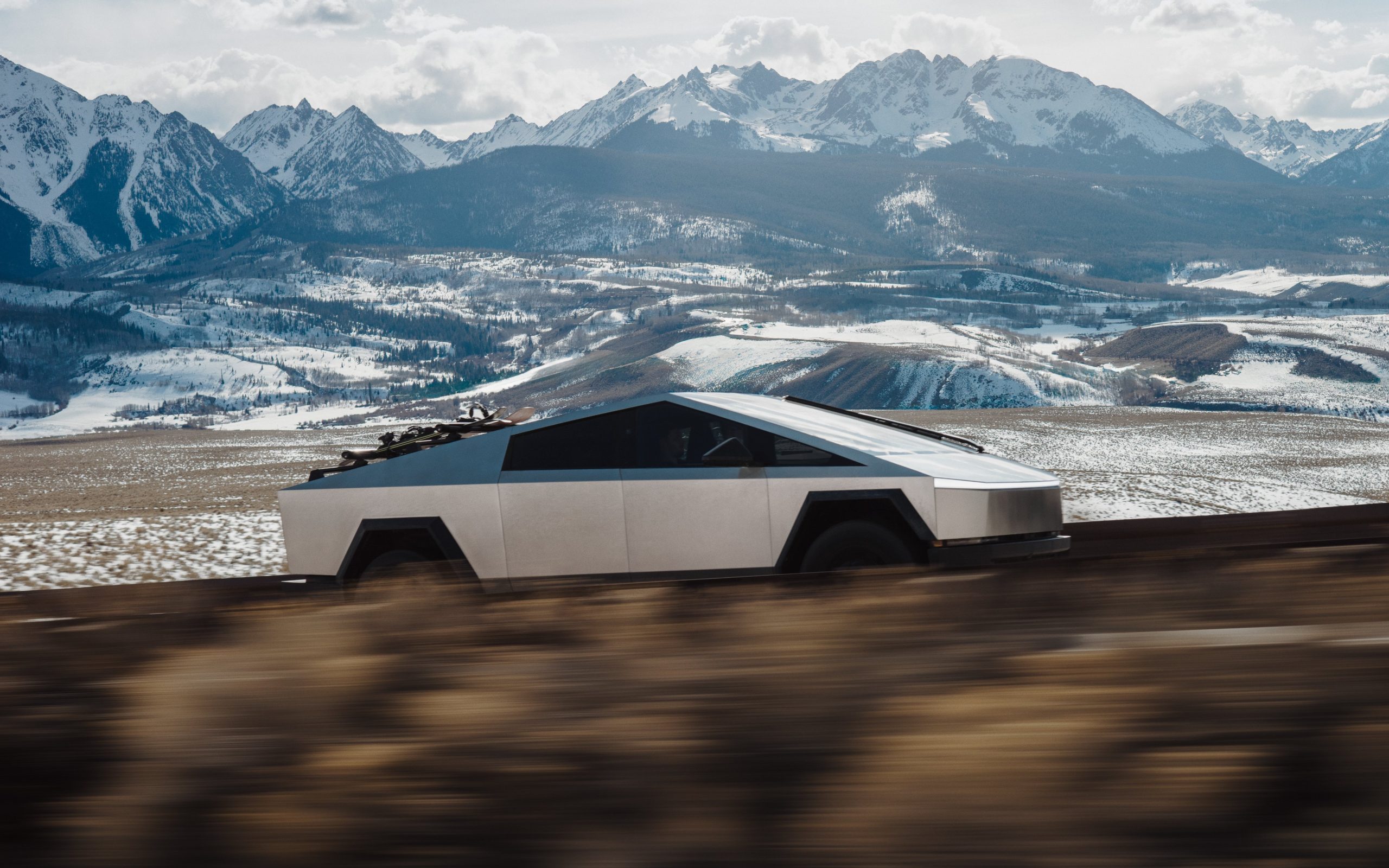
Tesla’s Full Self-Driving (FSD) V14 update for the Cybertruck could arrive this weekend, as per recent comments from Director of Autopilot Software and VP of AI Ashok Elluswamy.
The Cybertruck was expected to receive FSD V14 before the end of the month, but Tesla was not able to meet the target.
Cybertruck FSD V14
Considering the extended wait for FSD V14, it was no surprise that several Cybertruck owners were asking for updates about the system’s rollout to the all-electric pickup truck on Friday. These included the official Cybertruck X account, which responded to Elluswamy’s end of month estimate with “I only see trick. Where is my treat.”
This prompted a response from the AI executive, who replied with, “Sorry, pushing for early access Cyber release over the weekend.” This means that if all goes well, Cybertruck owners would be able to experience FSD V14 very soon. Some, however, are wondering if Tesla would go straight to V14.2 for the Cybertruck’s FSD V14 update, or if the vehicle will receive V14.1 first.
Tesla pushes to unify FSD experience across its lineup
The upcoming Cybertruck rollout represents the next step in Tesla’s efforts to roll out FSD capabilities across all of its vehicles. FSD V14 is a notable step forward for the company’s AI-driven self driving system, with features like Mad Max mode getting positive reviews from longtime Full Self Driving testers.
For the Cybertruck, the FSD V14 update would mark one of its first major over-the-air upgrades for the vehicle. Likely due to its size, the Cybertruck tends to receive FSD updates later than the S3XY lineup, which is quite surprising considering that the all-electric pickup truck is a premium-priced vehicle that is home to some of Tesla’s most advanced technologies.

Elon Musk just roasted Sam Altman’s Tesla Roadster cancellation

SpaceX successfully launches 100th Starlink mission of 2025

Tesla shares updated timeframe for Cybertruck FSD V14 release


-
 News2 weeks ago
Elon Musk confirms Tesla FSD V14.2 will see widespread rollout
-
 News2 weeks ago
Tesla might be doing away with a long-included feature with its vehicles
-
 News2 weeks ago
Tesla updates fans on its plans for the Roadster
-
 Elon Musk2 weeks ago
Elon Musk: Grok 5 now has a 10% chance of becoming world’s first AGI
-
 News2 weeks ago
Tesla is ramping up its hiring for the Cybercab production team
-
 News2 weeks ago
Tesla rolled out a new feature with FSD v14 to fix a major complaint
-
 Elon Musk2 weeks ago
Elon Musk hits back at former Tesla employee who disagrees with pay package
-
 News2 weeks ago
Tesla just made Service even easier and more convenient