
News
SpaceX Crew Dragon astronauts are chasing the space station around Earth

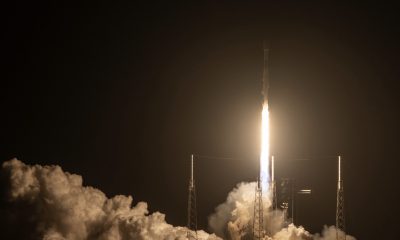
The morning of SpaceX’s most prolific launch – the Crew Dragon Demo-2 mission – began with one question on the mind of many, why did the Falcon 9 rocket have just one second, and one second only, to launch NASA astronauts Bob Behnken and Doug Hurley to the International Space Station (ISS)? A simplified answer is orbital mechanics and a carefully planned out 19 hour trip around the planet.
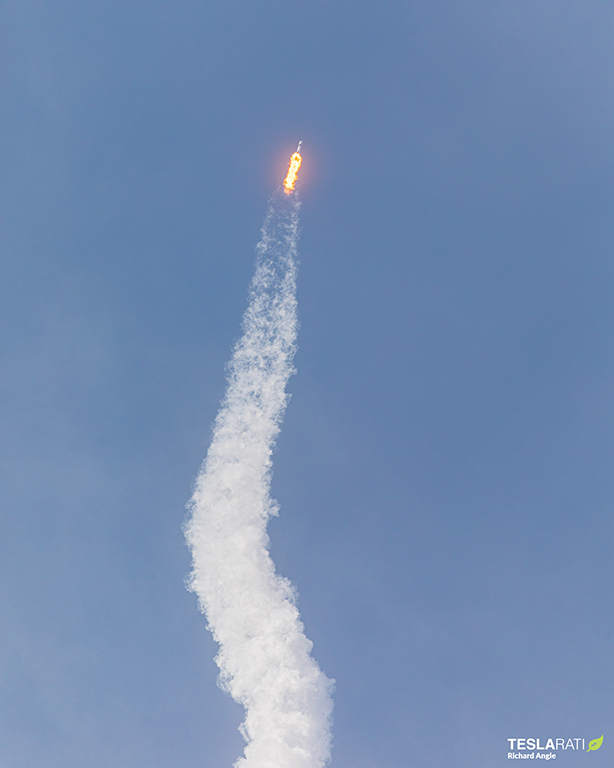
Richard Angle for Teslarati)
The launch of the Falcon 9 was a highly anticipated moment, however, it was easily the most familiar part of the Demo-2 mission. Leading up to Demo-2, SpaceX had successfully launched twenty-eight Block 5 Falcon 9 boosters – the same type of booster that the Crew Dragon carrying Behnken and Hurley would launch on. The landing of the Falcon 9 on the autonomous spaceport drone ship in the middle of the Atlantic Ocean was also a familiar process that SpaceX had completed successfully a number of times.
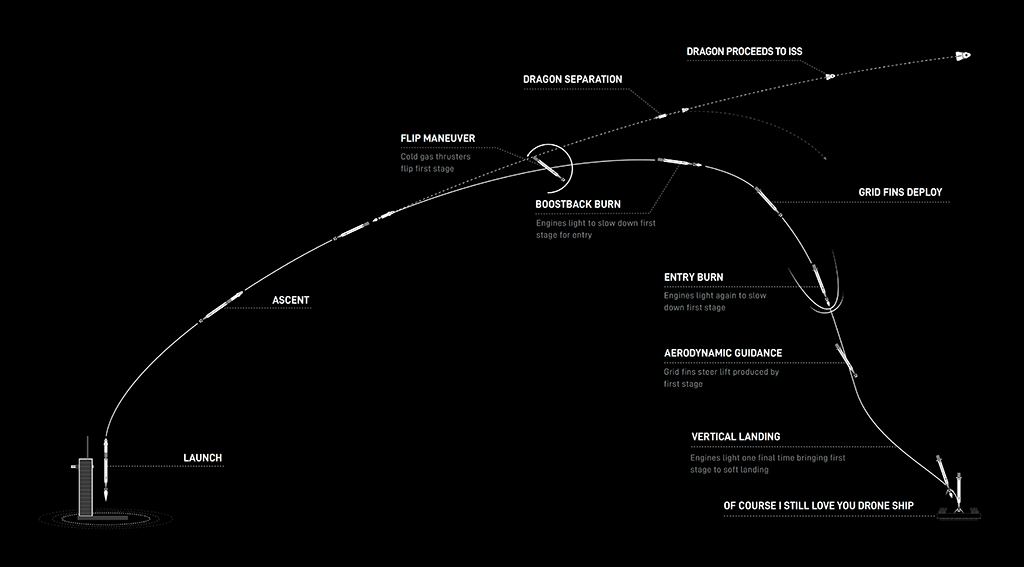
Even the Crew Dragon capsule had a launch and mission to the space station under its belt, however, launching astronauts aboard the capsule had yet to be attempted, let alone done successfully. The least familiar part of the mission was what Crew Dragon and its occupants had to achieve once free of the Earth’s gravity well.
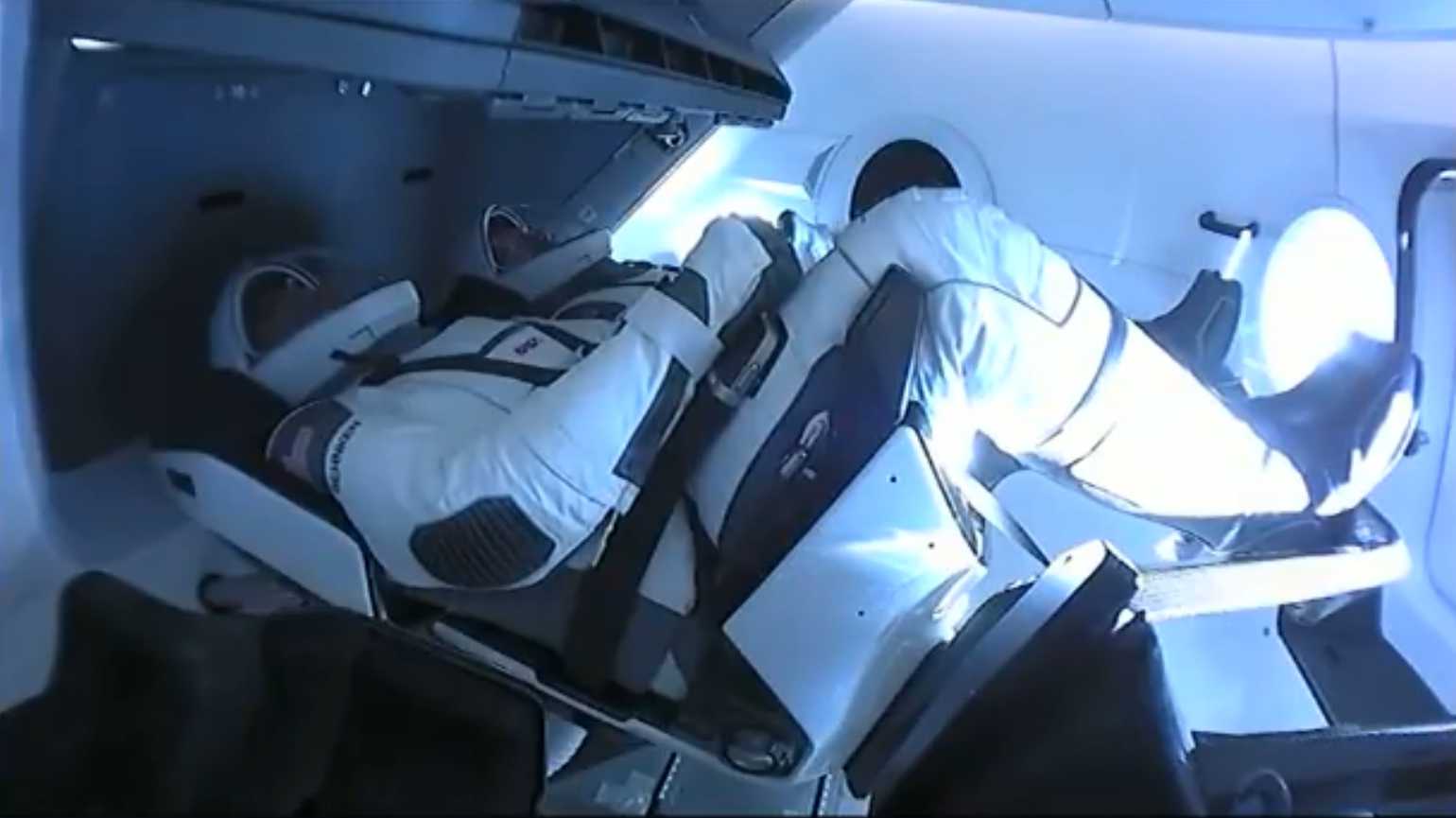
Once past launch and separation from the Falcon 9 first stage booster, Crew Dragon would separate from the Falcon 9 second stage, enter an initial orbit, and proceed to spend the next nineteen hours chasing the ISS around the planet. The capsule had to perform a series of burns to lift its orbit high enough to match that of the ISS for autonomous docking nineteen hours later. During the trip, Behnken and Hurley had a series of items to check off prior to initiating their crew sleep aboard Crew Dragon. A few of the items included doffing – or taking off – their SpaceX pressure suits, hosting a brief media opportunity explaining the name “Endeavour” chosen for their capsule as well as the zero-G indicator named “Tremor” chosen to ride along with them and eat their first meal in space.
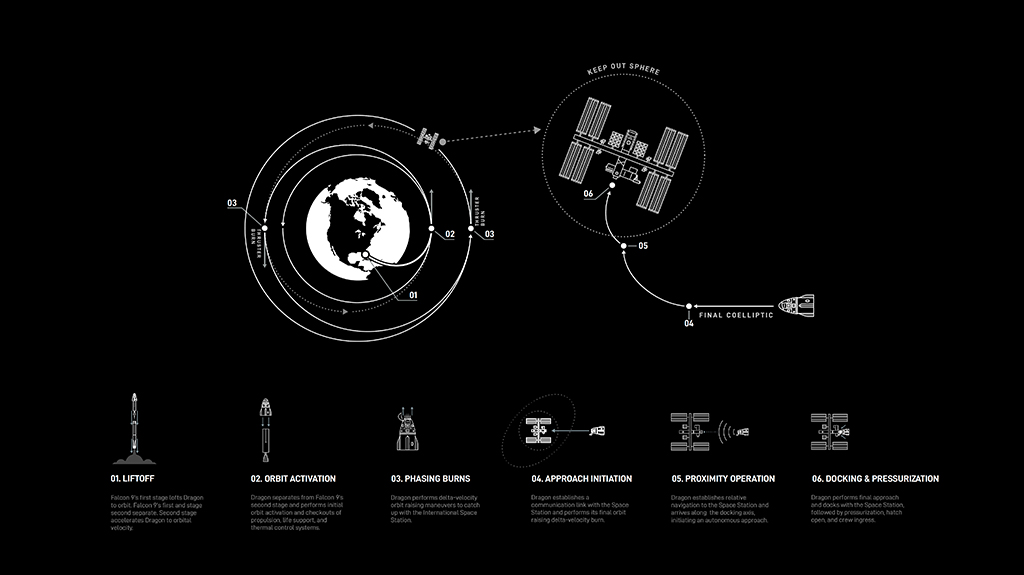
The Crew Dragon also had a few jobs of its own to complete. Crew and capsule would spend about two hours performing 3 different burns of the sixteen Draco thrusters outfitted all around the Crew Dragon’s outer shell. The first phasing burn was needed to insert it into the correct orbit, followed a little while later by a boost burn to raise the capsule’s orbit even more. And lastly, a close coelliptic burn to flatten out the orbit around the Earth making it more elliptical, rather than circular matching that of the ISS. These three burns were completed while the crew was awake performing any necessary tasks. Two more burns remained to be completed, but those would need to occur much closure to docking with the ISS, one while the crew slept and one just before autonomous docking procedures were set to begin.
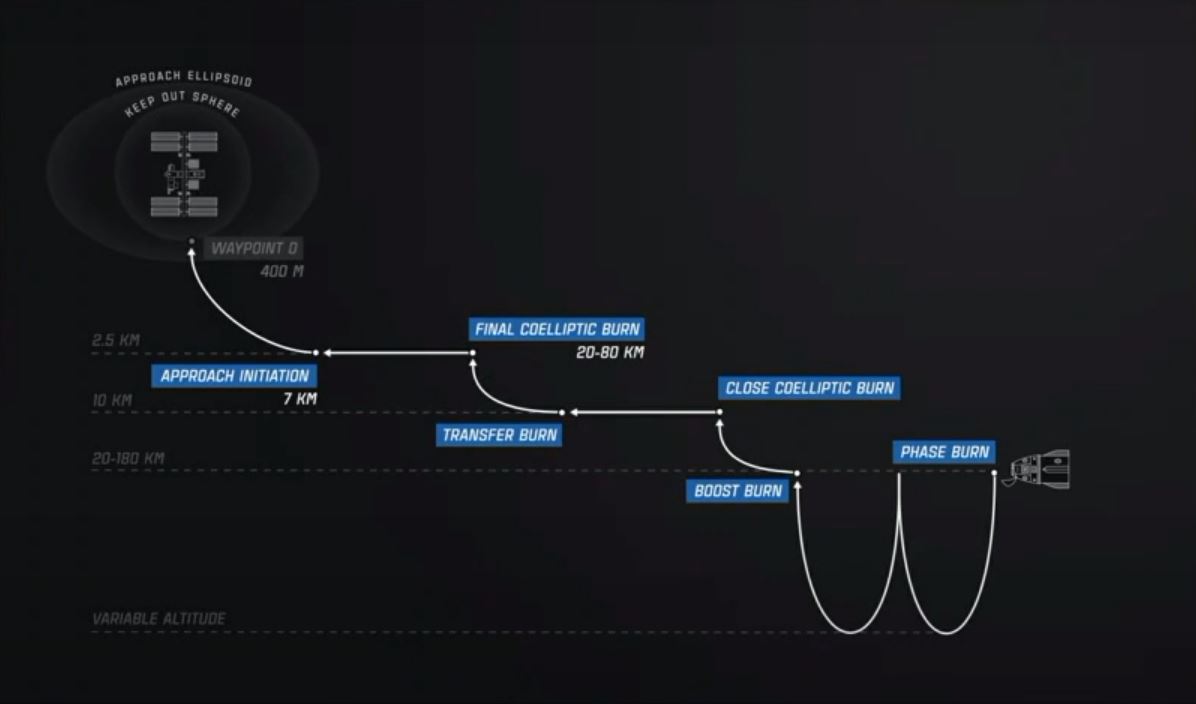
The fourth burn – a transfer burn – is intended to raise the capsule the final ten meters in orbital space to match that of the ISS. This burn will allow the capsule to begin its final approach toward the station. It will be completed by the SpaceX mission control ground station in Hawthorne, California while the crew sleeps. It will be a gentle burn of the Dracos lasting less than a minute.
The capsule will then burn the Draco thrusters once more for the final coelliptic burn matching its orbit directly with the ISS. At this time, the crew aboard both the Crew Dragon capsule and space station will be awake for a full day of work including the meticulous process of autonomously docking the capsule to the ISS, the opening of the hatch of Crew Dragon, and welcoming Behnken and Hurley aboard the station as members of the Expedition 63 crew.
Crew Dragon is expected to meet up with the ISS nineteen hours after liftoff. Docking with the station is set to occur on Sunday, May 31st around 10:30 am EDT/14:30 UTC. Behnken and Hurley will be welcomed aboard the station during a traditional crew welcoming ceremony that should occur about two hours after docking has been confirmed.
Check out Teslarati’s newsletters for prompt updates, on-the-ground perspectives, and unique glimpses of SpaceX’s rocket launch and recovery processes.







Elon Musk
Elon Musk just roasted Sam Altman’s Tesla Roadster cancellation
“And you forgot to mention act 4, where this issue was fixed and you received a refund within 24 hours.
But that is in your nature.”

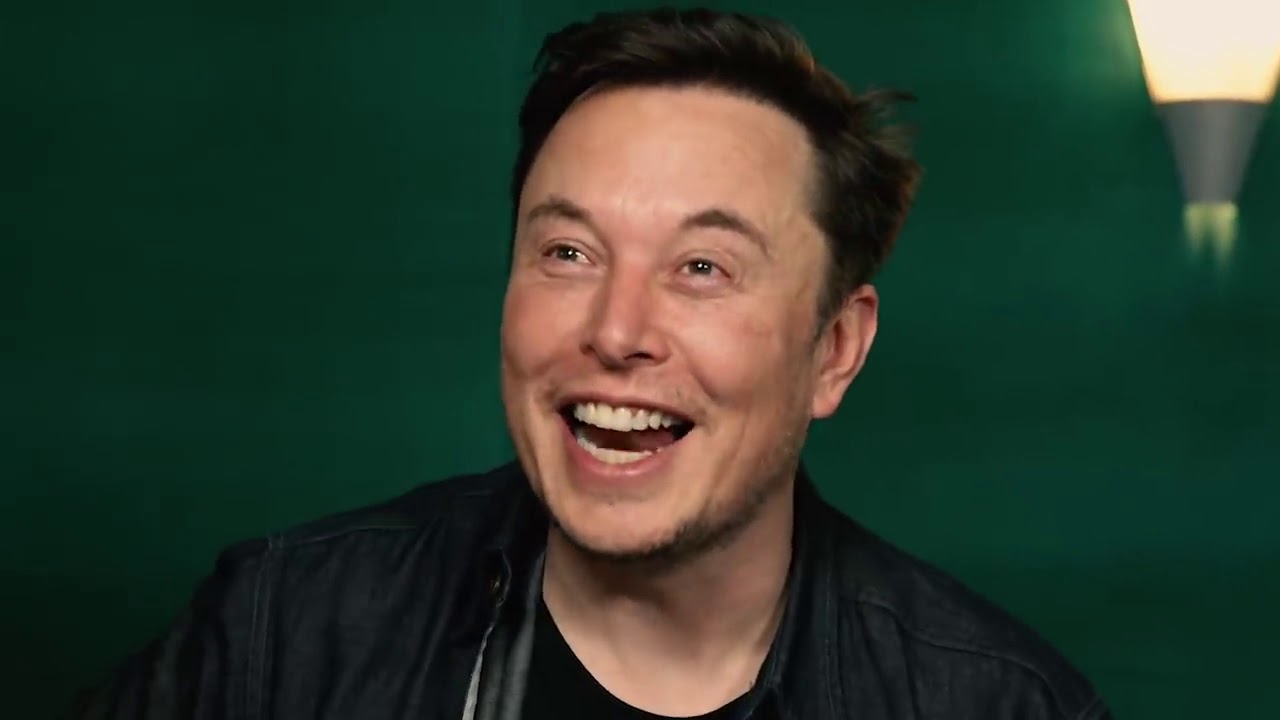
Elon Musk has responded to OpenAI CEO Sam Altman’s decision to cancel his Tesla Roadster reservation, which he revealed on X on Thursday.
We reported on Altman’s decision, which he called “A tale in three acts,” showing his confirmation email from Tesla back in 2018, an email requesting his $50,000 deposit back after canceling his order, and a notification from Google that the email he sent was not delivered.
A tale in three acts: pic.twitter.com/ClRZBgT24g
— Sam Altman (@sama) October 30, 2025
Musk did not take too kindly to the post from his tech rival, first referencing his position with OpenAI, and then confirming that Altman received his reservation deposit back within 24 hours:
And you forgot to mention act 4, where this issue was fixed and you received a refund within 24 hours.
But that is in your nature.
— Elon Musk (@elonmusk) November 1, 2025
OpenAI was started by Musk, Altman, and others back in 2015, and was geared toward being a non-profit company that would develop safe artificial intelligence that would be accessible to people.
However, Musk and Altman did not agree on the future of the company. Musk left, and Altman turned OpenAI into a for-profit company. This led to a variety of lawsuits and some very public spats between the two. Musk has called out Altman for turning the company into a for-profit, which has been his main source of criticism for his former colleague.
The Roadster has been hanging in the balance of Tesla’s manufacturing plans for seven years, but the company has made more indications that it will be unveiled later this year and will have some insane technologies.
Musk said on Friday in an episode of the Joe Rogan Experience Podcast that Tesla is “getting close to demonstrating the prototype.”
He said:
“Whether it’s good or bad, it will be unforgettable. My friend Peter Thiel once reflected that the future was supposed to have flying cars, but we don’t have flying cars. I think if Peter wants a flying car, he should be able to buy one…I think it has a shot at being the most memorable product unveil ever. [It will be unveiled] hopefully before the end of the year. You know, we need to make sure that it works. This is some crazy technology in this car. Let’s just put it this way: if you took all the James Bond cars and combined them, it’s crazier than that.”
Musk hinted that the vehicle could fly and would have “crazy technology” that would put James Bond’s vehicles to shame. It will be interesting to see what Tesla will unveil when the event happens and if it can come through on this mind-blowing teaser.
News
SpaceX successfully launches 100th Starlink mission of 2025
With 100 Starlink missions completed for 2025, space enthusiasts have noted that SpaceX has successfully launched 2,554 Starlink satellites so far this year.

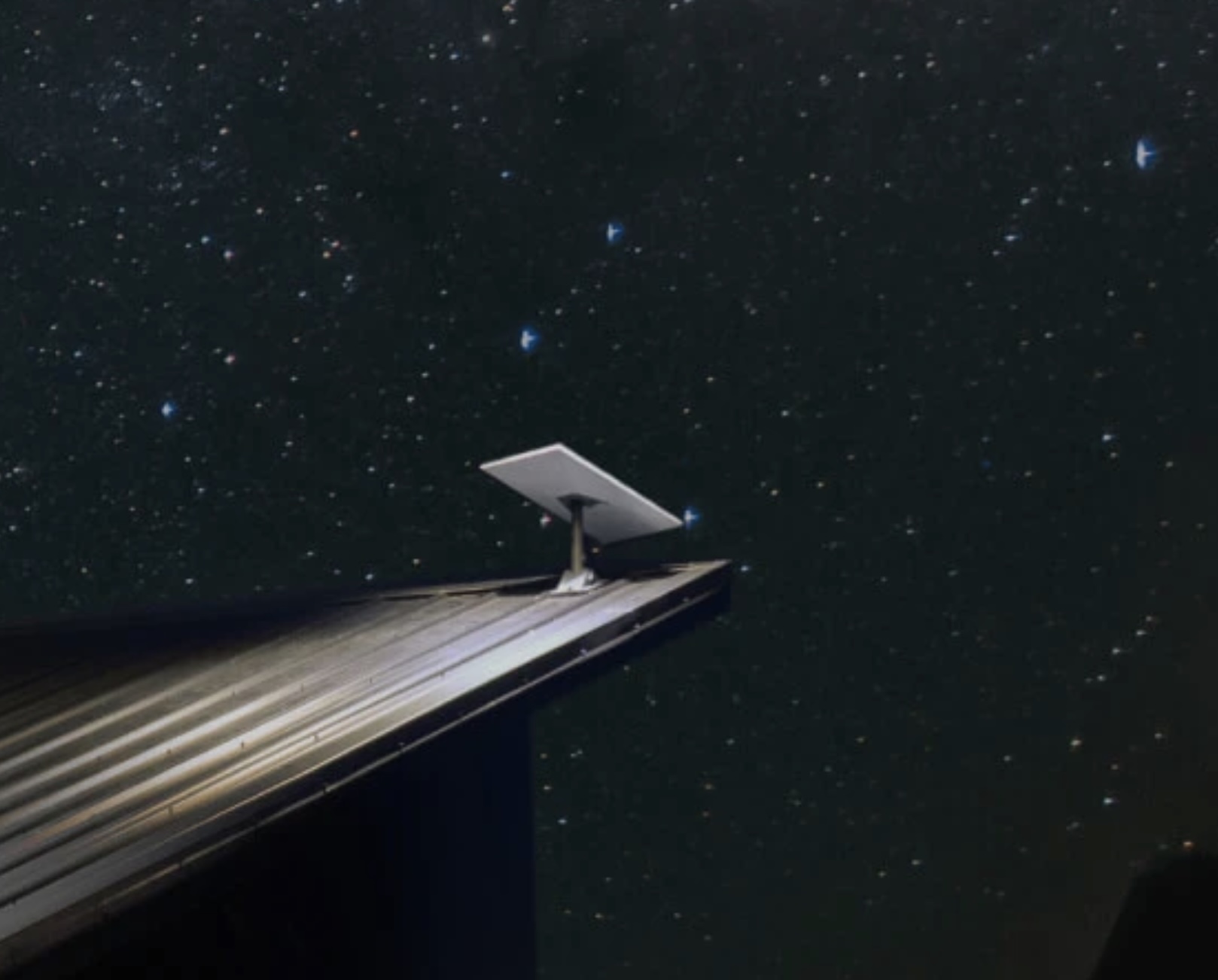
SpaceX achieved its 100th Starlink mission of the year on Friday, October 31, marking another milestone for 2025.
A Falcon 9 rocket carrying 28 Starlink broadband satellites successfully lifted off from Vandenberg Space Force Base in California at 4:41 p.m. ET, carrying another 28 Starlink satellites to Low Earth Orbit (LEO).
Falcon 9 booster’s 29th flight
Roughly 8.5 minutes after liftoff, the Falcon 9’s first stage touched down on the drone ship Of Course I Still Love You in the Pacific Ocean. This marked the booster’s 29th flight, which is approaching SpaceX’s reuse record of 31 missions.
This latest mission adds to SpaceX’s impressive 138 Falcon 9 launches in 2025, 99 of which were dedicated to Starlink, according to Space.com. The company’s focus on reusing boosters has enabled this breakneck pace, with multiple launches each week supporting both Starlink’s expansion and external customers.
Starlink’s network continues massive global expansion
Starlink remains the largest active satellite constellation in history, with more than 10,000 satellites launched, nearly 8,800 of which are currently active. SpaceX recently achieved Starlink’s 10,000-satellite milestone. With 100 Starlink missions completed for 2025, space enthusiasts have noted that SpaceX has successfully launched 2,554 Starlink satellites so far this year.
Starlink, which provides high-speed, low-latency internet connectivity even to the world’s most remote areas, has been proven to be life-changing technology for people across the globe. The service is currently operational in about 150 countries, and it currently has over 5 million subscribers worldwide. From this number, 2.7 million joined over the past year.
News
Tesla shares updated timeframe for Cybertruck FSD V14 release
The Cybertruck was expected to receive FSD V14 before the end of the month, but Tesla was not able to meet the target.
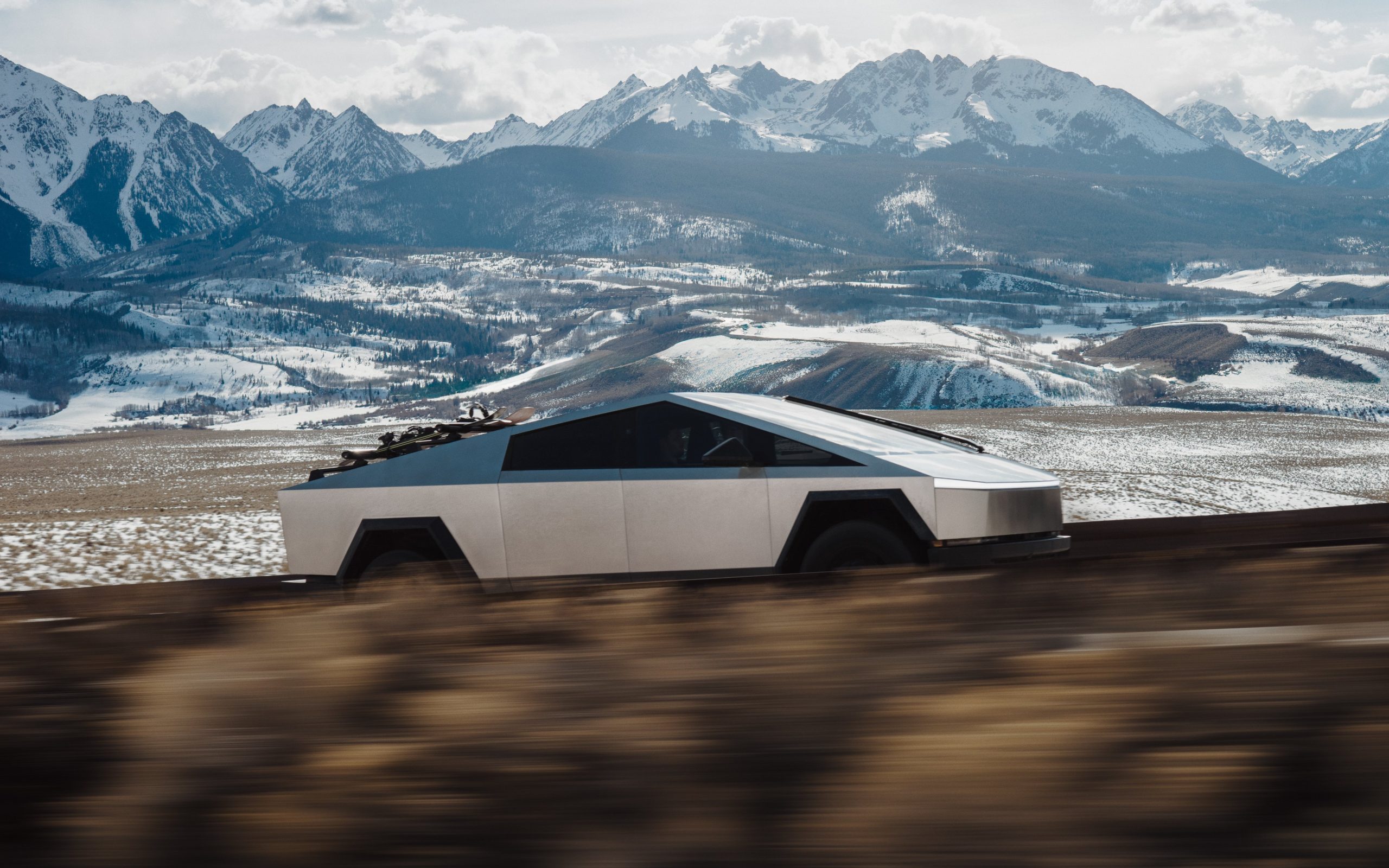
Tesla’s Full Self-Driving (FSD) V14 update for the Cybertruck could arrive this weekend, as per recent comments from Director of Autopilot Software and VP of AI Ashok Elluswamy.
The Cybertruck was expected to receive FSD V14 before the end of the month, but Tesla was not able to meet the target.
Cybertruck FSD V14
Considering the extended wait for FSD V14, it was no surprise that several Cybertruck owners were asking for updates about the system’s rollout to the all-electric pickup truck on Friday. These included the official Cybertruck X account, which responded to Elluswamy’s end of month estimate with “I only see trick. Where is my treat.”
This prompted a response from the AI executive, who replied with, “Sorry, pushing for early access Cyber release over the weekend.” This means that if all goes well, Cybertruck owners would be able to experience FSD V14 very soon. Some, however, are wondering if Tesla would go straight to V14.2 for the Cybertruck’s FSD V14 update, or if the vehicle will receive V14.1 first.
Tesla pushes to unify FSD experience across its lineup
The upcoming Cybertruck rollout represents the next step in Tesla’s efforts to roll out FSD capabilities across all of its vehicles. FSD V14 is a notable step forward for the company’s AI-driven self driving system, with features like Mad Max mode getting positive reviews from longtime Full Self Driving testers.
For the Cybertruck, the FSD V14 update would mark one of its first major over-the-air upgrades for the vehicle. Likely due to its size, the Cybertruck tends to receive FSD updates later than the S3XY lineup, which is quite surprising considering that the all-electric pickup truck is a premium-priced vehicle that is home to some of Tesla’s most advanced technologies.

Elon Musk just roasted Sam Altman’s Tesla Roadster cancellation

SpaceX successfully launches 100th Starlink mission of 2025

Tesla shares updated timeframe for Cybertruck FSD V14 release


-
 News2 weeks ago
Elon Musk confirms Tesla FSD V14.2 will see widespread rollout
-
 News2 weeks ago
Tesla might be doing away with a long-included feature with its vehicles
-
 News2 weeks ago
Tesla updates fans on its plans for the Roadster
-
 Elon Musk2 weeks ago
Elon Musk: Grok 5 now has a 10% chance of becoming world’s first AGI
-
 News2 weeks ago
Tesla is ramping up its hiring for the Cybercab production team
-
 News2 weeks ago
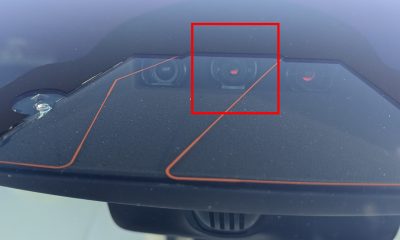
Tesla rolled out a new feature with FSD v14 to fix a major complaint
-
 Elon Musk2 weeks ago
Elon Musk hits back at former Tesla employee who disagrees with pay package
-
 News2 weeks ago
Tesla just made Service even easier and more convenient