
News
Elon Musk says SpaceX could soon face bankruptcy – here’s why that’s unlikely

In a new leaked email, SpaceX CEO Elon Musk says that the company could go bankrupt if, by the end of 2022, it can’t achieve Starship and Starlink milestones that are by all practical appearances out of reach.
The news – first broken by SpaceExplored – comes about a week after CNBC reported that Musk was “shaking up” SpaceX’s leadership by effectively firing its vice president of propulsion due to “a lack of progress” in the development of Starship’s Raptor engine. Now, apparently after taking his first good look ‘under the hood’ in a while, Musk says that “the Raptor production crisis is much worse than it seemed a few weeks ago.” Worse, the CEO has implied that if it “can’t get enough reliable Raptors made [by the end of 2022]…[SpaceX will] face a genuine risk of bankruptcy.”
The email raises both skepticism and several major questions.
First and foremost, can there be any truth to Musk’s claim that SpaceX could go bankrupt because of an unspecified “Raptor production crisis [and disaster]?” Put simply, not really. Musk’s argument is simple enough. According to his estimations, the first-generation (V1) Starlink satellite internet constellation is “financially weak by itself,” which has led SpaceX to develop a much larger, more advanced second-generation (V2) Starlink satellite and constellation that the company’s existing “Falcon [rockets have] neither the [payload] volume nor mass to orbit” to launch. To efficiently launch the Starlink V2 constellation, then, Musk says SpaceX needs Starship to be operational.
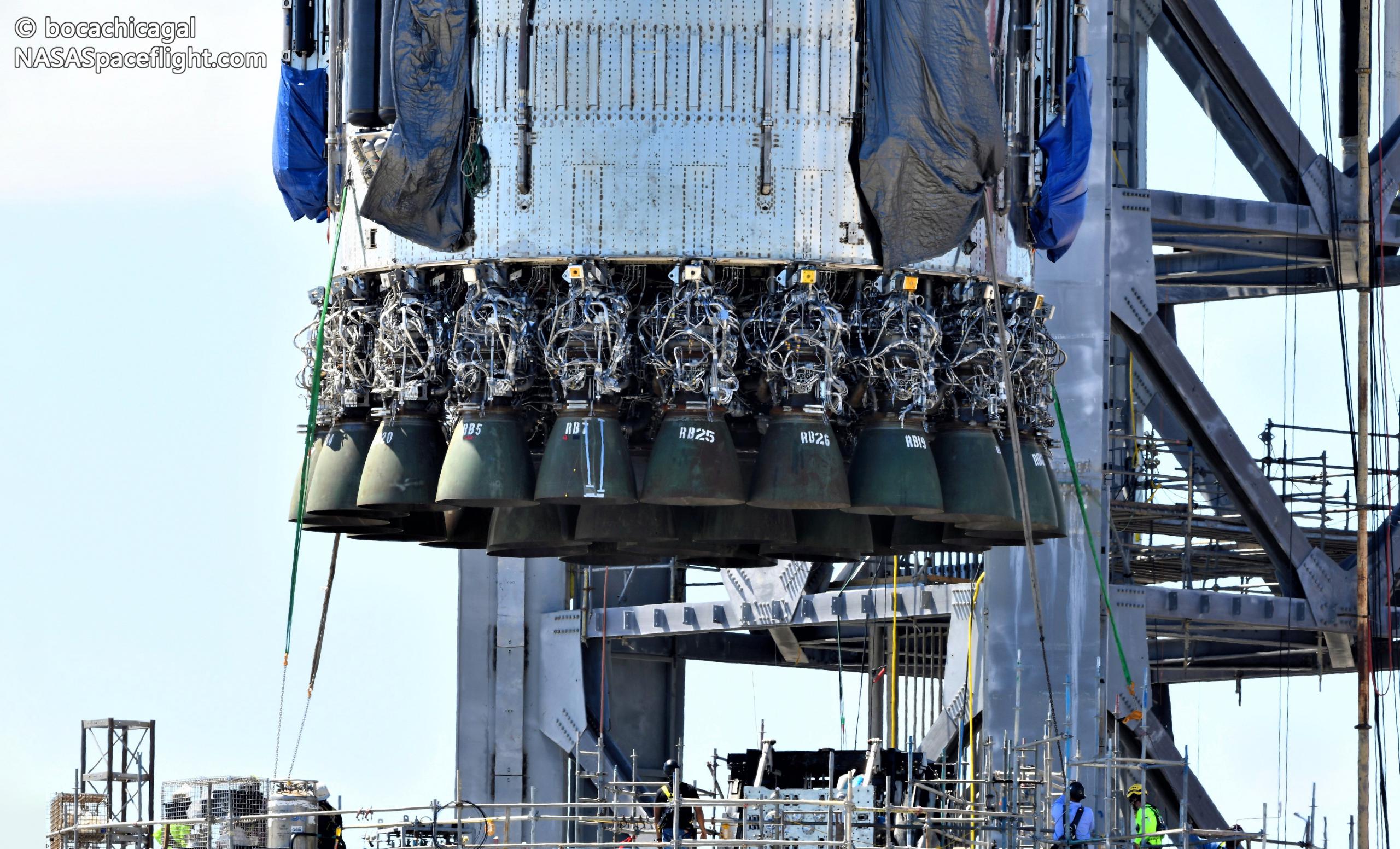
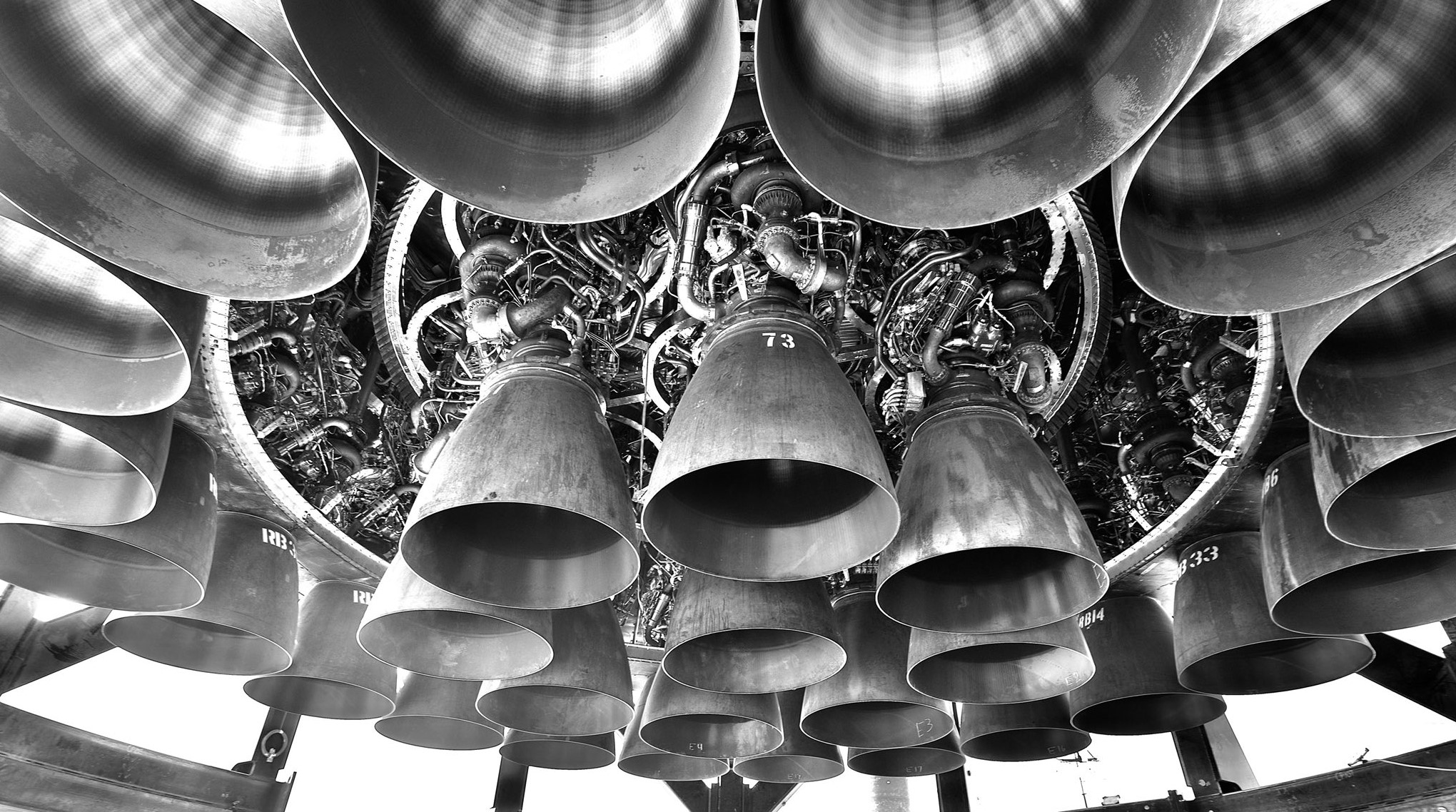
Up to that point, nothing in Musk’s email implies that a “Raptor production crisis” could pose any serious harm to SpaceX beyond annoying delays. More than two years ago, Musk believed that Raptor V1.0 already cost less than $1M to produce. As of 2021, SpaceX (again per Musk) is completing an average of one Raptor engine every two days and currently has 35 functional engines installed on Starship and Super Heavy booster prototypes in Boca Chica, Texas. Already, at a rate of one engine every 48 hours, SpaceX’s Raptor production capabilities are theoretically strong enough to fully outfit a significant Starship fleet.
Both stages of Starship are designed to be rapidly and fully reusable and absolutely need to be to efficiently and rapidly launch SpaceX’s Starlink V2 constellation. In theory, a production capacity of ~180 Raptors per year should allow SpaceX to outfit a fleet of three Super Heavies (99 engines) and 13 Starships (72 engines). Even if Super Heavy booster reuse is initially no faster than Falcon (~1 launch per month) and Starship reuse is no faster than Dragon (~3 launches per year), that fleet would be able to launch at least 36 times per years. Even if SpaceX’s former propulsion executives somehow pulled the wool over Musk’s eyes, tricking him into seeing engines that just weren’t there and hiding hundreds of millions of dollars in secret cost overruns from the company’s own accountants, an annual run rate of 100 Raptor engines at a cost of $5 million each would still be able to power a fleet of six reusable ships and two boosters capable of ~20 launches per year.
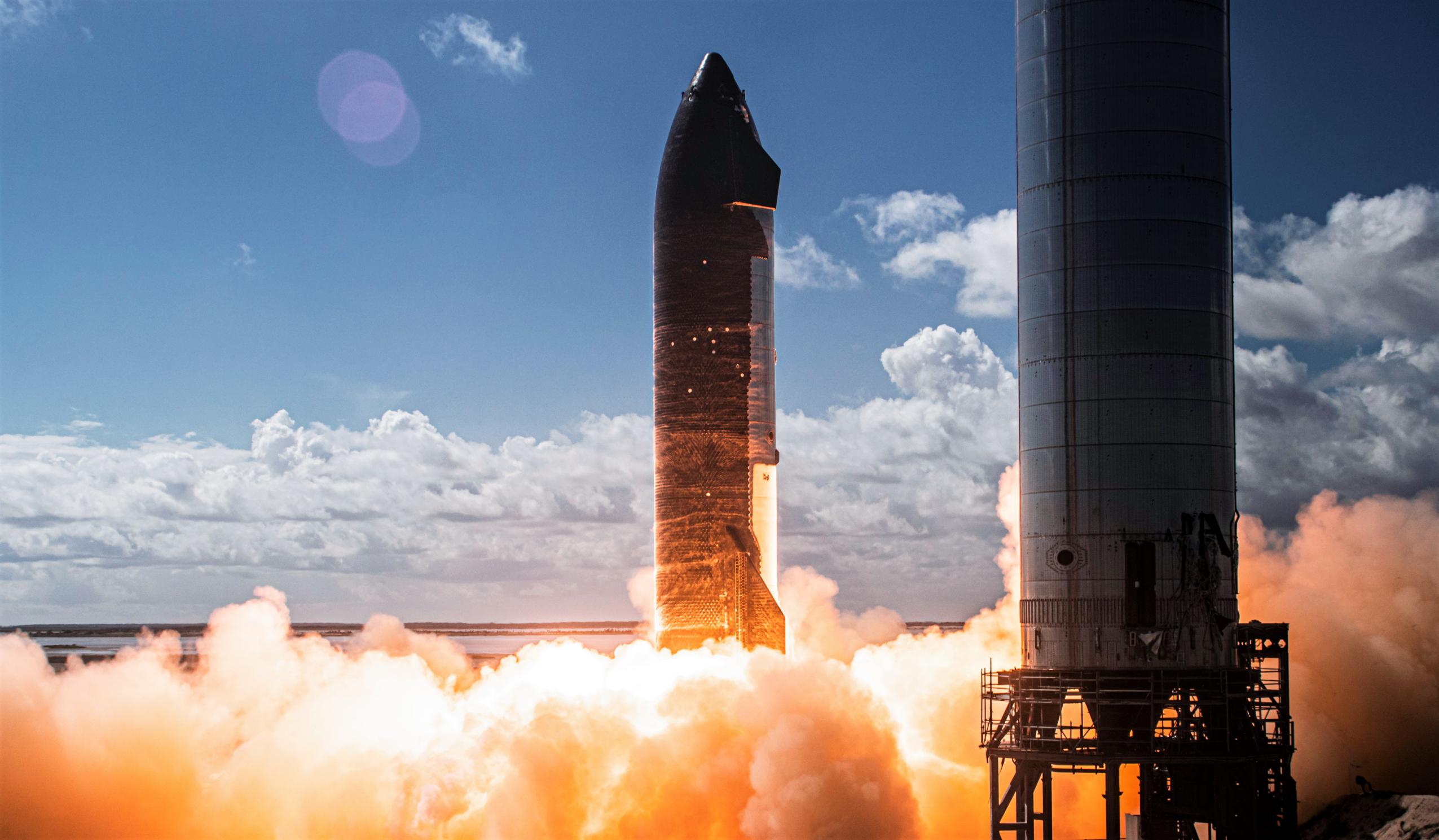
Musk says that SpaceX will only face the risk of bankruptcy if it “cannot achieve a Starship flight rate of at least once every two weeks next year” – equivalent to 26 launches annually. Again, being deceived for years would be a terrible look but nothing described above appears to have any chance of bankrupting SpaceX. However, the CEO also says that SpaceX “is spooling up” one or several factories to produce “several million” Starlink user terminals (dishes) per year in a process that “will consume massive capital [and assumes] that [Starlink V2 satellites] will be on orbit to handle the bandwidth demand.” He even goes as far as to say that those millions of terminals “will be useless otherwise.”
Once again, while what he describes is an undeniable hurdle for SpaceX, the company is making a choice to “consume massive capital” to “spool up” Starlink dish factories before the constellation capacity needed to take advantage of those dishes has been secured. SpaceX doesn’t need to make such a massive investment so quickly when it could instead split that money with Starship, ensure that Starship and Raptor and Starlink V2.0 satellites are ready or close to ready for routine launches, and then invest heavily in dish production.
For example, just this month, SpaceX raised almost $350M from investors that have a practically bottomless appetite for SpaceX investments. Combined, by the end of the year, SpaceX will have likely raised more than $2.3B in 2021 alone. Valued at more than $100 billion, the company could – as a last resort – feasibly raise double-digit billions in one fell swoop with an IPO. Put simply, the only way SpaceX could ever go bankrupt in the near term would be by consciously letting itself drown in a sea of life preservers.
This is not to say that SpaceX doesn’t have numerous massive challenges ahead of it, nor is it to say that its fundraising potential is truly limitless. Investors could eventually become disillusioned. It’s entirely possible that it will take SpaceX years longer than Musk expects to begin routine Starlink V2.0 launches with Starship. Environmental approvals alone could easily preclude more than five orbital Starship launches in 2022 and potentially prevent regular (i.e. biweekly) launches well into 2023. But the fact of the matter is that unless Elon Musk is telegraphing signs that the rest of the company’s finances are a house of cards, the odds of SpaceX actually going bankrupt anytime soon are vanishingly small. In reality, he’s likely just attempting to (for better or worse) instill some amount of fear and panic in SpaceX employees to encourage them to work more hours and take fewer days off.
Update: Musk has tweeted a brief public comment confirming that he believes bankruptcy is actually an unlikely – but not impossible – outcome for SpaceX.
If a severe global recession were to dry up capital availability / liquidity while SpaceX was losing billions on Starlink & Starship, then bankruptcy, while still unlikely, is not impossible.
GM & Chrysler went BK last recession.
“Only the paranoid survive.” – Grove— Elon Musk (@elonmusk) November 30, 2021







Elon Musk
Elon Musk just roasted Sam Altman’s Tesla Roadster cancellation
“And you forgot to mention act 4, where this issue was fixed and you received a refund within 24 hours.
But that is in your nature.”

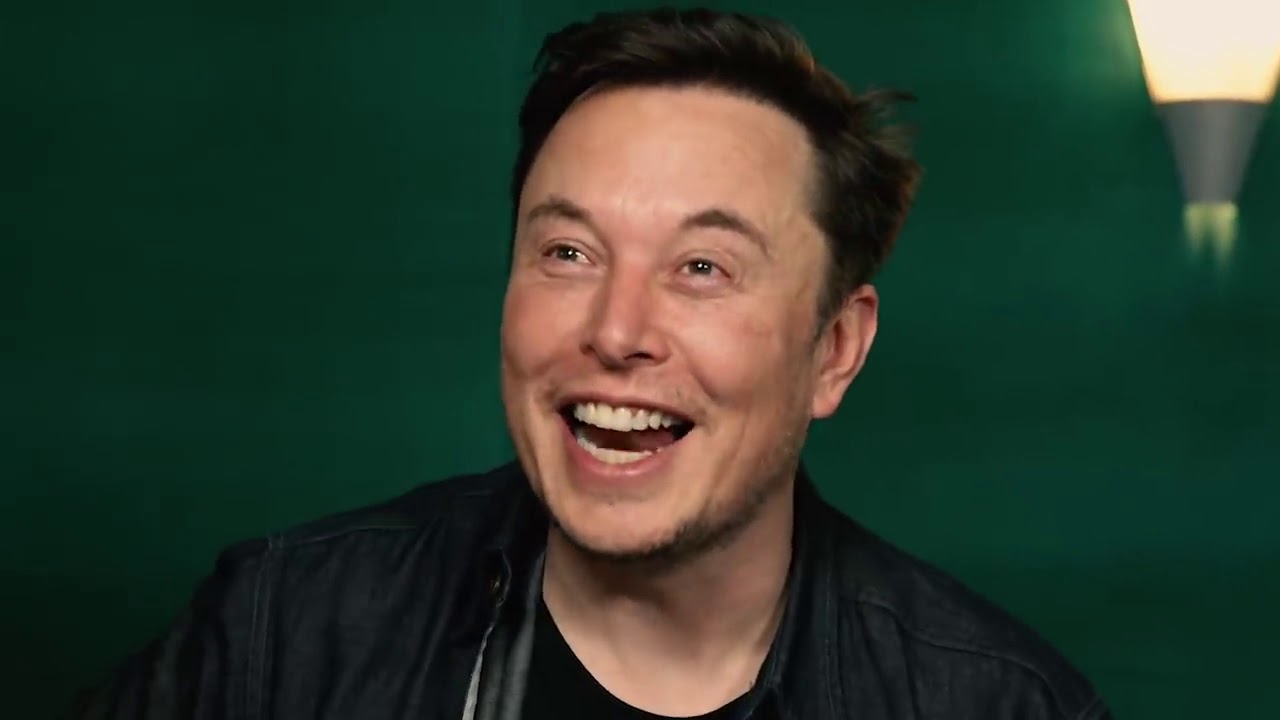
Elon Musk has responded to OpenAI CEO Sam Altman’s decision to cancel his Tesla Roadster reservation, which he revealed on X on Thursday.
We reported on Altman’s decision, which he called “A tale in three acts,” showing his confirmation email from Tesla back in 2018, an email requesting his $50,000 deposit back after canceling his order, and a notification from Google that the email he sent was not delivered.
A tale in three acts: pic.twitter.com/ClRZBgT24g
— Sam Altman (@sama) October 30, 2025
Musk did not take too kindly to the post from his tech rival, first referencing his position with OpenAI, and then confirming that Altman received his reservation deposit back within 24 hours:
And you forgot to mention act 4, where this issue was fixed and you received a refund within 24 hours.
But that is in your nature.
— Elon Musk (@elonmusk) November 1, 2025
OpenAI was started by Musk, Altman, and others back in 2015, and was geared toward being a non-profit company that would develop safe artificial intelligence that would be accessible to people.
However, Musk and Altman did not agree on the future of the company. Musk left, and Altman turned OpenAI into a for-profit company. This led to a variety of lawsuits and some very public spats between the two. Musk has called out Altman for turning the company into a for-profit, which has been his main source of criticism for his former colleague.
The Roadster has been hanging in the balance of Tesla’s manufacturing plans for seven years, but the company has made more indications that it will be unveiled later this year and will have some insane technologies.
Musk said on Friday in an episode of the Joe Rogan Experience Podcast that Tesla is “getting close to demonstrating the prototype.”
He said:
“Whether it’s good or bad, it will be unforgettable. My friend Peter Thiel once reflected that the future was supposed to have flying cars, but we don’t have flying cars. I think if Peter wants a flying car, he should be able to buy one…I think it has a shot at being the most memorable product unveil ever. [It will be unveiled] hopefully before the end of the year. You know, we need to make sure that it works. This is some crazy technology in this car. Let’s just put it this way: if you took all the James Bond cars and combined them, it’s crazier than that.”
Musk hinted that the vehicle could fly and would have “crazy technology” that would put James Bond’s vehicles to shame. It will be interesting to see what Tesla will unveil when the event happens and if it can come through on this mind-blowing teaser.
News
SpaceX successfully launches 100th Starlink mission of 2025
With 100 Starlink missions completed for 2025, space enthusiasts have noted that SpaceX has successfully launched 2,554 Starlink satellites so far this year.

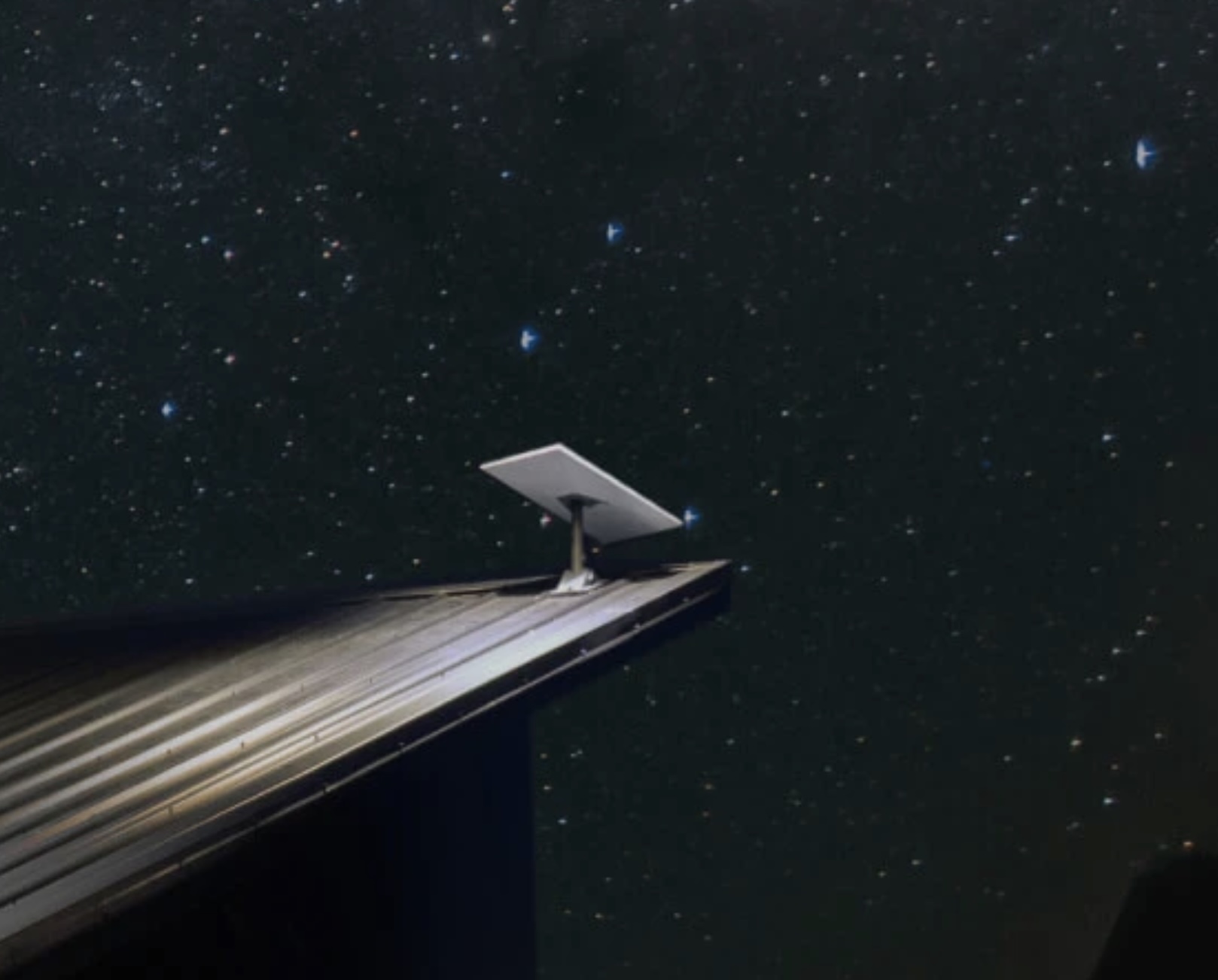
SpaceX achieved its 100th Starlink mission of the year on Friday, October 31, marking another milestone for 2025.
A Falcon 9 rocket carrying 28 Starlink broadband satellites successfully lifted off from Vandenberg Space Force Base in California at 4:41 p.m. ET, carrying another 28 Starlink satellites to Low Earth Orbit (LEO).
Falcon 9 booster’s 29th flight
Roughly 8.5 minutes after liftoff, the Falcon 9’s first stage touched down on the drone ship Of Course I Still Love You in the Pacific Ocean. This marked the booster’s 29th flight, which is approaching SpaceX’s reuse record of 31 missions.
This latest mission adds to SpaceX’s impressive 138 Falcon 9 launches in 2025, 99 of which were dedicated to Starlink, according to Space.com. The company’s focus on reusing boosters has enabled this breakneck pace, with multiple launches each week supporting both Starlink’s expansion and external customers.
Starlink’s network continues massive global expansion
Starlink remains the largest active satellite constellation in history, with more than 10,000 satellites launched, nearly 8,800 of which are currently active. SpaceX recently achieved Starlink’s 10,000-satellite milestone. With 100 Starlink missions completed for 2025, space enthusiasts have noted that SpaceX has successfully launched 2,554 Starlink satellites so far this year.
Starlink, which provides high-speed, low-latency internet connectivity even to the world’s most remote areas, has been proven to be life-changing technology for people across the globe. The service is currently operational in about 150 countries, and it currently has over 5 million subscribers worldwide. From this number, 2.7 million joined over the past year.
News
Tesla shares updated timeframe for Cybertruck FSD V14 release
The Cybertruck was expected to receive FSD V14 before the end of the month, but Tesla was not able to meet the target.
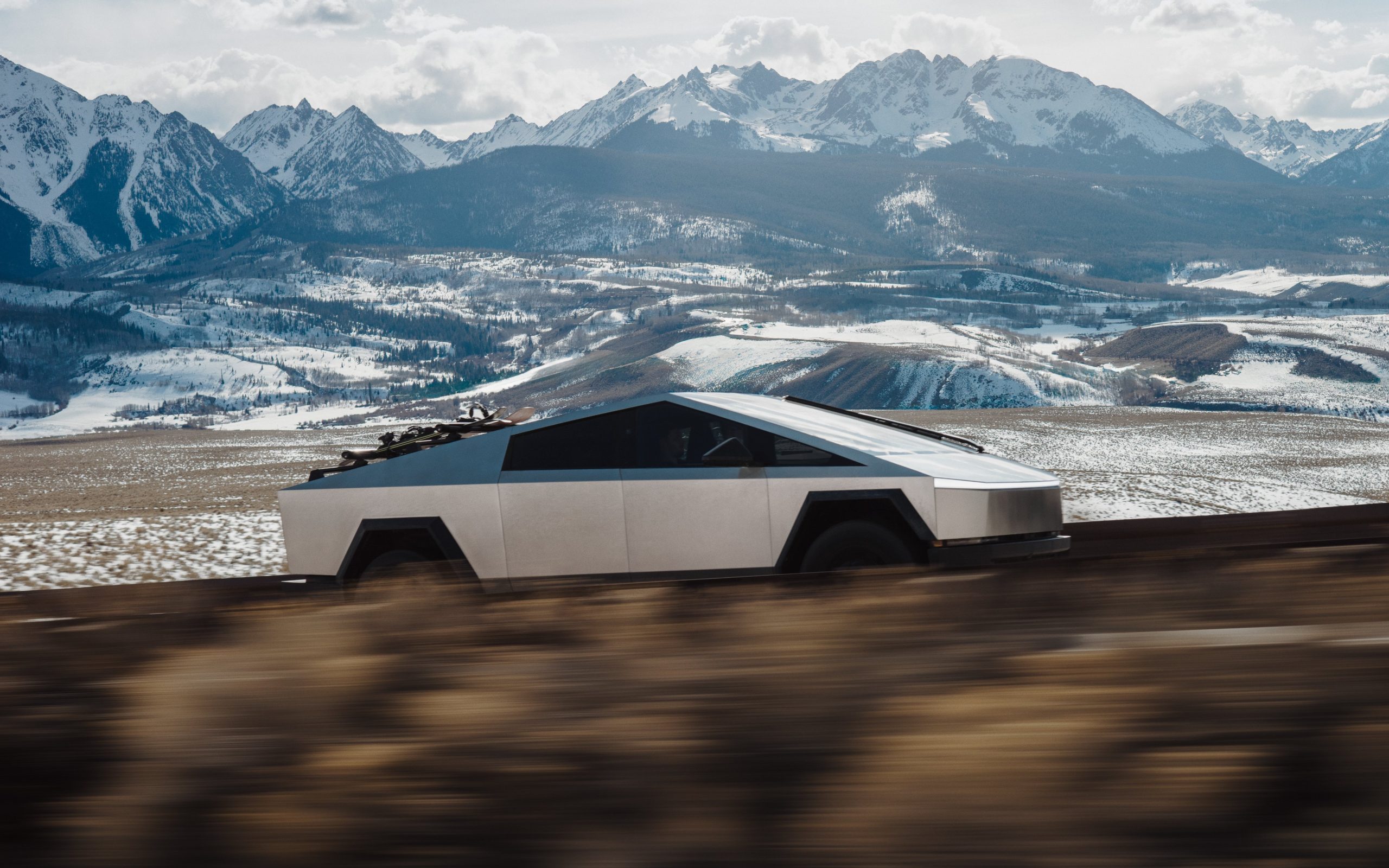
Tesla’s Full Self-Driving (FSD) V14 update for the Cybertruck could arrive this weekend, as per recent comments from Director of Autopilot Software and VP of AI Ashok Elluswamy.
The Cybertruck was expected to receive FSD V14 before the end of the month, but Tesla was not able to meet the target.
Cybertruck FSD V14
Considering the extended wait for FSD V14, it was no surprise that several Cybertruck owners were asking for updates about the system’s rollout to the all-electric pickup truck on Friday. These included the official Cybertruck X account, which responded to Elluswamy’s end of month estimate with “I only see trick. Where is my treat.”
This prompted a response from the AI executive, who replied with, “Sorry, pushing for early access Cyber release over the weekend.” This means that if all goes well, Cybertruck owners would be able to experience FSD V14 very soon. Some, however, are wondering if Tesla would go straight to V14.2 for the Cybertruck’s FSD V14 update, or if the vehicle will receive V14.1 first.
Tesla pushes to unify FSD experience across its lineup
The upcoming Cybertruck rollout represents the next step in Tesla’s efforts to roll out FSD capabilities across all of its vehicles. FSD V14 is a notable step forward for the company’s AI-driven self driving system, with features like Mad Max mode getting positive reviews from longtime Full Self Driving testers.
For the Cybertruck, the FSD V14 update would mark one of its first major over-the-air upgrades for the vehicle. Likely due to its size, the Cybertruck tends to receive FSD updates later than the S3XY lineup, which is quite surprising considering that the all-electric pickup truck is a premium-priced vehicle that is home to some of Tesla’s most advanced technologies.

Elon Musk just roasted Sam Altman’s Tesla Roadster cancellation

SpaceX successfully launches 100th Starlink mission of 2025

Tesla shares updated timeframe for Cybertruck FSD V14 release


-
 News2 weeks ago
Elon Musk confirms Tesla FSD V14.2 will see widespread rollout
-

 News2 weeks ago
Tesla might be doing away with a long-included feature with its vehicles
-
 News2 weeks ago
Tesla updates fans on its plans for the Roadster
-
 Elon Musk2 weeks ago
Elon Musk: Grok 5 now has a 10% chance of becoming world’s first AGI
-
 News2 weeks ago
Tesla is ramping up its hiring for the Cybercab production team
-
 News2 weeks ago
Tesla rolled out a new feature with FSD v14 to fix a major complaint
-
 Elon Musk2 weeks ago
Elon Musk hits back at former Tesla employee who disagrees with pay package
-
 News2 weeks ago
Tesla just made Service even easier and more convenient