
News
Panasonic deepens ties with Tesla and bets big on Auto Tech

The following post was originally published on EVANNEX
As the inevitability of a major disruption in the auto industry becomes clearer, we’ve been reading (and writing) a lot about the companies that seem likely to lose out – Big Oil, incumbent automakers, some parts suppliers. But who will be the winners? Battery-makers obviously, but also providers of “auto tech.” This term includes the electronics that make electric powertrains go – motor controllers, inverters, chargers and the like – as well as self-driving hardware and software, and customer-facing components such as touchscreens, head-up displays and infotainment systems.
Tech companies are infiltrating the automotive space, making acquisitions and alliances to position themselves for profits under the new order. Last year, GM paid a billion bucks for Cruise Automation and invested half a billion in Lyft. Intel is putting its recent acquisition, Mobileye, to work in a partnership with BMW to build self-driving vehicles. Google is working with Fiat Chrysler on self-driving cars and providing display systems for Volvo. Israeli startup Otonomo is competing with Google and Apple to sell user data to Daimler and other automakers.
No company is better placed to thrive in the electric, automated future than Panasonic, which is steadily redirecting its focus from consumer electronics to auto tech. In February, Panasonic named Tom Gebhardt Chairman and CEO of its North American operations. Gebhardt’s former post was leading the company’s Automotive Systems subsidiary.
“Our business has evolved… from purely a consumer business to a B2B business,” Gebhardt recently told Business Insider. “There’s a number of reasons for that: The commoditization of consumer products [and] the unfavorability in some of the cost models led us to look for better values in in-vehicle technologies.”
Gebhardt said Panasonic is devoting more resources to digital cockpits and vehicle entertainment systems as self-driving vehicles get closer to reality. “If the scenario says the car drives itself, it’s similar to sitting in an airplane seat, because you’re no longer actively driving,” he said. “We see that as an evolution of the space that has infinite possibilities for us.”
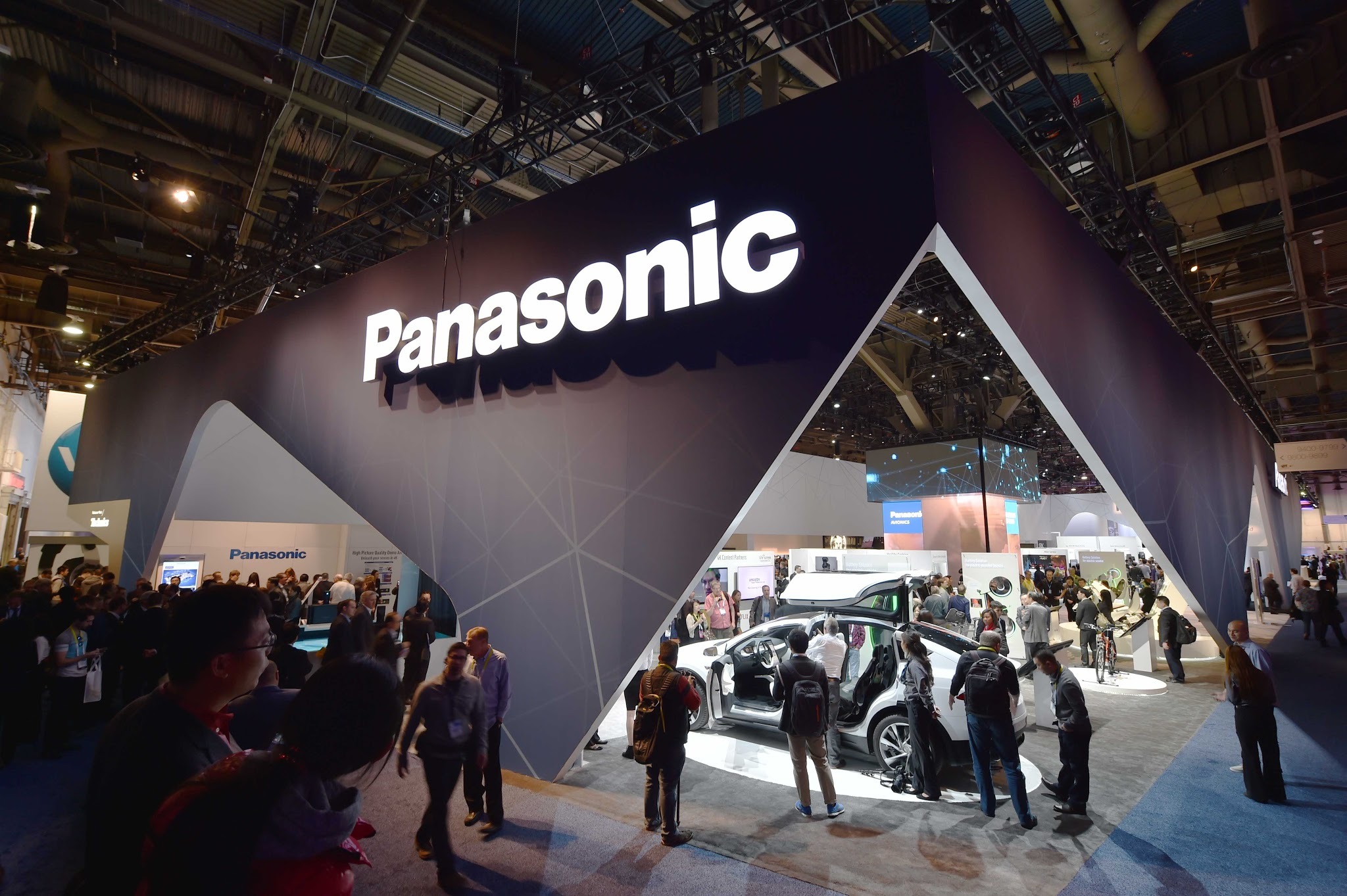
Panasonic offered several glimpses of those possibilities at CES in January. Fiat Chrysler’s semi-autonomous Portal concept car featured a Panasonic touchscreen with facial and voice recognition. Panasonic also revealed a new system with a head-up display and augmented reality that’s designed to replace the traditional instrument cluster and many of the car’s physical controls. Some speculated that it was a preview of Model 3’s user interface. A few days later, Panasonic CEO Kazuhiro Tsuga said in an interview, “We are deeply interested in Tesla’s self-driving system. We are hoping to expand our collaboration by jointly developing devices for that, such as sensors.”
Meanwhile, Panasonic’s collaboration with Tesla on batteries gives it a large stake in the potential profits as electrification gathers momentum. Panasonic is one of the largest battery manufacturers in the world, and it plans to invest $1.6 billion in Tesla’s Gigafactory. And looking back, in 2007 Panasonic began working with Tesla on the Roadster and has established a strong track record supporting Tesla over the past decade — even investing $30 million with Tesla at a critical juncture (in 2010) in order to develop lithium-ion battery cells for its forthcoming Model S sedan.
A lot has changed since those early days. Nevertheless, global electric vehicle sales are still hovering around 1% of the market. That said, there are many reasons to expect a breakout soon. Orders for Tesla’s upcoming Model 3 keep growing, and legacy automakers from VW to BMW to Ford are responding with plans for new electric models.
“The future is definitely electric, no question in my mind,” Gebhardt said. “What is the future timeline? Is it 10 years, 15 years, 40 years? It’s just a matter of what the adoption hits at the scale that makes this a slam dunk… We’re pretty bullish on the fact that this is a space that will continue to grow and there’s value there.”
Gebhardt conceded that EV adoption is slow in the US, a trend that may continue now that the federal government has shifted from supporting electrification to trying to revive the elderly fossil fuel industries. However, he characterizes this as “a short-term problem,” and points out that it’s a very different scene in China, the world’s largest car market. “If they adopt in a big way, that changes the balance of where electric is today versus where it will be going.”
Panasonic’s increasing investment in auto tech is already paying off, according to Nikkei Asian Review. At a recent financial briefing, President Kazuhiro Tsuga said the company is expecting an increase in net profit in fiscal year 2017, its first gain in two years, largely because of strong growth in EV batteries and other auto tech-related products. “We are confident we can achieve increases both in sales and profit for the year through March 2018 and later years,” he said.
Infographic
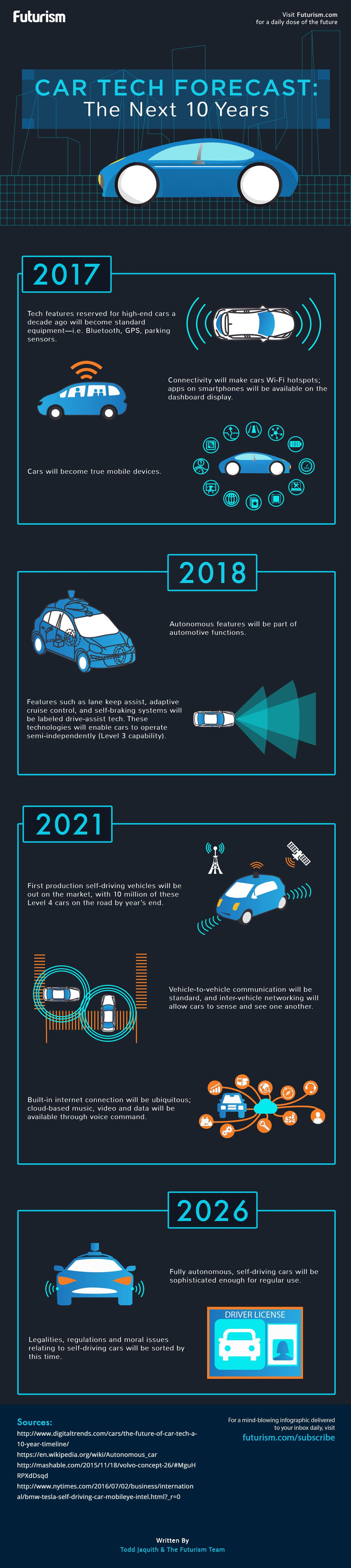
What auto tech opportunities are coming in the next decade? Check out this infographic for a few possibilities…
Sources: Business Insider, Nikkei Asian Review / Infographic: Futurism





Elon Musk
Elon Musk just roasted Sam Altman’s Tesla Roadster cancellation
“And you forgot to mention act 4, where this issue was fixed and you received a refund within 24 hours.
But that is in your nature.”

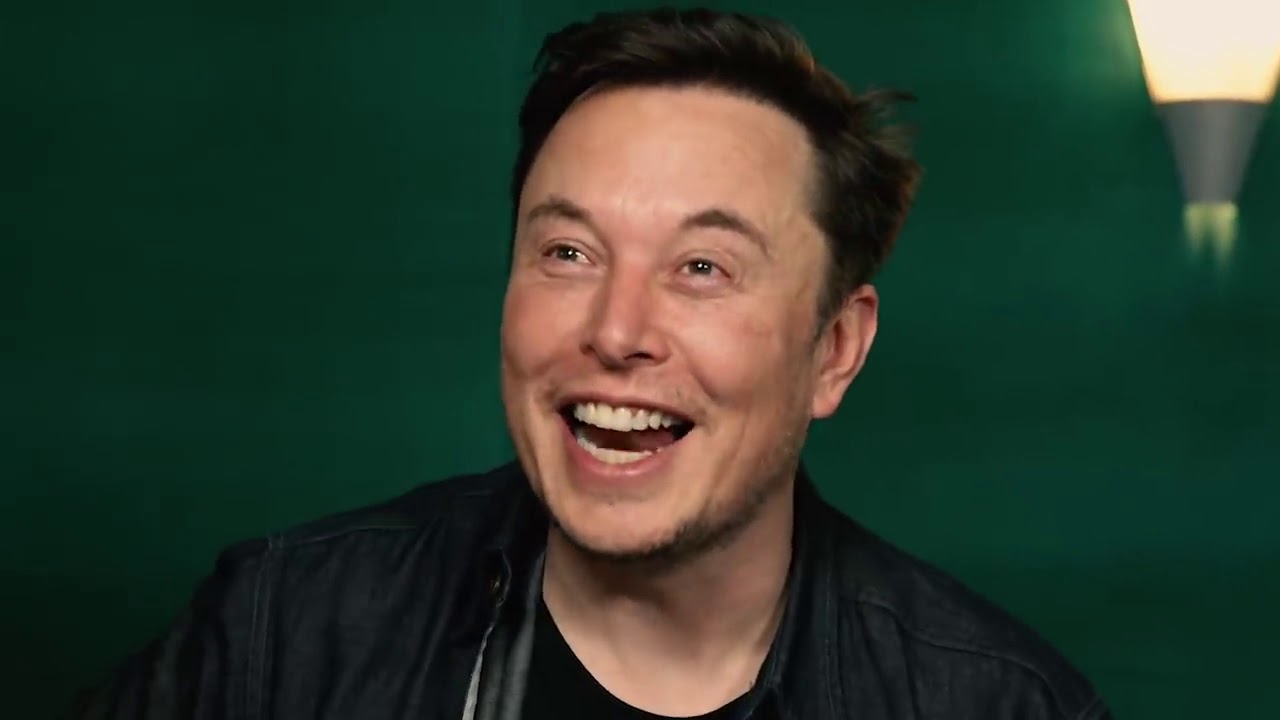
Elon Musk has responded to OpenAI CEO Sam Altman’s decision to cancel his Tesla Roadster reservation, which he revealed on X on Thursday.
We reported on Altman’s decision, which he called “A tale in three acts,” showing his confirmation email from Tesla back in 2018, an email requesting his $50,000 deposit back after canceling his order, and a notification from Google that the email he sent was not delivered.
A tale in three acts: pic.twitter.com/ClRZBgT24g
— Sam Altman (@sama) October 30, 2025
Musk did not take too kindly to the post from his tech rival, first referencing his position with OpenAI, and then confirming that Altman received his reservation deposit back within 24 hours:
And you forgot to mention act 4, where this issue was fixed and you received a refund within 24 hours.
But that is in your nature.
— Elon Musk (@elonmusk) November 1, 2025
OpenAI was started by Musk, Altman, and others back in 2015, and was geared toward being a non-profit company that would develop safe artificial intelligence that would be accessible to people.
However, Musk and Altman did not agree on the future of the company. Musk left, and Altman turned OpenAI into a for-profit company. This led to a variety of lawsuits and some very public spats between the two. Musk has called out Altman for turning the company into a for-profit, which has been his main source of criticism for his former colleague.
The Roadster has been hanging in the balance of Tesla’s manufacturing plans for seven years, but the company has made more indications that it will be unveiled later this year and will have some insane technologies.
Musk said on Friday in an episode of the Joe Rogan Experience Podcast that Tesla is “getting close to demonstrating the prototype.”
He said:
“Whether it’s good or bad, it will be unforgettable. My friend Peter Thiel once reflected that the future was supposed to have flying cars, but we don’t have flying cars. I think if Peter wants a flying car, he should be able to buy one…I think it has a shot at being the most memorable product unveil ever. [It will be unveiled] hopefully before the end of the year. You know, we need to make sure that it works. This is some crazy technology in this car. Let’s just put it this way: if you took all the James Bond cars and combined them, it’s crazier than that.”
Musk hinted that the vehicle could fly and would have “crazy technology” that would put James Bond’s vehicles to shame. It will be interesting to see what Tesla will unveil when the event happens and if it can come through on this mind-blowing teaser.
News
SpaceX successfully launches 100th Starlink mission of 2025
With 100 Starlink missions completed for 2025, space enthusiasts have noted that SpaceX has successfully launched 2,554 Starlink satellites so far this year.

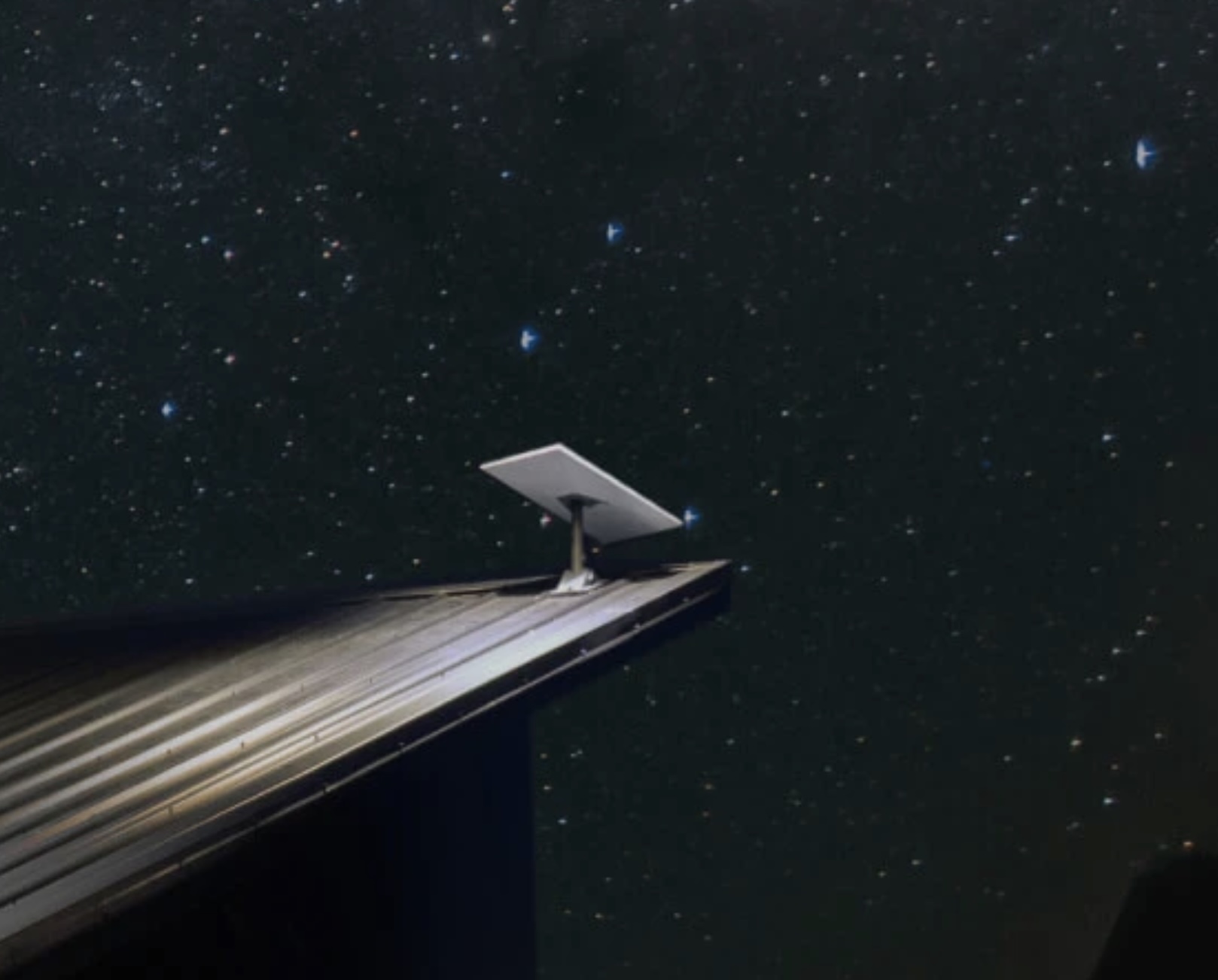
SpaceX achieved its 100th Starlink mission of the year on Friday, October 31, marking another milestone for 2025.
A Falcon 9 rocket carrying 28 Starlink broadband satellites successfully lifted off from Vandenberg Space Force Base in California at 4:41 p.m. ET, carrying another 28 Starlink satellites to Low Earth Orbit (LEO).
Falcon 9 booster’s 29th flight
Roughly 8.5 minutes after liftoff, the Falcon 9’s first stage touched down on the drone ship Of Course I Still Love You in the Pacific Ocean. This marked the booster’s 29th flight, which is approaching SpaceX’s reuse record of 31 missions.
This latest mission adds to SpaceX’s impressive 138 Falcon 9 launches in 2025, 99 of which were dedicated to Starlink, according to Space.com. The company’s focus on reusing boosters has enabled this breakneck pace, with multiple launches each week supporting both Starlink’s expansion and external customers.
Starlink’s network continues massive global expansion
Starlink remains the largest active satellite constellation in history, with more than 10,000 satellites launched, nearly 8,800 of which are currently active. SpaceX recently achieved Starlink’s 10,000-satellite milestone. With 100 Starlink missions completed for 2025, space enthusiasts have noted that SpaceX has successfully launched 2,554 Starlink satellites so far this year.
Starlink, which provides high-speed, low-latency internet connectivity even to the world’s most remote areas, has been proven to be life-changing technology for people across the globe. The service is currently operational in about 150 countries, and it currently has over 5 million subscribers worldwide. From this number, 2.7 million joined over the past year.
News
Tesla shares updated timeframe for Cybertruck FSD V14 release
The Cybertruck was expected to receive FSD V14 before the end of the month, but Tesla was not able to meet the target.
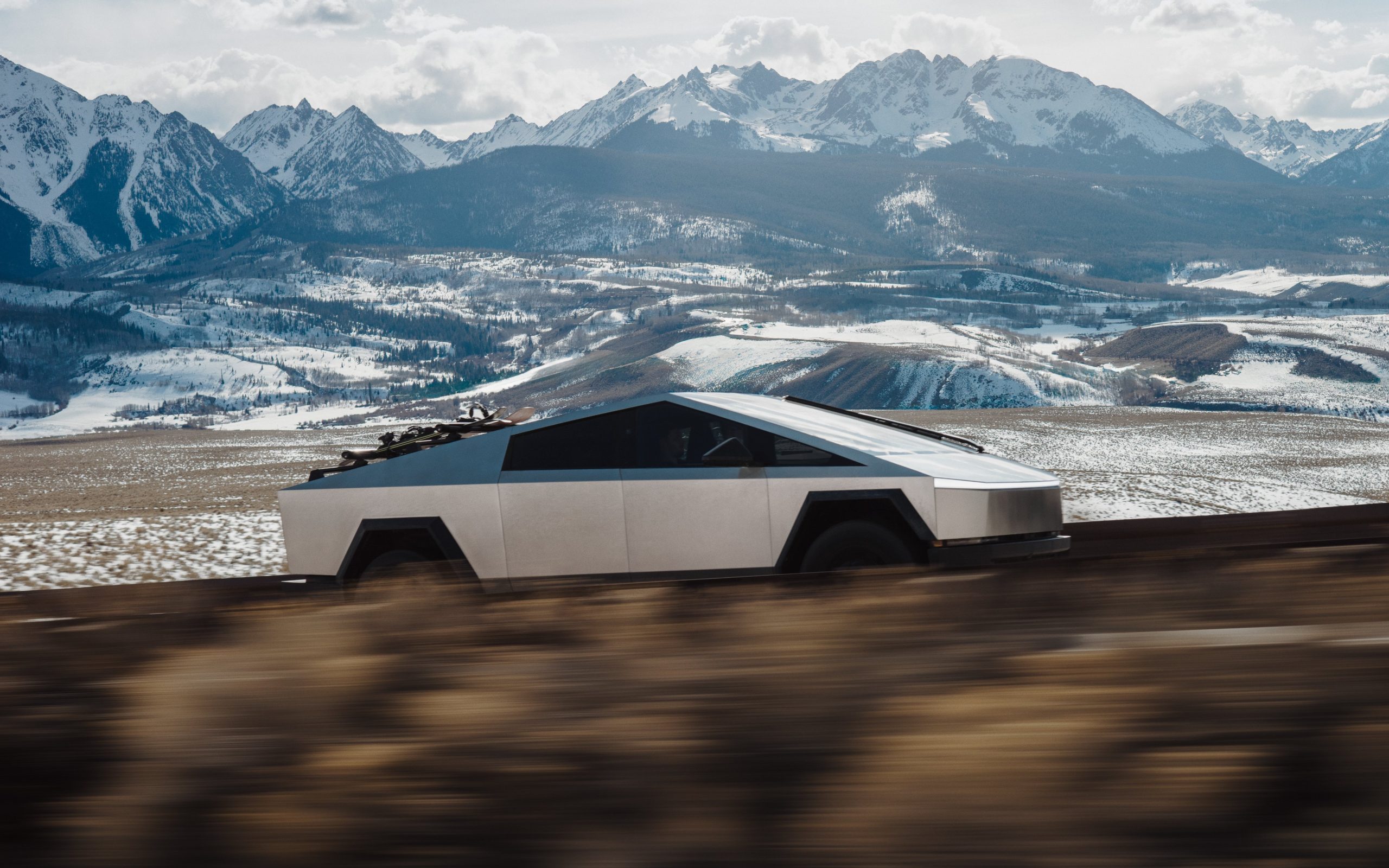
Tesla’s Full Self-Driving (FSD) V14 update for the Cybertruck could arrive this weekend, as per recent comments from Director of Autopilot Software and VP of AI Ashok Elluswamy.
The Cybertruck was expected to receive FSD V14 before the end of the month, but Tesla was not able to meet the target.
Cybertruck FSD V14
Considering the extended wait for FSD V14, it was no surprise that several Cybertruck owners were asking for updates about the system’s rollout to the all-electric pickup truck on Friday. These included the official Cybertruck X account, which responded to Elluswamy’s end of month estimate with “I only see trick. Where is my treat.”
This prompted a response from the AI executive, who replied with, “Sorry, pushing for early access Cyber release over the weekend.” This means that if all goes well, Cybertruck owners would be able to experience FSD V14 very soon. Some, however, are wondering if Tesla would go straight to V14.2 for the Cybertruck’s FSD V14 update, or if the vehicle will receive V14.1 first.
Tesla pushes to unify FSD experience across its lineup
The upcoming Cybertruck rollout represents the next step in Tesla’s efforts to roll out FSD capabilities across all of its vehicles. FSD V14 is a notable step forward for the company’s AI-driven self driving system, with features like Mad Max mode getting positive reviews from longtime Full Self Driving testers.
For the Cybertruck, the FSD V14 update would mark one of its first major over-the-air upgrades for the vehicle. Likely due to its size, the Cybertruck tends to receive FSD updates later than the S3XY lineup, which is quite surprising considering that the all-electric pickup truck is a premium-priced vehicle that is home to some of Tesla’s most advanced technologies.

Elon Musk just roasted Sam Altman’s Tesla Roadster cancellation

SpaceX successfully launches 100th Starlink mission of 2025

Tesla shares updated timeframe for Cybertruck FSD V14 release


-
 News2 weeks ago
Elon Musk confirms Tesla FSD V14.2 will see widespread rollout
-
 News2 weeks ago
Tesla might be doing away with a long-included feature with its vehicles
-
 News2 weeks ago
Tesla updates fans on its plans for the Roadster
-
 Elon Musk2 weeks ago
Elon Musk: Grok 5 now has a 10% chance of becoming world’s first AGI
-
 News2 weeks ago
Tesla is ramping up its hiring for the Cybercab production team
-
 News2 weeks ago
Tesla rolled out a new feature with FSD v14 to fix a major complaint
-
 Elon Musk2 weeks ago
Elon Musk hits back at former Tesla employee who disagrees with pay package
-
 News2 weeks ago
Tesla just made Service even easier and more convenient