
News
Tesla VP Grace Tao explains China’s Model 3 and Model Y price reductions

After a challenging December, Tesla China adopted a number of strategies designed to improve its vehicle sales in the country. Among these was a price reduction on the domestically-produced Model 3 sedan and Model Y crossover. Recent comments from Tesla VP Grace Tao have now provided some insights into these price adjustments.
In a recent interview with local Chinese media, Tao was asked about Tesla China’s rather volatile pricing strategy. Similar to Tesla in the United States, Tesla China saw a number of price adjustments over the past year. This has resulted in some netizens in the country stating that Tesla’s pricing strategy is “too casual.”
Addressing the inquiry, Grace Tao explained that the pricing strategy of Tesla China’s vehicles is “actually a forecast of the company’s cost changes in the next period of time.” She also explained that the landscape had changed now, at least compared to the last year due to the end of the pandemic.
“The biggest difference between 2023 and last year is that the epidemic is basically over, and we believe that the supply chain has largely returned to normal and will not experience the various unpredictable shortages of materials that have occurred in previous years, leading to uncertainty in costs. In my personal opinion, price adjustments reflect our good planning for the supply chain to a certain extent. We expect what the vehicle cost will be approximately and then make such adjustments according to this expectation,” the executive said.
The Tesla VP also addressed the issue of some consumers in China who were upset that they bought vehicles before the recent round of price reductions took effect. So notable were the reactions of some consumers that protests were reportedly held in a number of Tesla stores.
“Maybe some consumers say that ‘I bought it yesterday, and you can’t suddenly change the cost overnight,’ but the fact is that no company calculates the cost every day, but rather calculates it on a time period. At the same time, the price of industrial products cannot be immediately reflected in the terminal products. Some raw materials may still be contracted a few months ago, so it actually has a certain lag.
“In addition, the price of a product is not only affected by its own cost, but also by the market demand and competition. If there is a change in the market demand or competition, it will also affect the price of the product. Therefore, the price adjustment of a product is not a simple matter. It is a comprehensive consideration of the enterprise’s own cost, market demand and competition,” the executive said.
Overall, the executive clarified that Tesla China’s price adjustments are not casual at all. Instead, they are done with a clear understanding of the company’s costs, demand in the market, and competitors. So far, however, Grace Tao noted that Tesla China has not had to change its strategy due to market demand or competition, which bodes well for the company’s footing in the country’s auto market. The executive also highlighted that after this recent round of price reductions, the cost of the domestically-produced Model 3 and Model Y should become more stable.
“In the past, Tesla has made several larger price adjustments due to external factors that have had an impact on costs. For example, when we became a domestic car(maker), the price naturally decreased compared to a pure import, at least the tariff was saved by 15%. For example, after our supply chain stabilized, it would definitely be lower than before when it was shipped from abroad. Tesla’s supply chain localization rate is now 95%, so theoretically, there is not much room for improvement. Therefore, I think after this price adjustment, the price should be relatively stable.
“Tesla’s logic is very simple. When the cost is calculated to have changed, such as changing raw materials, we will immediately increase or decrease the price. Actually, Tesla’s logic is very simple. Consumers seem to think that the price drop was relatively large compared to last month, but in fact, the price rose last month, and compared to the costs before the price increase, the difference is not large,” she said.
The Teslarati team would appreciate hearing from you. If you have any tips, contact me at maria@teslarati.com or via Twitter @Writer_01001101.





News
SpaceX successfully launches 100th Starlink mission of 2025
With 100 Starlink missions completed for 2025, space enthusiasts have noted that SpaceX has successfully launched 2,554 Starlink satellites so far this year.

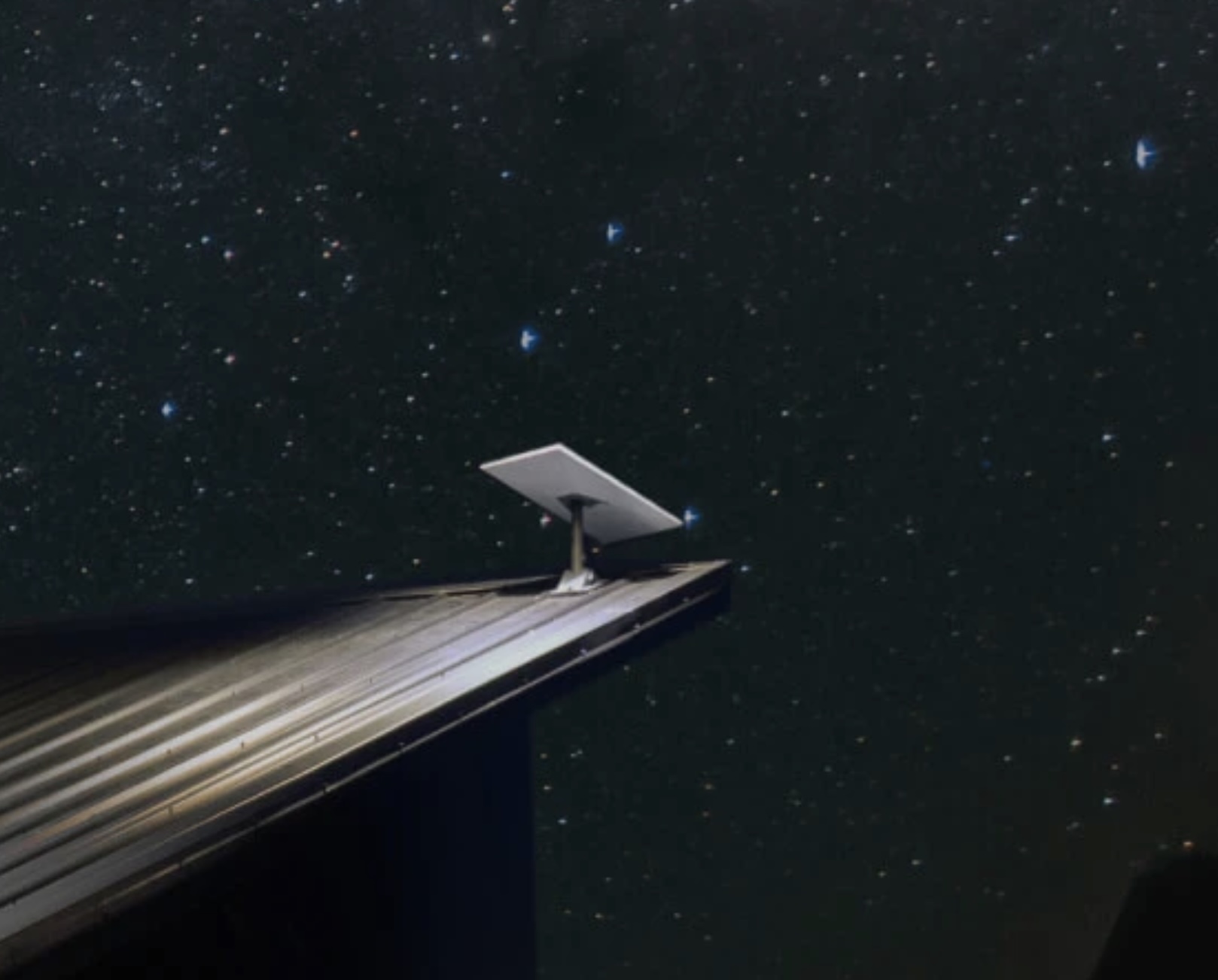
SpaceX achieved its 100th Starlink mission of the year on Friday, October 31, marking another milestone for 2025.
A Falcon 9 rocket carrying 28 Starlink broadband satellites successfully lifted off from Vandenberg Space Force Base in California at 4:41 p.m. ET, carrying another 28 Starlink satellites to Low Earth Orbit (LEO).
Falcon 9 booster’s 29th flight
Roughly 8.5 minutes after liftoff, the Falcon 9’s first stage touched down on the drone ship Of Course I Still Love You in the Pacific Ocean. This marked the booster’s 29th flight, which is approaching SpaceX’s reuse record of 31 missions.
This latest mission adds to SpaceX’s impressive 138 Falcon 9 launches in 2025, 99 of which were dedicated to Starlink, according to Space.com. The company’s focus on reusing boosters has enabled this breakneck pace, with multiple launches each week supporting both Starlink’s expansion and external customers.
Starlink’s network continues massive global expansion
Starlink remains the largest active satellite constellation in history, with more than 10,000 satellites launched, nearly 8,800 of which are currently active. SpaceX recently achieved Starlink’s 10,000-satellite milestone. With 100 Starlink missions completed for 2025, space enthusiasts have noted that SpaceX has successfully launched 2,554 Starlink satellites so far this year.
Starlink, which provides high-speed, low-latency internet connectivity even to the world’s most remote areas, has been proven to be life-changing technology for people across the globe. The service is currently operational in about 150 countries, and it currently has over 5 million subscribers worldwide. From this number, 2.7 million joined over the past year.
News
Tesla shares updated timeframe for Cybertruck FSD V14 release
The Cybertruck was expected to receive FSD V14 before the end of the month, but Tesla was not able to meet the target.
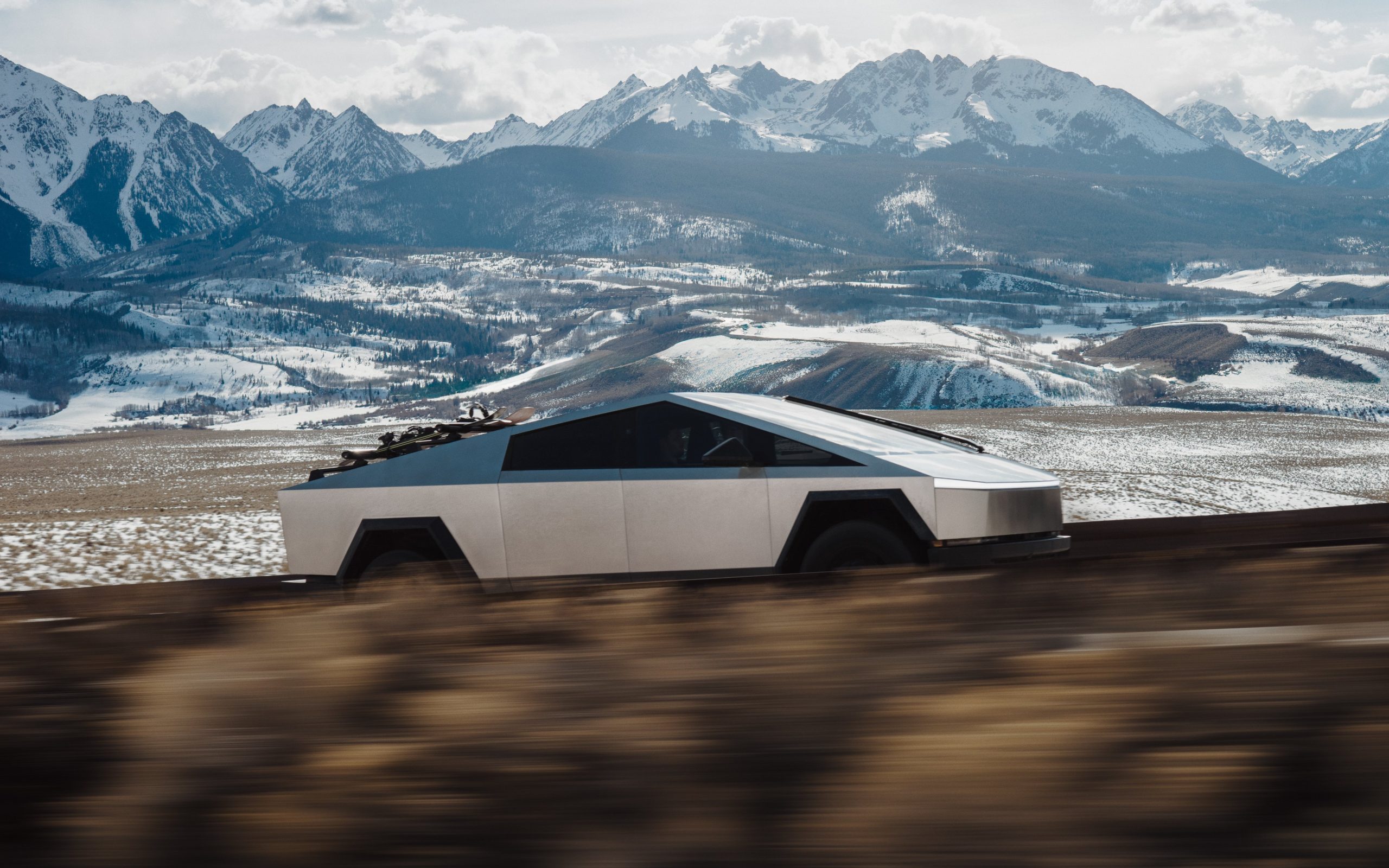
Tesla’s Full Self-Driving (FSD) V14 update for the Cybertruck could arrive this weekend, as per recent comments from Director of Autopilot Software and VP of AI Ashok Elluswamy.
The Cybertruck was expected to receive FSD V14 before the end of the month, but Tesla was not able to meet the target.
Cybertruck FSD V14
Considering the extended wait for FSD V14, it was no surprise that several Cybertruck owners were asking for updates about the system’s rollout to the all-electric pickup truck on Friday. These included the official Cybertruck X account, which responded to Elluswamy’s end of month estimate with “I only see trick. Where is my treat.”
This prompted a response from the AI executive, who replied with, “Sorry, pushing for early access Cyber release over the weekend.” This means that if all goes well, Cybertruck owners would be able to experience FSD V14 very soon. Some, however, are wondering if Tesla would go straight to V14.2 for the Cybertruck’s FSD V14 update, or if the vehicle will receive V14.1 first.
Tesla pushes to unify FSD experience across its lineup
The upcoming Cybertruck rollout represents the next step in Tesla’s efforts to roll out FSD capabilities across all of its vehicles. FSD V14 is a notable step forward for the company’s AI-driven self driving system, with features like Mad Max mode getting positive reviews from longtime Full Self Driving testers.
For the Cybertruck, the FSD V14 update would mark one of its first major over-the-air upgrades for the vehicle. Likely due to its size, the Cybertruck tends to receive FSD updates later than the S3XY lineup, which is quite surprising considering that the all-electric pickup truck is a premium-priced vehicle that is home to some of Tesla’s most advanced technologies.
News
“Tesla Ride” program lets riders experience FSD and Grok AI in real-world demos
The initiative aims to bring supervised Full Self-Driving demos and Grok AI-guided experiences to consumers in real world trips.
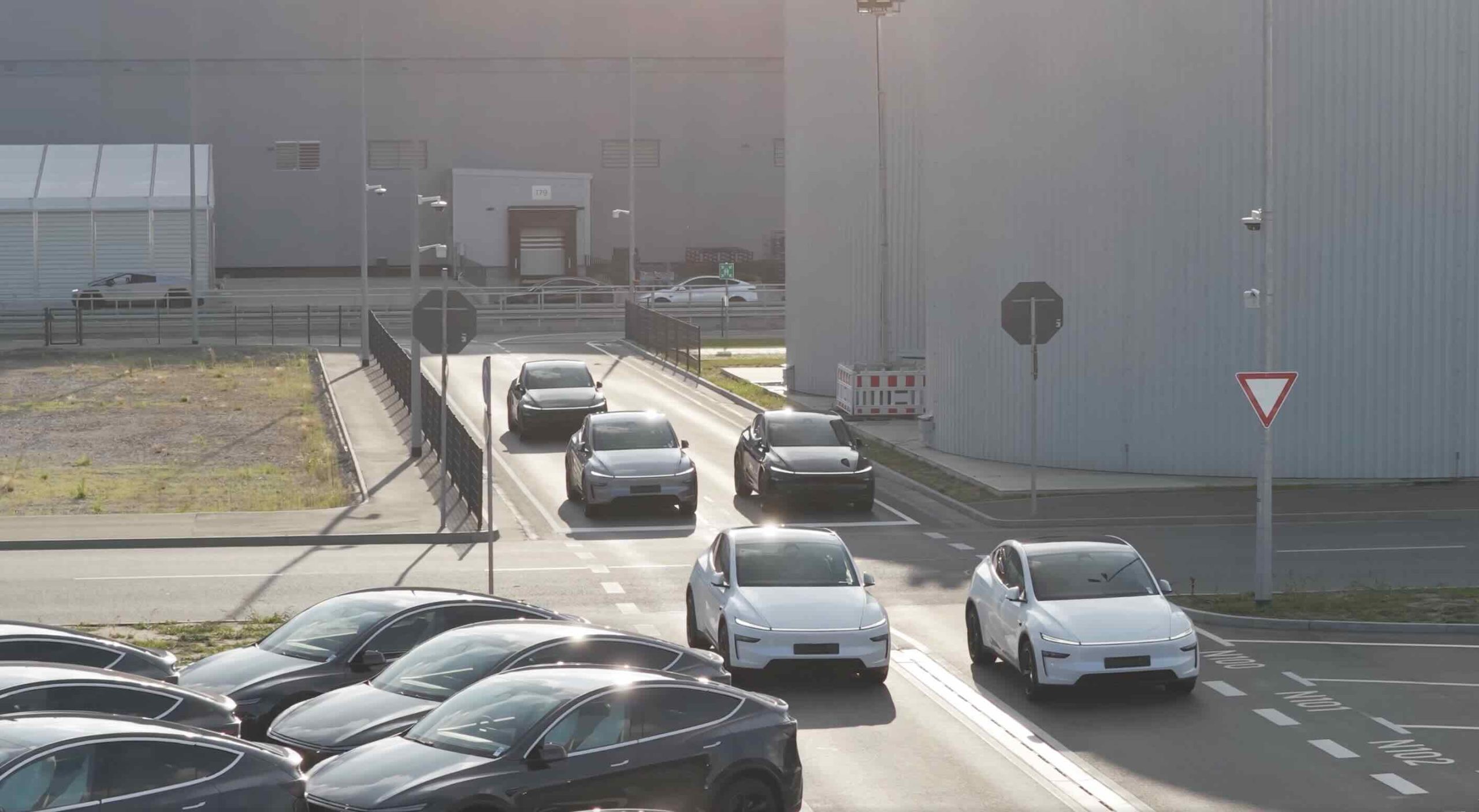
Tesla has launched a new service designed to make its Full Self-Driving (FSD) technology familiar to all commuters.
Dubbed the “Tesla Ride” program, the initiative aims to bring supervised Full Self-Driving demos and Grok AI-guided experiences to consumers in real world trips.
How Tesla Ride Works
As per the official Tesla Ride website, the session will allow participants to sit in the driver’s seat while a Tesla Advisor rides shotgun as co-pilot. The Tesla Advisor then guides riders through the company’s latest supervised FSD features, comfort settings, and in-car entertainment. Participants would also be able to interact with Grok AI in the vehicles. Grok will be capable of answering questions during the ride, and it will even tell stories along the way.
Tesla noted, however, that Tesla Ride sessions are capped at 45 minutes each, and it requires participants to have a valid driver’s license and insurance. Interested participants are also advised to call beforehand so they can schedule their Tesla Rides.
Marketing push and reach
The Tesla Ride program runs across several markets from October into November, and in some locations into the end of December 2025. Participating states are numerous, from Michigan to Virginia to Illiois, Nevada, and California, among others. A look at the official webpage for Tesla Ride shows that the company is still taking a very cautious approach with the program, with disclaimers clearly stating that FSD Supervised does not make Teslas autonomous just yet.
Tesla’s focus on safety with FSD was highlighted recently by Senior Vice President for Automotive Tom Zhu. “Elon said it in 2021: “For self-driving, even if the road is painted completely wrong and a UFO lands in the middle of the road, the car still cannot crash and still needs to do the right thing.
“The prime directive for the autopilot system is: Don’t crash. That really overrides everything. No matter what the lines say or how the road is done, the thing that needs to happen is minimizing the probability of impact while getting you to your destination conveniently and comfortably,” the executive stated.

SpaceX successfully launches 100th Starlink mission of 2025

Tesla shares updated timeframe for Cybertruck FSD V14 release

“Tesla Ride” program lets riders experience FSD and Grok AI in real-world demos


-
 News2 weeks ago
Elon Musk confirms Tesla FSD V14.2 will see widespread rollout
-
 News2 weeks ago
Tesla might be doing away with a long-included feature with its vehicles
-
 News2 weeks ago
Tesla updates fans on its plans for the Roadster
-
 Elon Musk2 weeks ago
Elon Musk: Grok 5 now has a 10% chance of becoming world’s first AGI
-
 News2 weeks ago
Tesla is ramping up its hiring for the Cybercab production team
-
 News2 weeks ago
Multiple Tesla Cybercab units spotted at Giga Texas crash test facility
-
 Elon Musk2 weeks ago
Tesla will launch driverless rides in Las Vegas, but not where you think
-
 News2 weeks ago
Tesla rolled out a new feature with FSD v14 to fix a major complaint