
News
SpaceX’s first ever Block 5 booster gives one last hurrah, in photos

After helping SpaceX enter a new era of routine rocket reusability, the very first Falcon 9 Block 5 booster is officially nothing more than bits, pieces, and a few artificial reefs at the bottom of the Atlantic Ocean — intentionally destroyed to give SpaceX the confidence it needs to soon launch astronauts.
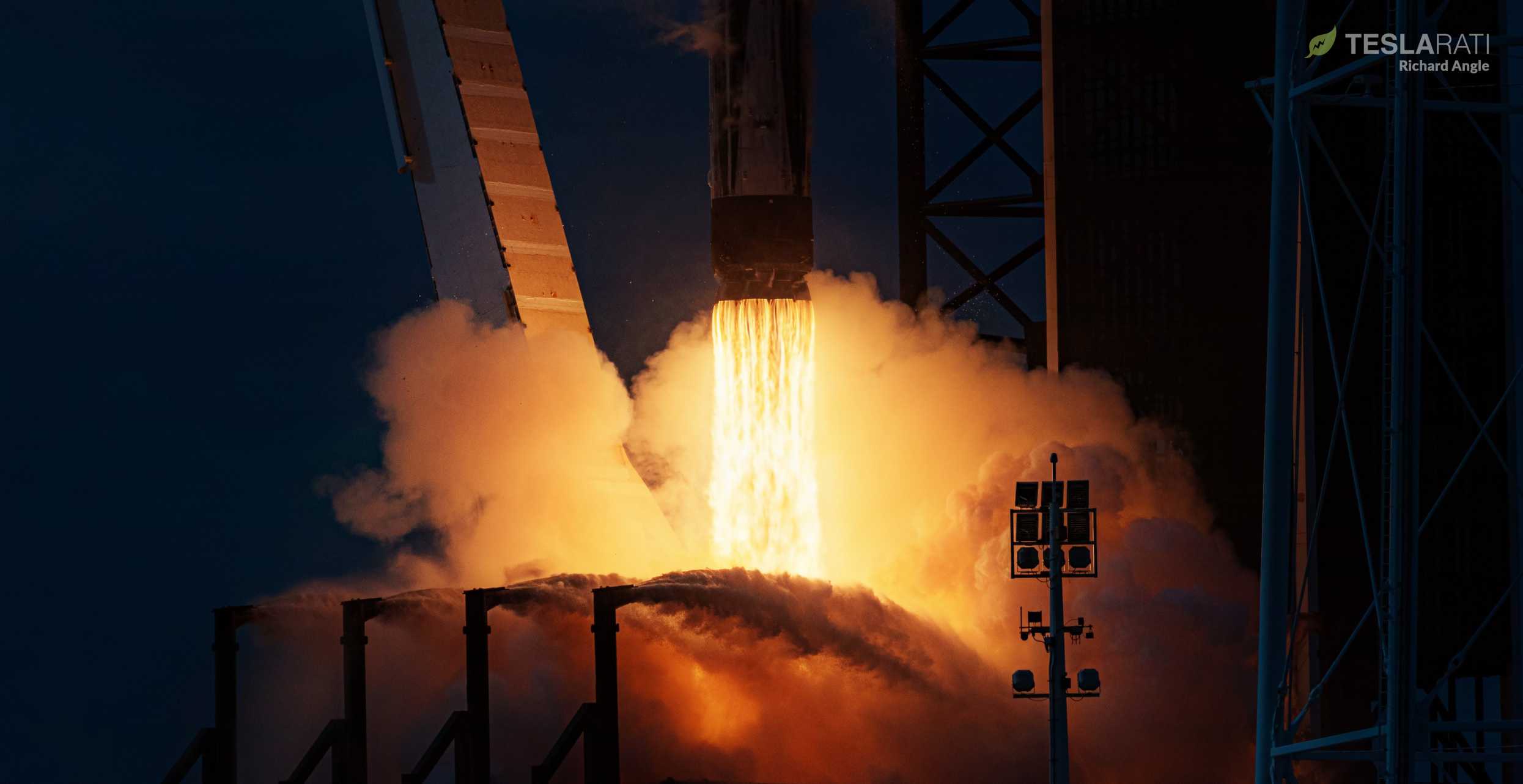
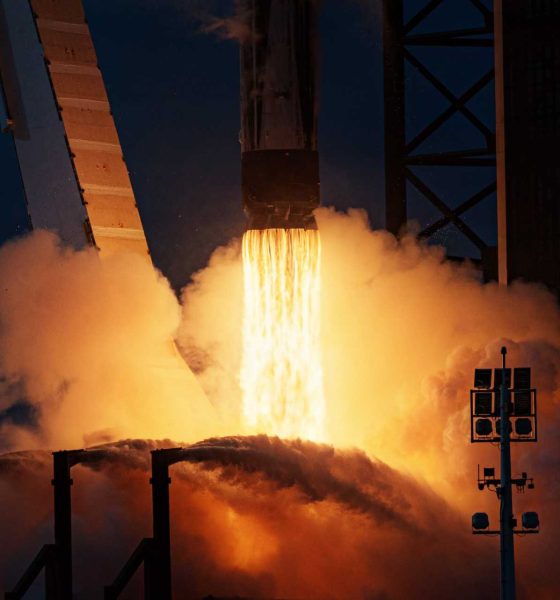
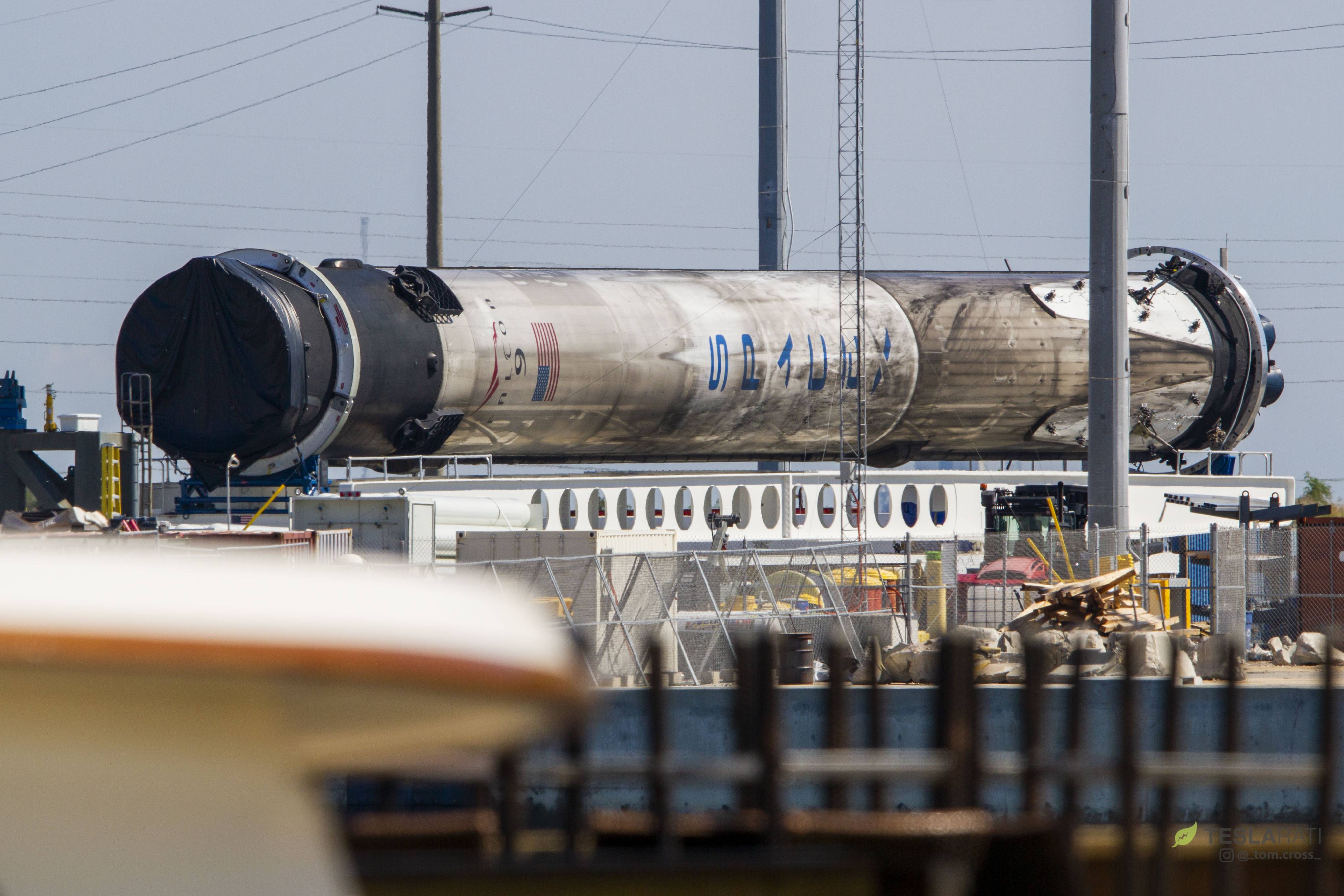
Captured on camera by Teslarati photographer Richard Angle, the upgraded Falcon 9 booster was able to give one last spectacular hurrah prior to its even more spectacular demise, returning fire to Kennedy Space Center (KSC) Launch Complex 39A for the first time in more than half a year. Lacking landing legs and grid fins, visible instead as comically stark outlines on the booster’s sooty exterior, Falcon 9 B1046 lifted off for the fourth and final time on January 19th, 2020.
In doing so, B1046 became the third orbital-class booster ever to fly launch four separate missions — a more than fitting end to the first in a line of upgraded Falcon 9 rockets that have brought with them major improvements in reusability and reliability. Nevertheless, a little over 90 seconds after lifting off for the fourth time, Falcon 9 B1046 – left behind after Crew Dragon successfully escaped the (simulated) failing rocket – yielded under intense off-nominal stresses, rupturing the booster’s propellant tanks and creating a vast fireball at least 300 meters (1000+ ft) in diameter.
Powered by nine Merlin 1D engines and capable of producing up to 7600 kN (1.7 million lbf) of thrust, Falcon 9 B1046 was extensively tested at SpaceX’s McGregor, Texas development facilities over a period of two or so months – unusually lengthy. The extra time was used to make sure that the first completed Block 5 booster – representing an almost clean-slate upgrade of the Falcon rocket family – was agreeing with SpaceX’s engineering models and expectations at all points.
The company likely spent several weeks or more performing numerous wet dress rehearsals (WDRs) — filling Falcon 9 B1046’s propellant tanks with liquid oxygen, refined kerosene (RP-1), helium, and nitrogen and verifying that the rocket was structurally sound and functioning smoothly. Once complete, SpaceX moved onto static fire testing, igniting the booster’s M1D engines for increasing periods of time. Finally, the company wrapped up the rocket and shipped it by road from Texas to Florida.
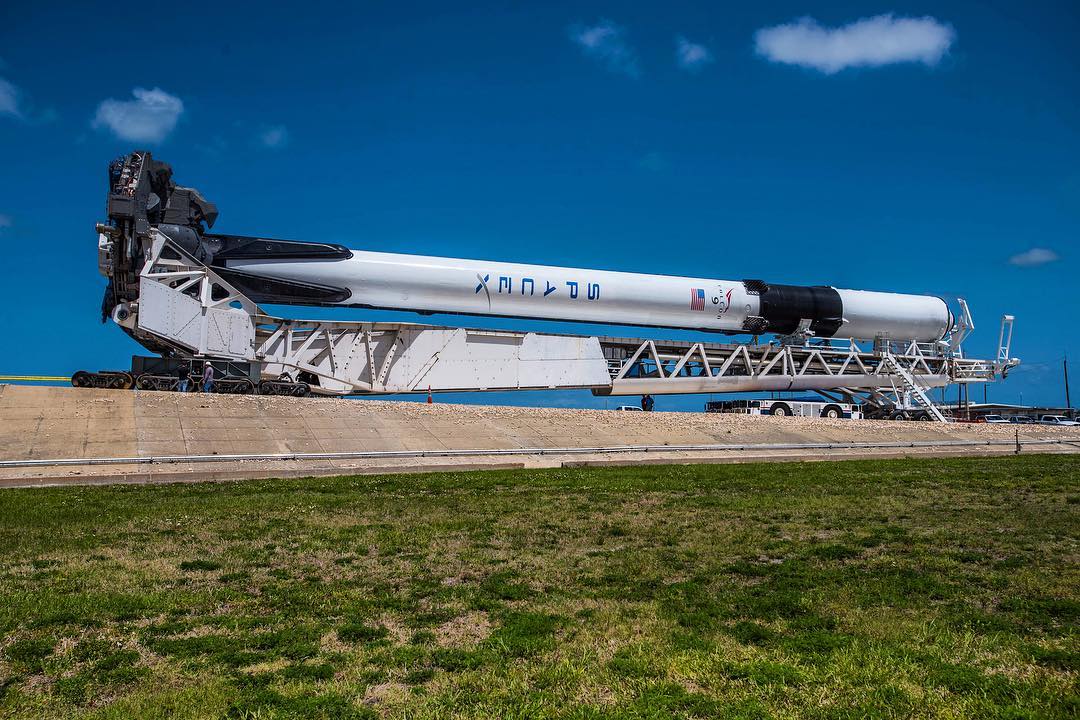
Shortly thereafter, the rocket was quickly prepared for flight and became the first Falcon 9 Block 5 booster to successfully launch and land in May 2018. Over the course of 2018, SpaceX debuted another five Block 5 boosters, while Falcon 9 B1046 became the first Block 5 booster to launch both twice and three times in August and December.
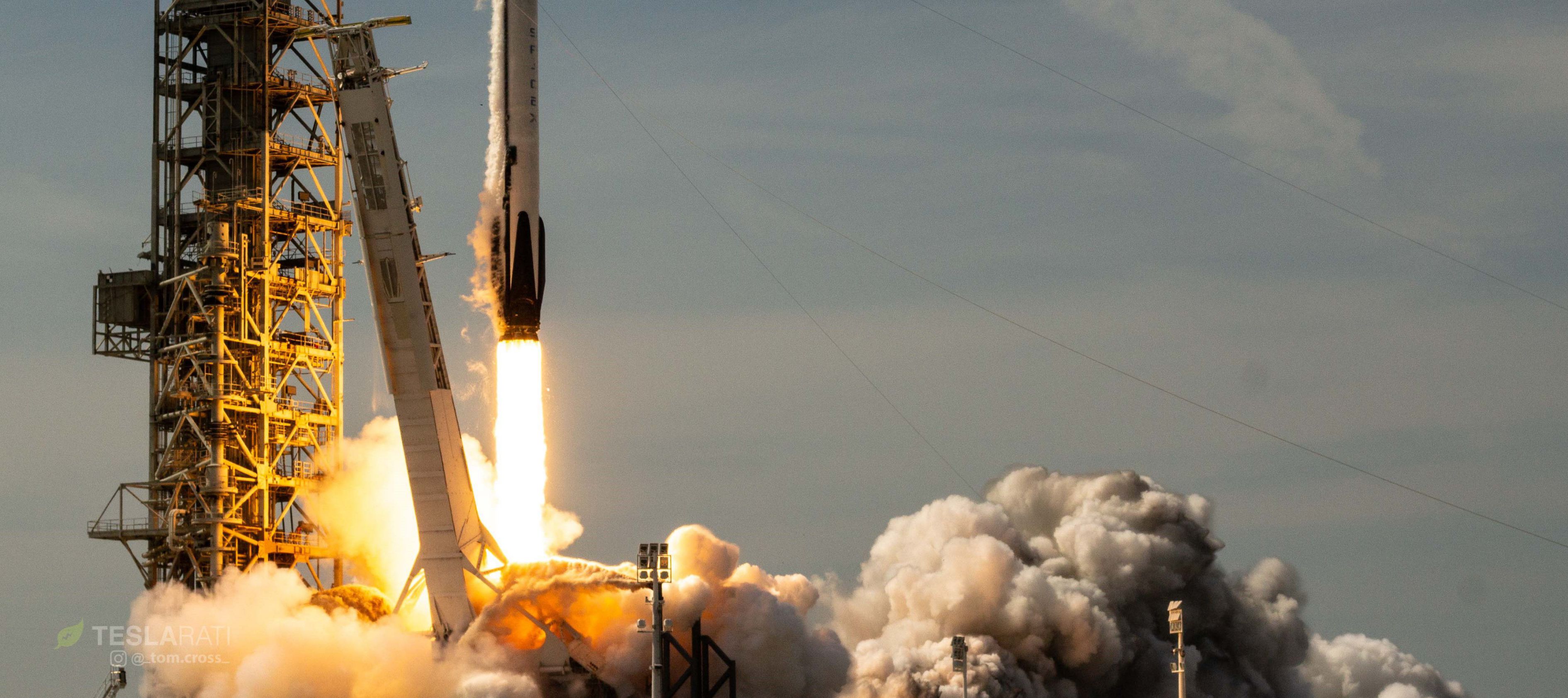
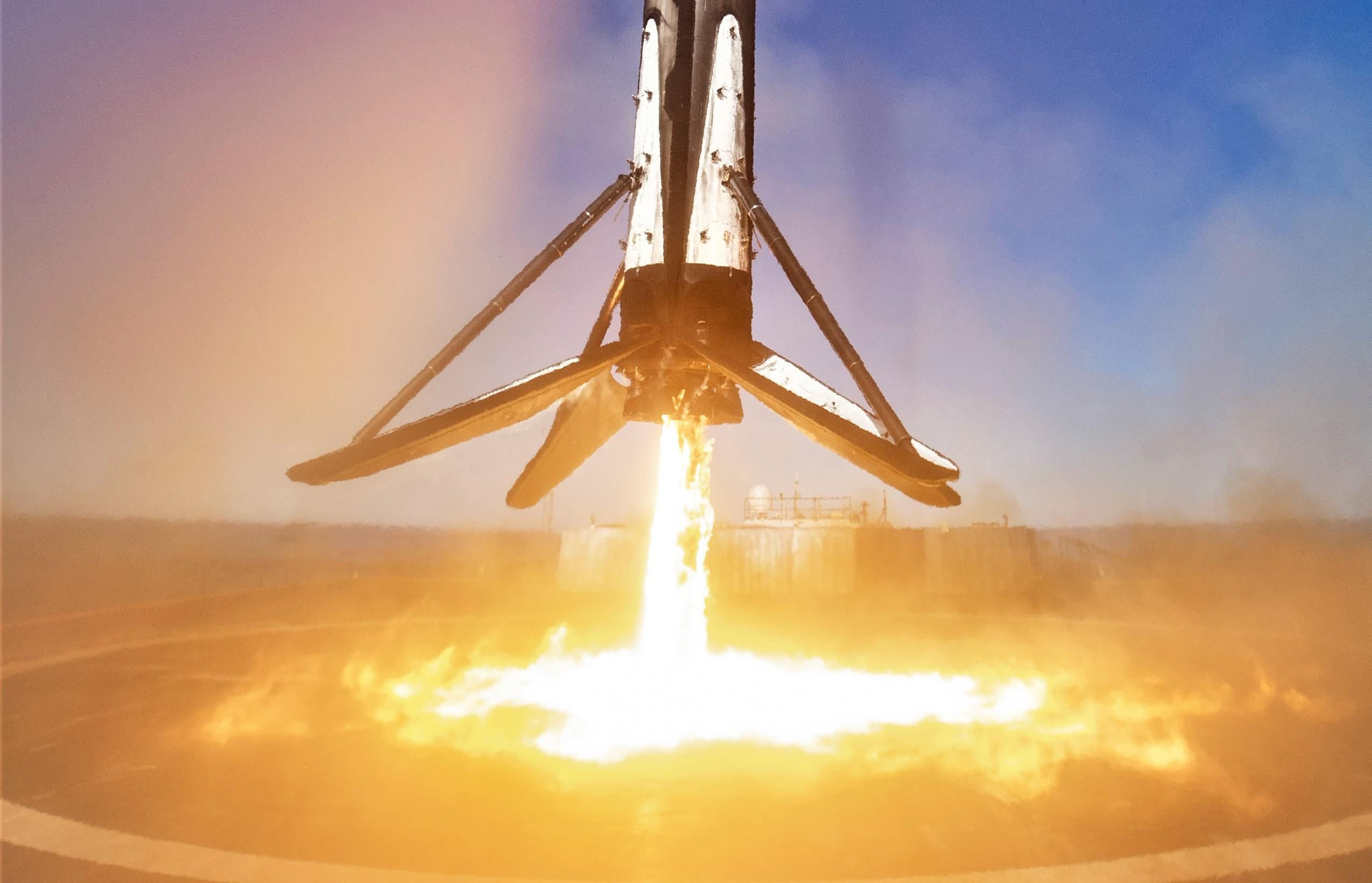
Finally, on January 19th, 2020, Falcon 9 B1046 lifted off for the fourth and last time, becoming the third SpaceX booster to do so in barely two months. Fittingly, B1046’s last launch occurred at Pad 39A, the same launch site it lifted off from for the first time back in May 2018. Carrying an expendable upper stage, Dragon trunk, and Crew Dragon capsule C205, B1046 could not have experienced a more perfect 90 or so seconds of uninterrupted flight. Interrupted, however, it would shortly thereafter become.
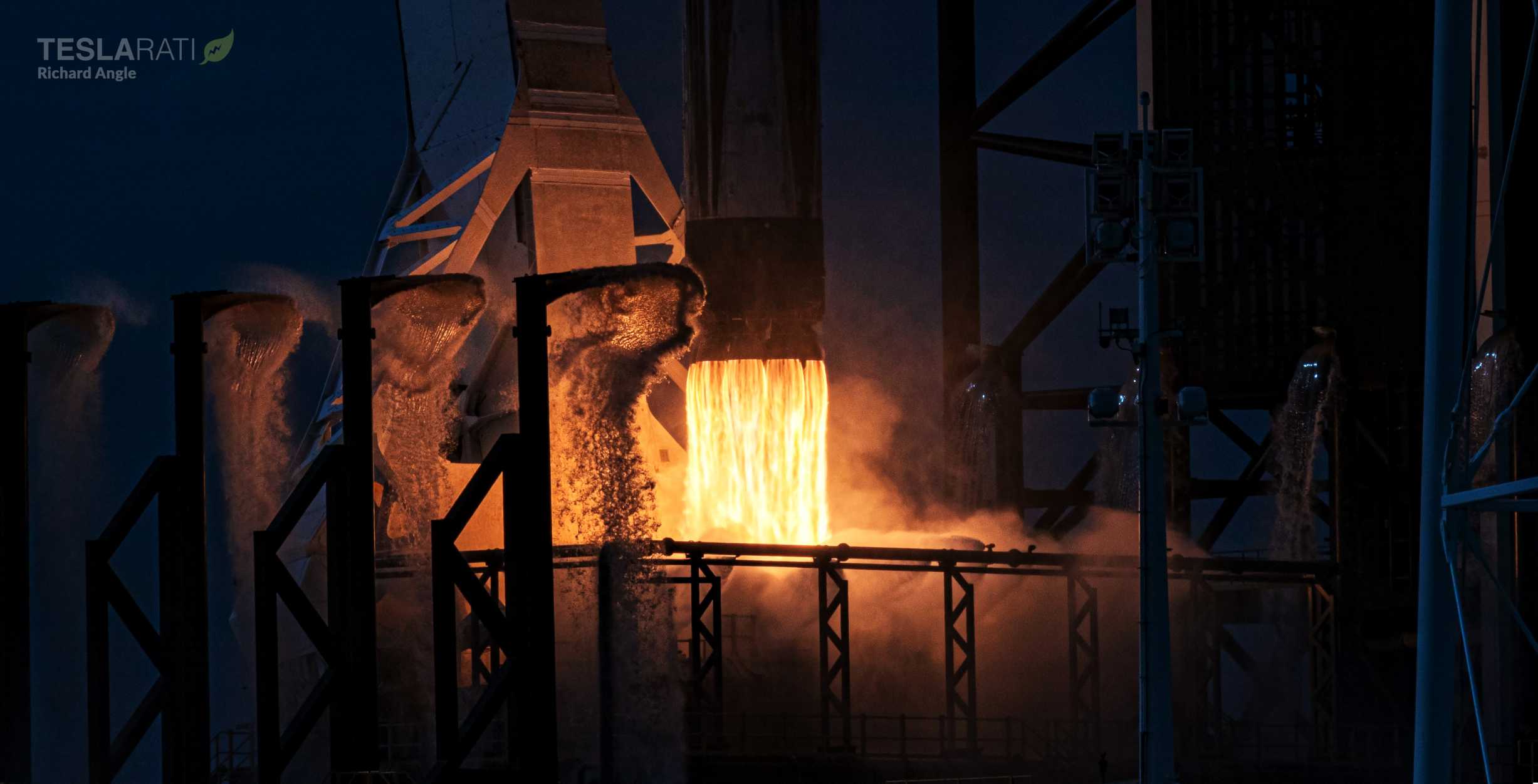
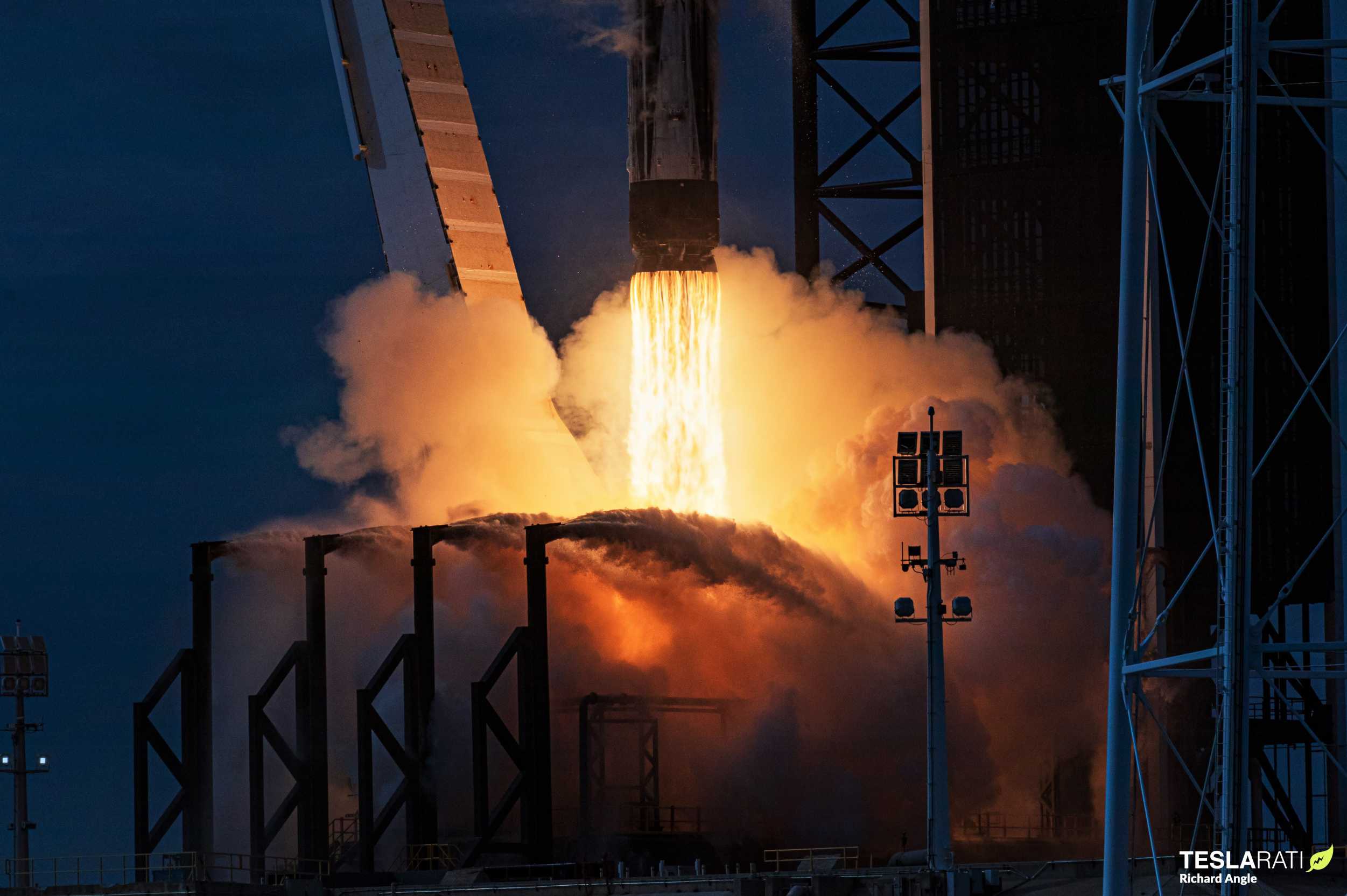
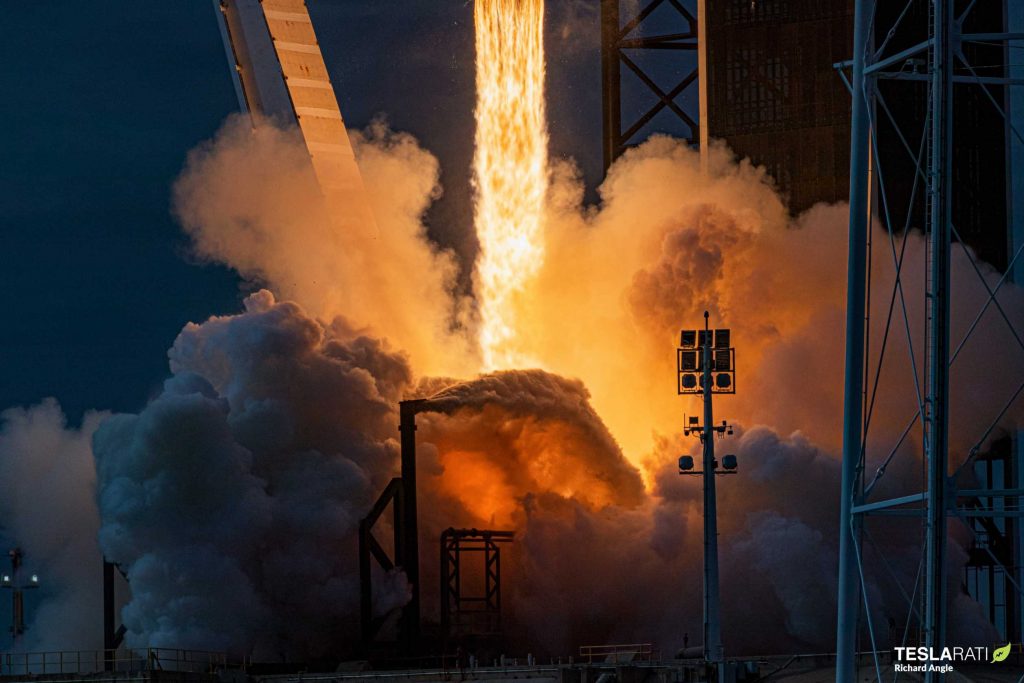
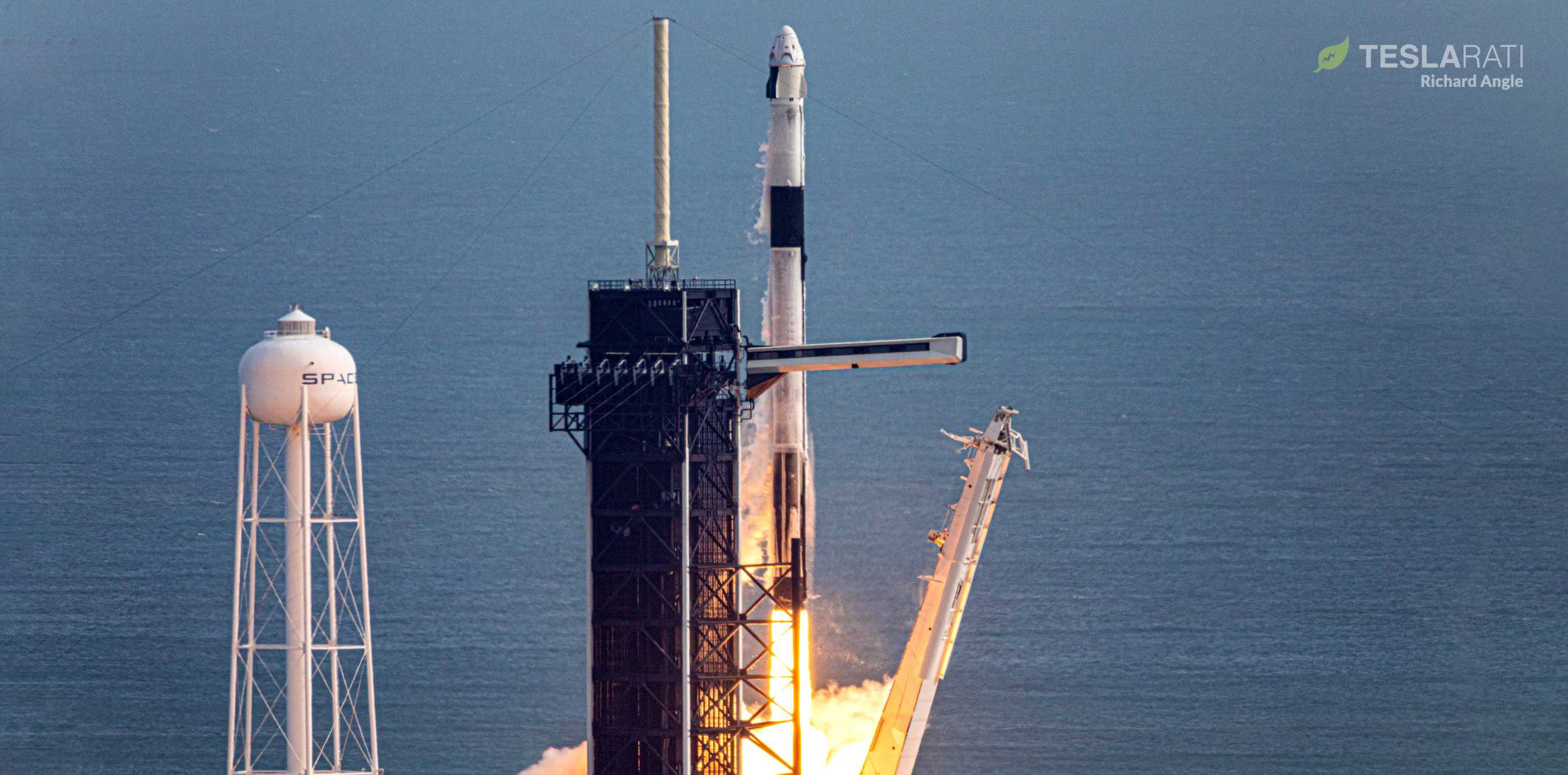
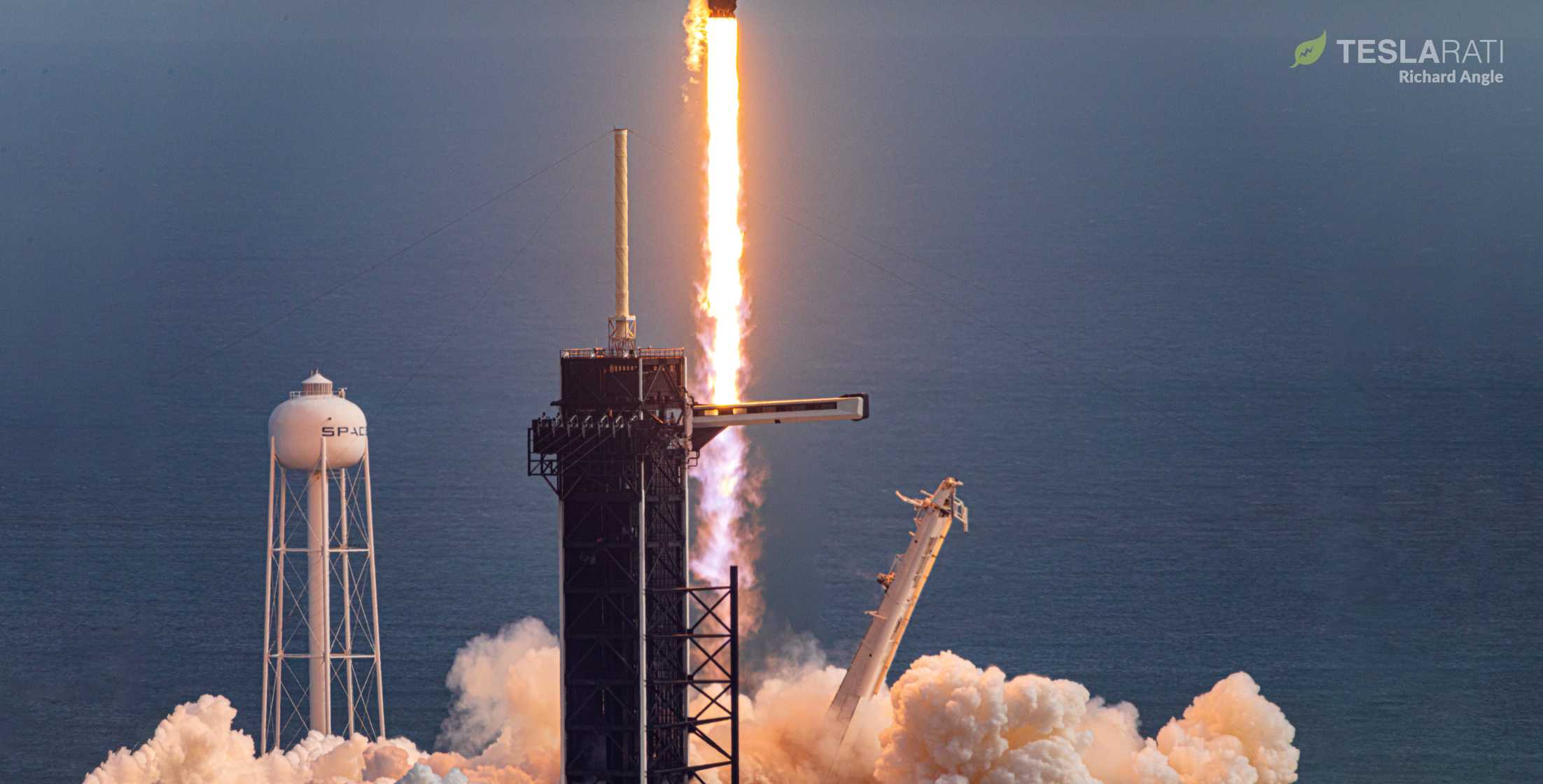
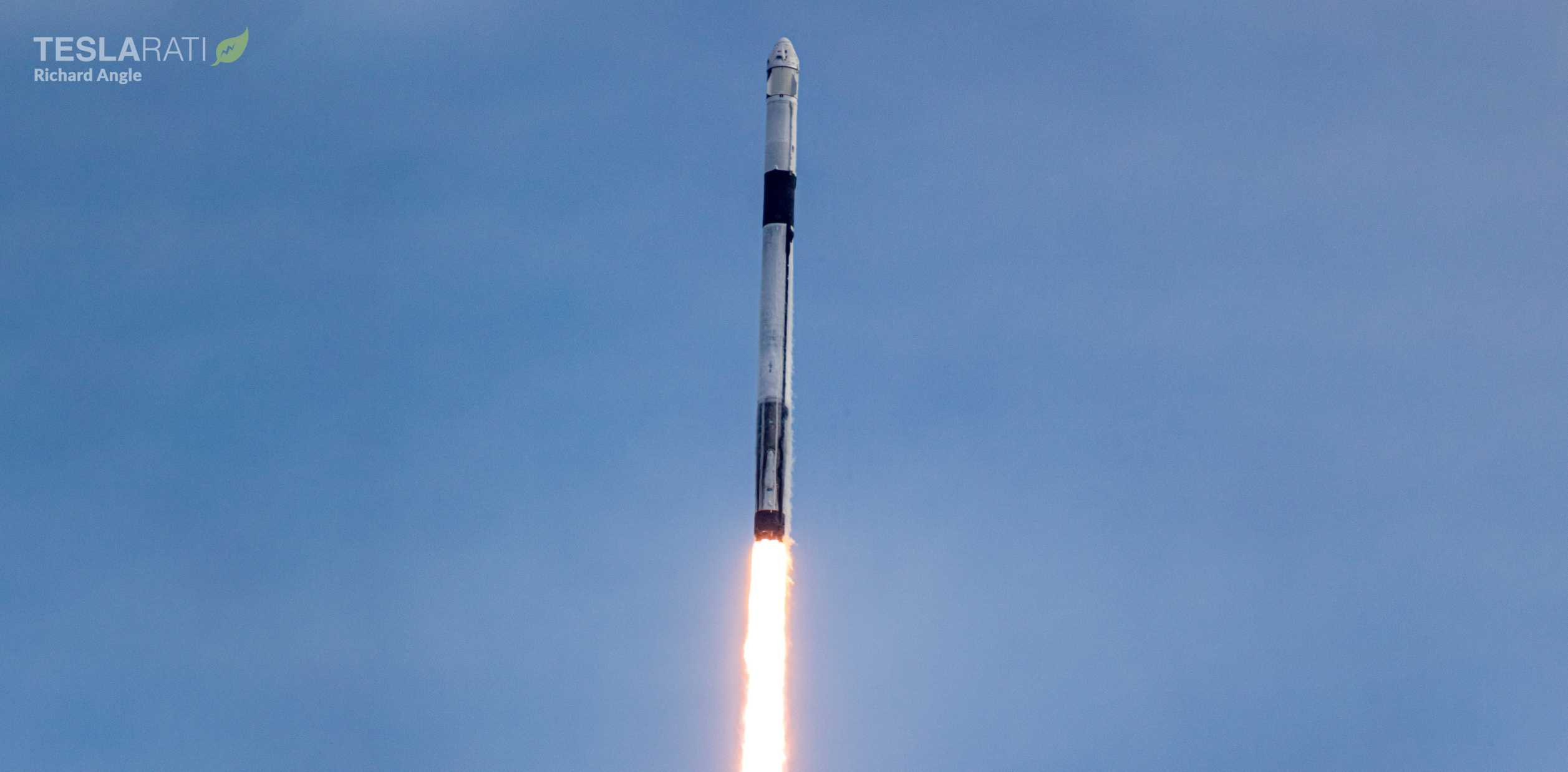
Around 85 seconds after liftoff, Falcon 9 B1046 shut off its Merlin 1D engines at the same time as Crew Dragon C205 ignited eight SuperDraco engines, briskly carrying the spacecraft several thousand feet away in just a handful of seconds. Now fully uncontrolled and rudely interrupted to a supersonic wall of air, B1046 found itself bent and contorted in ways – and under loads – it simply was not designed to survive. Seconds later, the booster’s pressurized propellant tanks were breached, releasing a rapidly dispersing cloud of fuel and oxidizer that almost instantly ignited, creating a fireball the size of several city blocks.
All things considered, not a bad way to go for a well-worn rocket.
Check out Teslarati’s Marketplace! We offer Tesla accessories, including for the Tesla Cybertruck and Tesla Model 3.







Elon Musk
Elon Musk just roasted Sam Altman’s Tesla Roadster cancellation
“And you forgot to mention act 4, where this issue was fixed and you received a refund within 24 hours.
But that is in your nature.”

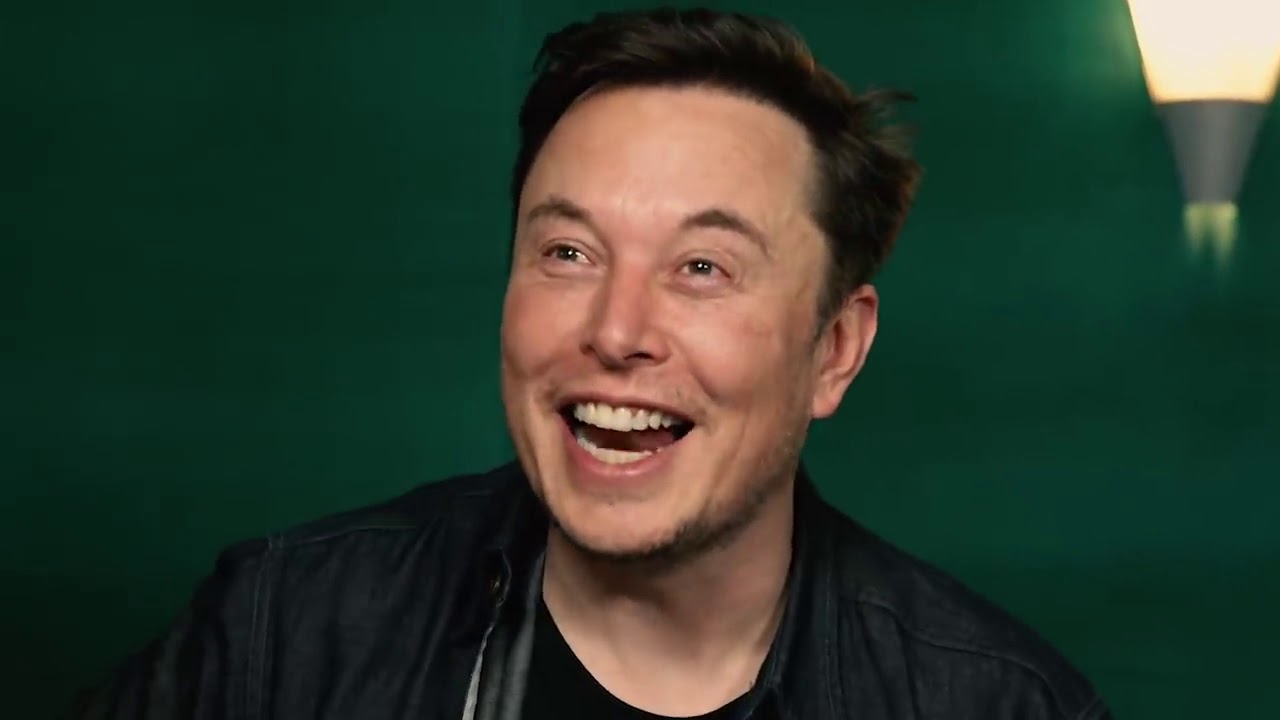
Elon Musk has responded to OpenAI CEO Sam Altman’s decision to cancel his Tesla Roadster reservation, which he revealed on X on Thursday.
We reported on Altman’s decision, which he called “A tale in three acts,” showing his confirmation email from Tesla back in 2018, an email requesting his $50,000 deposit back after canceling his order, and a notification from Google that the email he sent was not delivered.
A tale in three acts: pic.twitter.com/ClRZBgT24g
— Sam Altman (@sama) October 30, 2025
Musk did not take too kindly to the post from his tech rival, first referencing his position with OpenAI, and then confirming that Altman received his reservation deposit back within 24 hours:
And you forgot to mention act 4, where this issue was fixed and you received a refund within 24 hours.
But that is in your nature.
— Elon Musk (@elonmusk) November 1, 2025
OpenAI was started by Musk, Altman, and others back in 2015, and was geared toward being a non-profit company that would develop safe artificial intelligence that would be accessible to people.
However, Musk and Altman did not agree on the future of the company. Musk left, and Altman turned OpenAI into a for-profit company. This led to a variety of lawsuits and some very public spats between the two. Musk has called out Altman for turning the company into a for-profit, which has been his main source of criticism for his former colleague.
The Roadster has been hanging in the balance of Tesla’s manufacturing plans for seven years, but the company has made more indications that it will be unveiled later this year and will have some insane technologies.
Musk said on Friday in an episode of the Joe Rogan Experience Podcast that Tesla is “getting close to demonstrating the prototype.”
He said:
“Whether it’s good or bad, it will be unforgettable. My friend Peter Thiel once reflected that the future was supposed to have flying cars, but we don’t have flying cars. I think if Peter wants a flying car, he should be able to buy one…I think it has a shot at being the most memorable product unveil ever. [It will be unveiled] hopefully before the end of the year. You know, we need to make sure that it works. This is some crazy technology in this car. Let’s just put it this way: if you took all the James Bond cars and combined them, it’s crazier than that.”
Musk hinted that the vehicle could fly and would have “crazy technology” that would put James Bond’s vehicles to shame. It will be interesting to see what Tesla will unveil when the event happens and if it can come through on this mind-blowing teaser.
News
SpaceX successfully launches 100th Starlink mission of 2025
With 100 Starlink missions completed for 2025, space enthusiasts have noted that SpaceX has successfully launched 2,554 Starlink satellites so far this year.

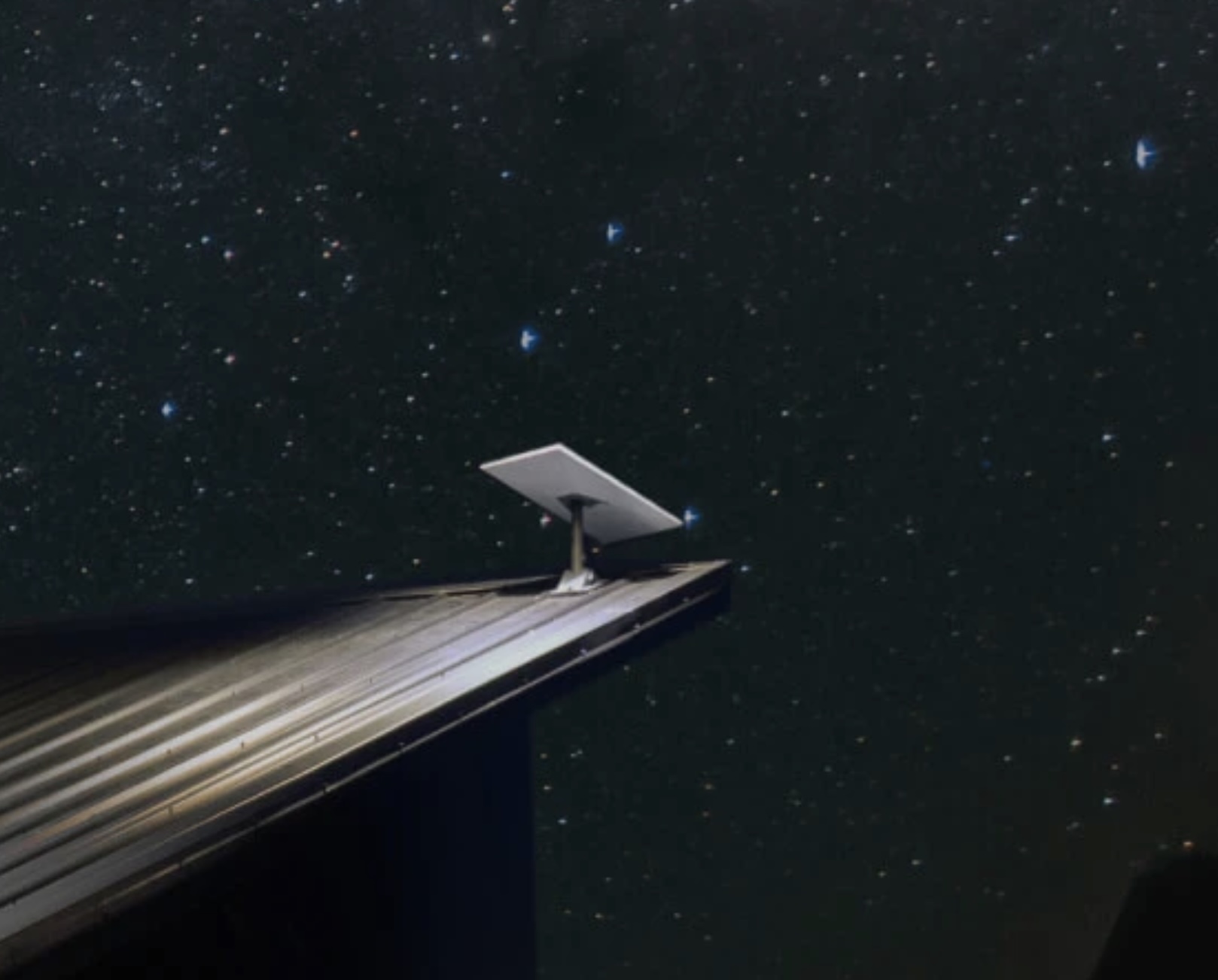
SpaceX achieved its 100th Starlink mission of the year on Friday, October 31, marking another milestone for 2025.
A Falcon 9 rocket carrying 28 Starlink broadband satellites successfully lifted off from Vandenberg Space Force Base in California at 4:41 p.m. ET, carrying another 28 Starlink satellites to Low Earth Orbit (LEO).
Falcon 9 booster’s 29th flight
Roughly 8.5 minutes after liftoff, the Falcon 9’s first stage touched down on the drone ship Of Course I Still Love You in the Pacific Ocean. This marked the booster’s 29th flight, which is approaching SpaceX’s reuse record of 31 missions.
This latest mission adds to SpaceX’s impressive 138 Falcon 9 launches in 2025, 99 of which were dedicated to Starlink, according to Space.com. The company’s focus on reusing boosters has enabled this breakneck pace, with multiple launches each week supporting both Starlink’s expansion and external customers.
Starlink’s network continues massive global expansion
Starlink remains the largest active satellite constellation in history, with more than 10,000 satellites launched, nearly 8,800 of which are currently active. SpaceX recently achieved Starlink’s 10,000-satellite milestone. With 100 Starlink missions completed for 2025, space enthusiasts have noted that SpaceX has successfully launched 2,554 Starlink satellites so far this year.
Starlink, which provides high-speed, low-latency internet connectivity even to the world’s most remote areas, has been proven to be life-changing technology for people across the globe. The service is currently operational in about 150 countries, and it currently has over 5 million subscribers worldwide. From this number, 2.7 million joined over the past year.
News
Tesla shares updated timeframe for Cybertruck FSD V14 release
The Cybertruck was expected to receive FSD V14 before the end of the month, but Tesla was not able to meet the target.
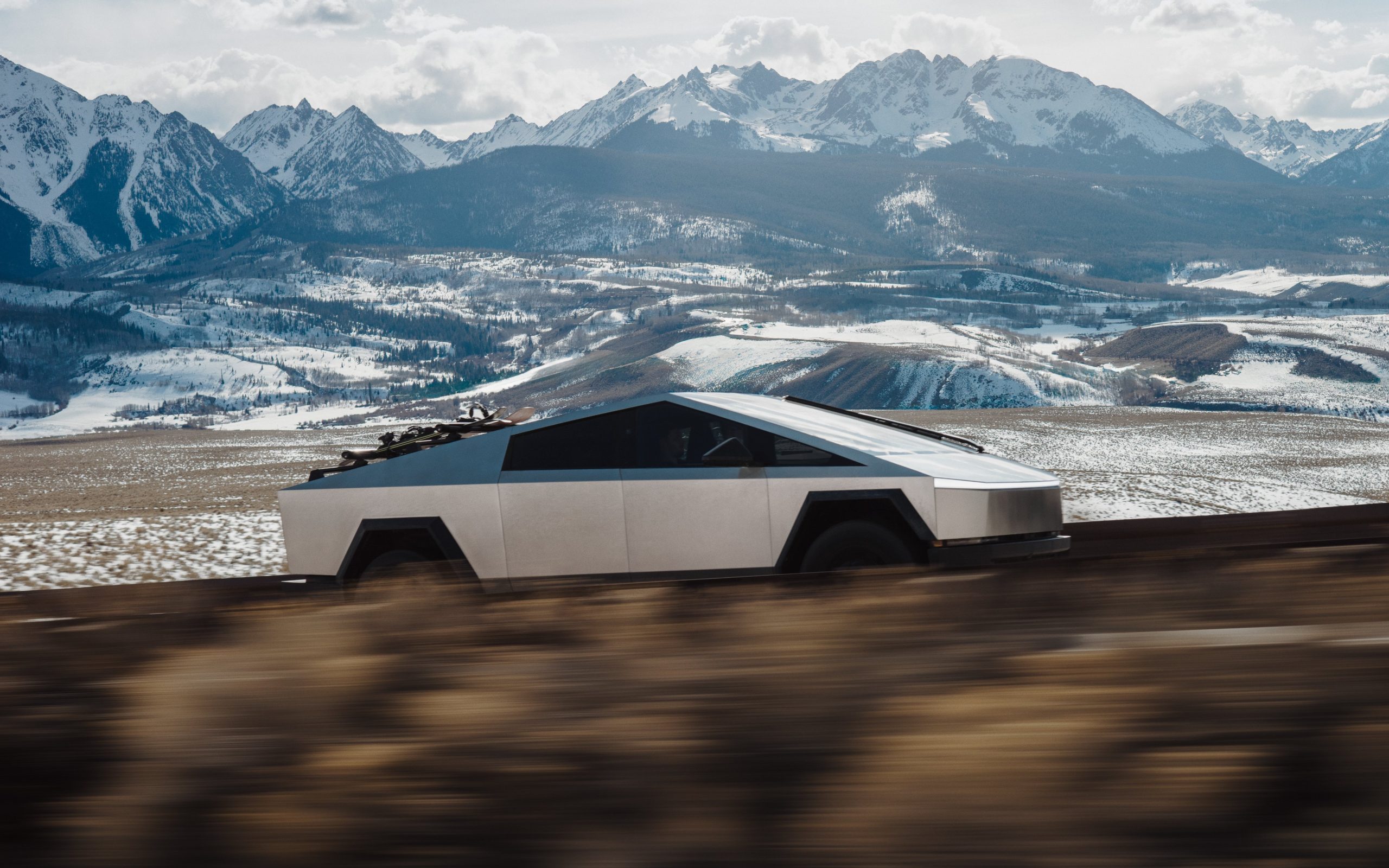
Tesla’s Full Self-Driving (FSD) V14 update for the Cybertruck could arrive this weekend, as per recent comments from Director of Autopilot Software and VP of AI Ashok Elluswamy.
The Cybertruck was expected to receive FSD V14 before the end of the month, but Tesla was not able to meet the target.
Cybertruck FSD V14
Considering the extended wait for FSD V14, it was no surprise that several Cybertruck owners were asking for updates about the system’s rollout to the all-electric pickup truck on Friday. These included the official Cybertruck X account, which responded to Elluswamy’s end of month estimate with “I only see trick. Where is my treat.”
This prompted a response from the AI executive, who replied with, “Sorry, pushing for early access Cyber release over the weekend.” This means that if all goes well, Cybertruck owners would be able to experience FSD V14 very soon. Some, however, are wondering if Tesla would go straight to V14.2 for the Cybertruck’s FSD V14 update, or if the vehicle will receive V14.1 first.
Tesla pushes to unify FSD experience across its lineup
The upcoming Cybertruck rollout represents the next step in Tesla’s efforts to roll out FSD capabilities across all of its vehicles. FSD V14 is a notable step forward for the company’s AI-driven self driving system, with features like Mad Max mode getting positive reviews from longtime Full Self Driving testers.
For the Cybertruck, the FSD V14 update would mark one of its first major over-the-air upgrades for the vehicle. Likely due to its size, the Cybertruck tends to receive FSD updates later than the S3XY lineup, which is quite surprising considering that the all-electric pickup truck is a premium-priced vehicle that is home to some of Tesla’s most advanced technologies.

Elon Musk just roasted Sam Altman’s Tesla Roadster cancellation

SpaceX successfully launches 100th Starlink mission of 2025

Tesla shares updated timeframe for Cybertruck FSD V14 release


-
 News2 weeks ago
Tesla might be doing away with a long-included feature with its vehicles
-
 News2 weeks ago
Tesla updates fans on its plans for the Roadster
-
 Elon Musk2 weeks ago
Elon Musk: Grok 5 now has a 10% chance of becoming world’s first AGI
-
 News2 weeks ago
Tesla is ramping up its hiring for the Cybercab production team
-
 News2 weeks ago
Tesla rolled out a new feature with FSD v14 to fix a major complaint
-
 Elon Musk2 weeks ago
Elon Musk hits back at former Tesla employee who disagrees with pay package
-
 News2 weeks ago
Tesla just made Service even easier and more convenient
-
 News2 weeks ago
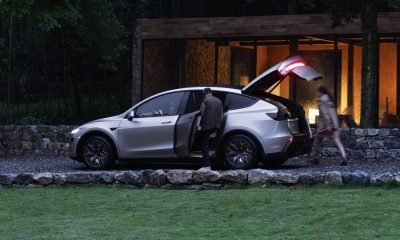
Tesla Model Y L becomes China’s 4th best-selling mid-to-large SUV in its first month of sales