
Elon Musk
SpaceX is preparing to launch Starship V2 one final time
The mission will test reentry dynamics, new landing burn configurations, and heat-shield upgrades.

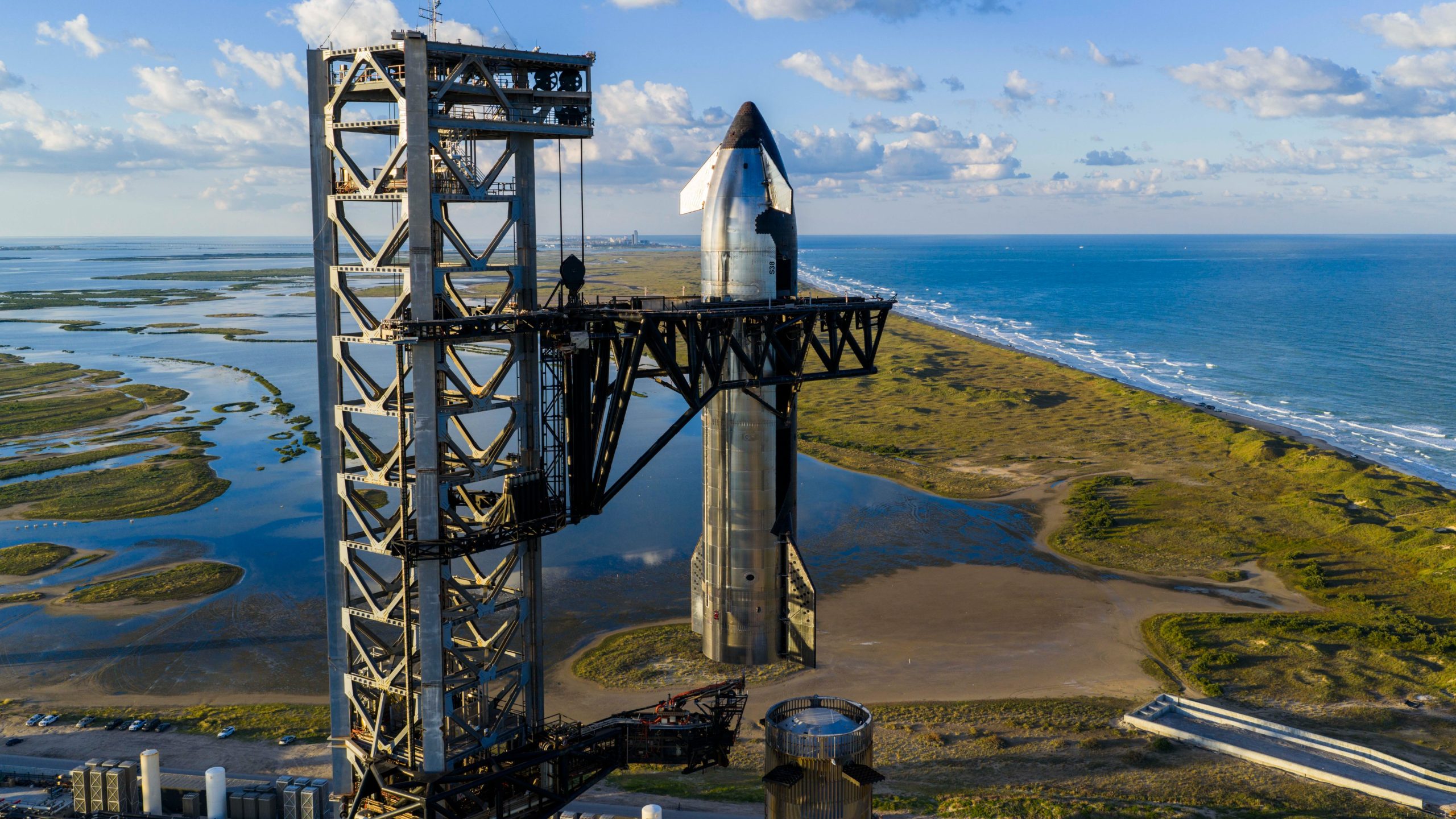
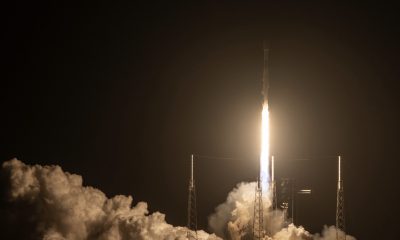
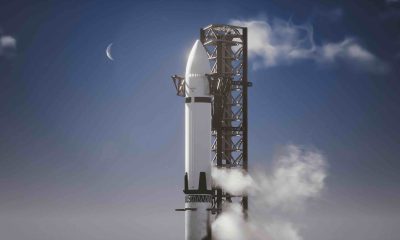
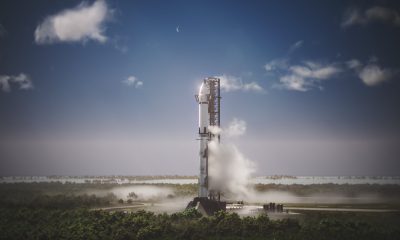
SpaceX is preparing to launch its final Starship V2 rocket on October 13, 2025. The launch closes the curtain on Starship V2 and marks the start of the ambitious spacecraft’s V3 era.
Liftoff for Flight 11 is scheduled for 7:15 p.m. ET from Starbase in South Texas, with a 75-minute launch window. The mission will test reentry dynamics, new landing burn configurations, and heat-shield upgrades ahead of the transition to the next-generation Starship V3.
Starship V3 and beyond
Elon Musk confirmed on X that Starship V3 is already in production and could be “built & tested” and perhaps even flown before the end of 2025. The new version is expected to feature major performance and scale improvements, with Musk stating that Starship V3, provided that things go well, might be capable of reaching Mars, though V4 is more likely to perform a full-scale mission to the red planet.
“Only one more V2 left to launch,” Musk wrote back in August following Starship’s successful Flight 10 mission. In another post, Musk stated that “Starship V3 is a massive upgrade from the current V2 and should be through production and testing by end of year, with heavy flight activity next year.”
Starship V2’s final mission
Flight 11 is designed to push the limits of Starship V2. SpaceX engineers have intentionally removed heat-shield tiles in vulnerable areas to analyze how the vehicle handles atmospheric reentry under stress, as noted in a Space.com report. The test will also refine subsonic guidance algorithms and new landing burn sequences for the Super Heavy booster that would be used for Starship V3.
“Super Heavy will ignite 13 engines at the start of the landing burn and then transition to a new configuration with five engines running for the divert phase. Previously done with three engines, the planned baseline for V3 Super Heavy will use five engines during the section of the burn responsible for fine-tuning the booster’s path, adding additional redundancy for spontaneous engine shutdowns.
“The booster will then transition to its three center engines for the end of the landing burn, entering a full hover while still above the ocean surface, followed by shutdown and dropping into the Gulf of America,” SpaceX wrote in a post on its official website.






Elon Musk
Tesla to ramp to 500 Robotaxis in Austin, 1,000 in Bay Area, by end of 2025: Musk
This was, at least, as per recent comments from CEO Elon Musk during his appearance on the All-In podcast.
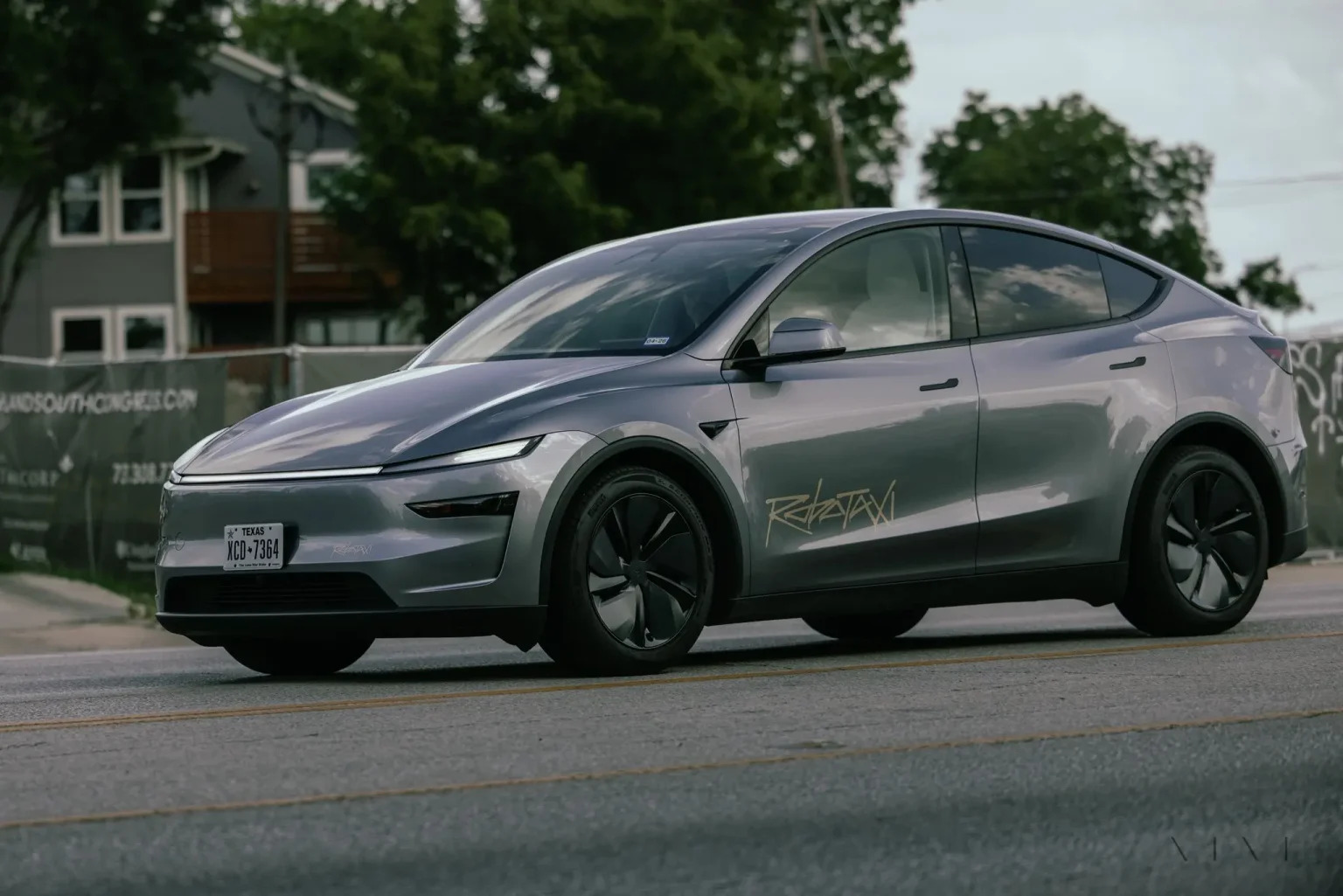
Tesla’s Robotaxi pilot is still in its early stages, but it seems like the program in Austin and the Bay Area will see a notable update soon. This was, at least, as per recent comments from CEO Elon Musk during his appearance on the All-In podcast.
Robotaxi expansion
While discussing Tesla’s Robotaxi ambitions, Elon Musk shared some tidbits about the company’s targets for the autonomous ride-hailing program. As per Musk, Tesla is pushing to increase its Robotaxi fleet size in Austin to 500 units. The Robotaxi fleet in the Bay Area will also be increased to 1,000 units. These expansions are expected to be accomplished by the end of the year.
“We’re scaling up the number of cars to, what happens if you have a thousand cars? Probably we’ll have a thousands cars or more in the Bay Area by the end of this year, probably 500 or more in the greater Austin area,” Musk said in the podcast.
Considering that there are only two months left in the fourth quarter of 2025, Tesla’s Robotaxi team will likely be extremely busy during the next eight weeks. A successful expansion of the Robotaxi pilot in Austin and the Bay Area will also bode well for the company’s ride-hailing program, which has been pretty conservative as of late.
Musk’s Robotaxi comments
Elon Musk has been pretty clear in the past that Tesla’s FSD and Robotaxi network would play a huge role in the company’s future valuation and potential. Thus, during the third quarter earnings call, Musk highlighted that Tesla will also be transitioning to a system with no safety monitors in Austin by the end of the year.
“We are expecting to have no safety drivers in at least large parts of Austin by the end of this year. So within a few months, we expect to have no safety drivers at all in at least parts of Austin. We’re obviously being very cautious about the deployment,” Musk said during the Q3 2025 earnings call.
Elon Musk
Neuralink’s first patient could receive an upgrade: Elon Musk
Musk stated that Arbaugh could also be the first Neuralink patient to receive an upgrade.
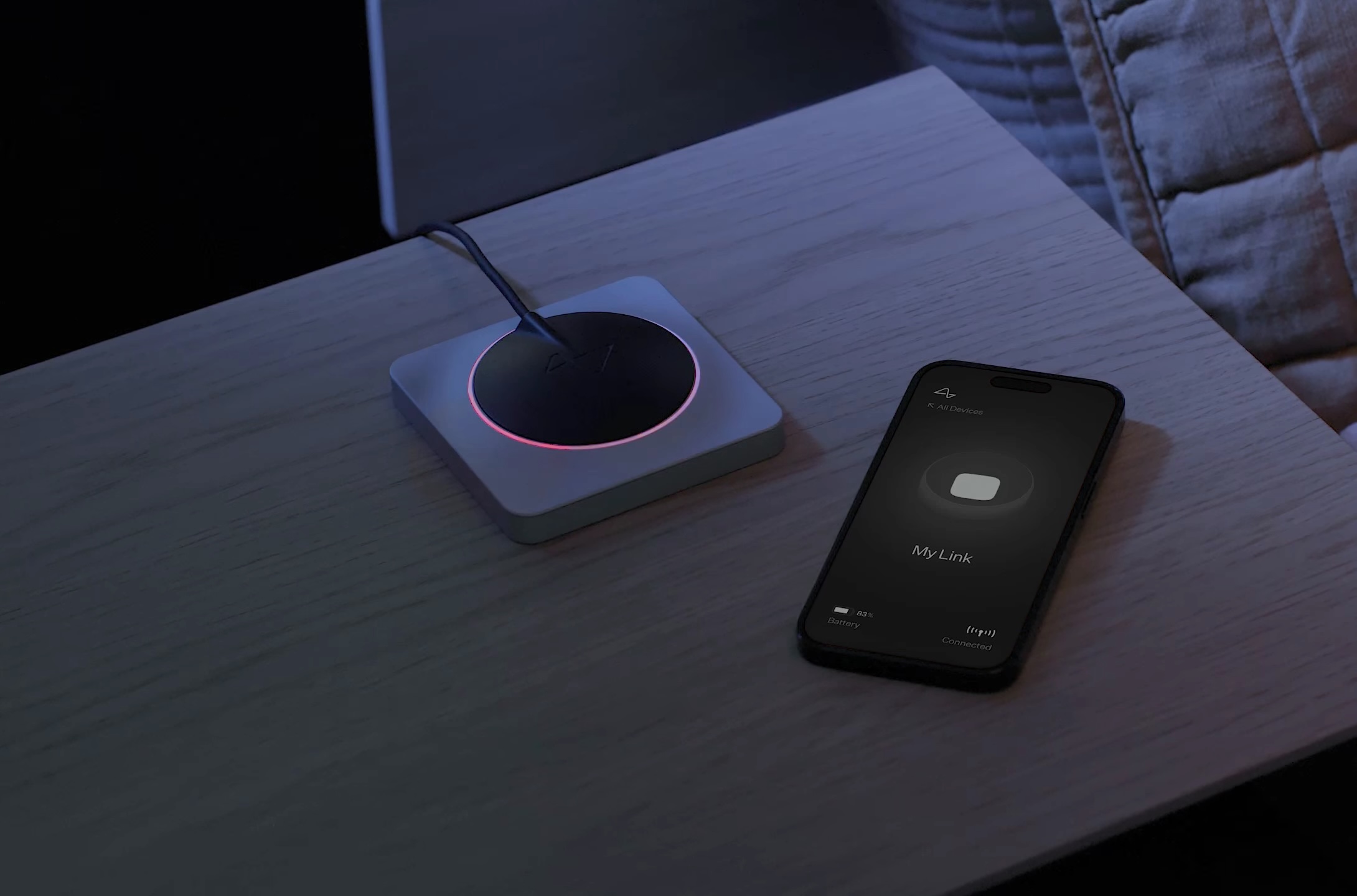
Neuralink’s first human patient might be in line for a very interesting development in the future.
Based on recent comments from Elon Musk, Neuralink seems to be considering an “upgrade” for its first human patient, allowing him to perform even more sophisticated tasks using only his mind.
Elon Musk’s recent comments
Musk’s update came as a reply to an X post that featured some details about the current activities of Noland Arbaugh, the first person in the world to receive a Neuralink implant. Since receiving his implant, Arbaugh has been able to take back his life, and he now games, attends class, and even works as a paid speaker.
In his response, Musk stated that Arbaugh could also be the first Neuralink patient to receive an upgrade. “Noland might be the first to receive a Neuralink upgrade and/or dual Neuralink implant to further augment his abilities. It won’t be long before a Neuralink recipient can beat most and eventually all humans at fast reaction video games,” Musk wrote in a post on X.
Noland’s recent update
Noland actually provided a quick update about his life with his Neuralink implant, which he fondly named Eve, on X. He noted that his direct involvement with Neuralink has lessened as more participants have joined the company’s human trials. And despite a recent pressure sore setback, he remains optimistic and teased “big news” coming for his two-year update in early 2026.
Beyond his recovery, Arbaugh stated that Neuralink has made everyday goals achievable again. He is currently studying neuroscience, taking chemistry, biology, and pre-calculus and maintaining good grades, something he said would have been impossible without Neuralink.

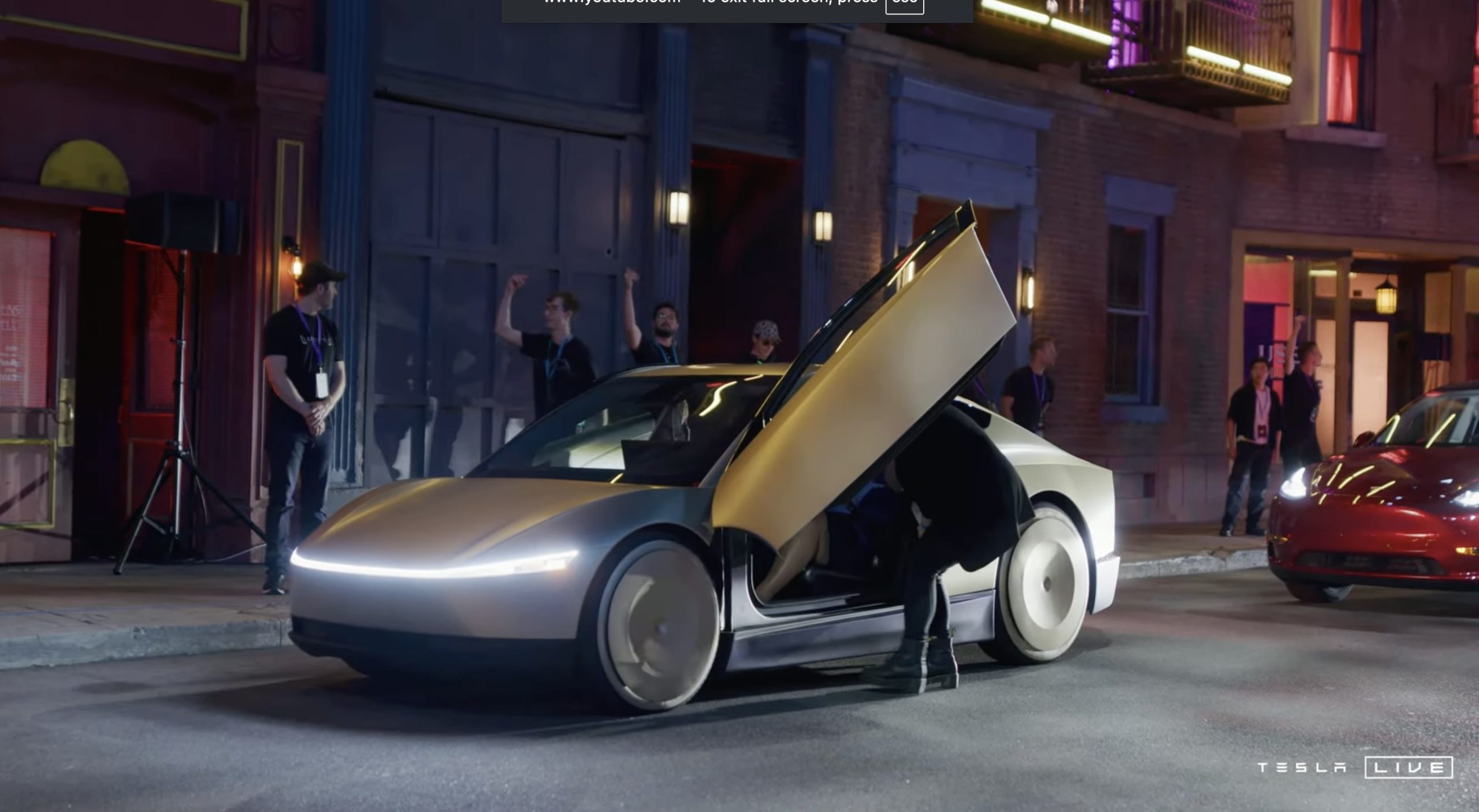
Tesla Cybercab is the company’s autonomy-geared automobile that will eventually begin the phase-out of human drivers. In recent days, however, there has been speculation regarding the vehicle’s equipment and whether it would be fitted with a typical steering wheel and pedals.
CEO Elon Musk put an end to this discussion, at least for now, as he maintains the vehicle will not have anything that would remotely resemble any possibility of any sort of manual operation.
The problem is, there is a flaw in his logic, and his justification for the reasoning is an opinion. But Musk has a special ability; he has the final say on what goes on at Tesla, and if he does or doesn’t want manual controls in the new vehicle, he’ll get his way.
On the All In Podcast on Friday, Musk gave his final answer to whether the Cybercab would have a steering wheel or pedals by stating it would not when the production units start rolling off lines in Q2 2026.
He provided a further explanation:
“The reality is, people may think they want to drive their car, but the reality is that they don’t. How many times have you been in an Uber or Lyft and said ‘I wish I could take over for the driver, get off my phone, and drive to my destination? 0.0 times.”
🚨 Elon Musk says Tesla will NOT put a steering wheel in the Cybercab (via All In Podcast):
“The reality is, people may think they want to drive their car, but the reality is that they don’t. How many times have you been in an Uber or Lyft and said ‘I wish I could take over for… pic.twitter.com/SGu3to5anA
— TESLARATI (@Teslarati) October 31, 2025
Although the units that have been spotted on public roads in recent days are equipped with a steering wheel and pedals, it is because Tesla is testing the vehicle in real-world situations, and manual controls are required for it.
Tesla Cybercab spotted testing on public roads for the first time
Some Tesla fans in the community have said that the car seems more geared toward being suitable for manual operation as opposed to a fully autonomous vehicle primed for driverless ride-hailing.
Earlier this week, Tesla Board Chair Robyn Denholm said that if the company had to put a steering wheel or pedals into the Cybercab, it would.

SpaceX successfully launches 100th Starlink mission of 2025

Tesla shares updated timeframe for Cybertruck FSD V14 release

“Tesla Ride” program lets riders experience FSD and Grok AI in real-world demos


-
 News2 weeks ago
Elon Musk confirms Tesla FSD V14.2 will see widespread rollout
-
 News2 weeks ago
Tesla might be doing away with a long-included feature with its vehicles
-
 News2 weeks ago
Tesla updates fans on its plans for the Roadster
-
 Elon Musk2 weeks ago
Elon Musk: Grok 5 now has a 10% chance of becoming world’s first AGI
-
 News2 weeks ago
Tesla is ramping up its hiring for the Cybercab production team
-
 News2 weeks ago
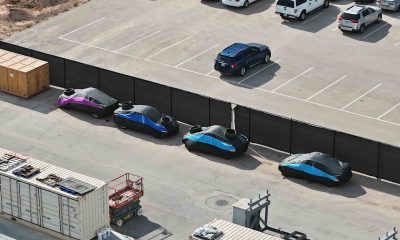
Multiple Tesla Cybercab units spotted at Giga Texas crash test facility
-
 Elon Musk2 weeks ago
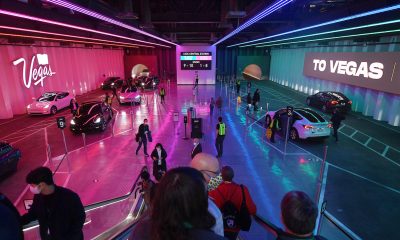
Tesla will launch driverless rides in Las Vegas, but not where you think
-
 News2 weeks ago
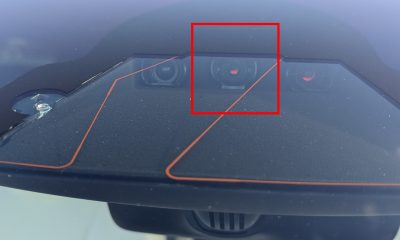
Tesla rolled out a new feature with FSD v14 to fix a major complaint