
SpaceX
Telstra Unveils Starlink-Powered Satellite Text Messaging in Australia


Australian telco Telstra has launched its Starlink-powered satellite text messaging service, a groundbreaking step in enhancing connectivity across the nation. Telstra x Starlink’s direct-to-device (D2D) service enables customers with Samsung Galaxy S25 devices to send and receive text messages in areas without mobile coverage, provided they have a clear view of the sky.
The Telstra Satellite Messaging service rolls out over the coming weeks. The service will allow users on select month-to-month mobile plans to communicate via the Starlink Direct to Cell satellite network. It targets remote locations, ensuring connectivity where traditional mobile networks are unavailable.
“From today, we’re rolling out Telstra Satellite Messaging – Australia’s first satellite to mobile text messaging product, available for consumer and small business customers on Telstra month-to-month mobile plans with a device from the Samsung Galaxy S25 series family,” Telstra announced.
Eligible customers with a Samsung Galaxy S25 and updated with the latest Android software can access Telstra xStarlink’s Satellite Messaging service as part of their core plan. Devices automatically connect to the Starlink network when mobile coverage is absent, requiring only an outdoor location with a direct line of sight to the sky. The launch follows extensive testing by Telstra engineers across Australia’s most remote regions. The Aussie telecom company promises ongoing refinements to ensure reliability.
The initiative reflects Telstra’s commitment to pioneering connectivity solutions. “Being able to send or receive a text message from an outdoor location that is beyond the range of our mobile network is a significant step forward and reinforces our commitment to pioneer new connectivity options for Australians,” the company stated.
The service is set to expand to more devices, with future capabilities expected to include data and voice calls, further bridging connectivity gaps.
Telstra’s collaboration with SpaceX positions Australia at the forefront of satellite-based communication. As the rollout progresses, the service could redefine how Australians stay connected in remote areas, leveraging Starlink’s satellite network to deliver seamless communication. With plans to enhance the service, Telstra’s satellite text messaging marks a milestone in ensuring no corner of the country is left disconnected.








News
SpaceX successfully launches 100th Starlink mission of 2025
With 100 Starlink missions completed for 2025, space enthusiasts have noted that SpaceX has successfully launched 2,554 Starlink satellites so far this year.

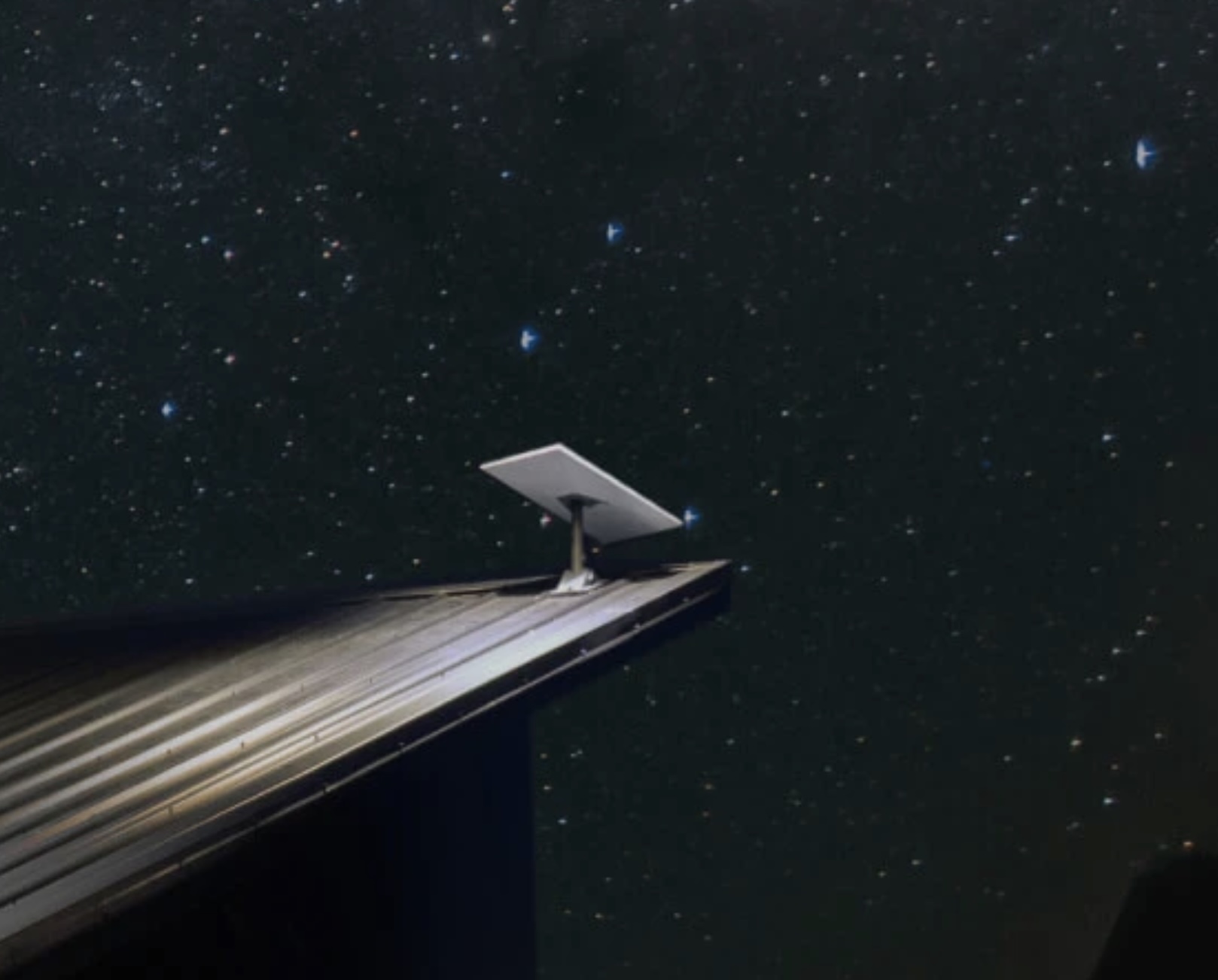
SpaceX achieved its 100th Starlink mission of the year on Friday, October 31, marking another milestone for 2025.
A Falcon 9 rocket carrying 28 Starlink broadband satellites successfully lifted off from Vandenberg Space Force Base in California at 4:41 p.m. ET, carrying another 28 Starlink satellites to Low Earth Orbit (LEO).
Falcon 9 booster’s 29th flight
Roughly 8.5 minutes after liftoff, the Falcon 9’s first stage touched down on the drone ship Of Course I Still Love You in the Pacific Ocean. This marked the booster’s 29th flight, which is approaching SpaceX’s reuse record of 31 missions.
This latest mission adds to SpaceX’s impressive 138 Falcon 9 launches in 2025, 99 of which were dedicated to Starlink, according to Space.com. The company’s focus on reusing boosters has enabled this breakneck pace, with multiple launches each week supporting both Starlink’s expansion and external customers.
Starlink’s network continues massive global expansion
Starlink remains the largest active satellite constellation in history, with more than 10,000 satellites launched, nearly 8,800 of which are currently active. SpaceX recently achieved Starlink’s 10,000-satellite milestone. With 100 Starlink missions completed for 2025, space enthusiasts have noted that SpaceX has successfully launched 2,554 Starlink satellites so far this year.
Starlink, which provides high-speed, low-latency internet connectivity even to the world’s most remote areas, has been proven to be life-changing technology for people across the globe. The service is currently operational in about 150 countries, and it currently has over 5 million subscribers worldwide. From this number, 2.7 million joined over the past year.
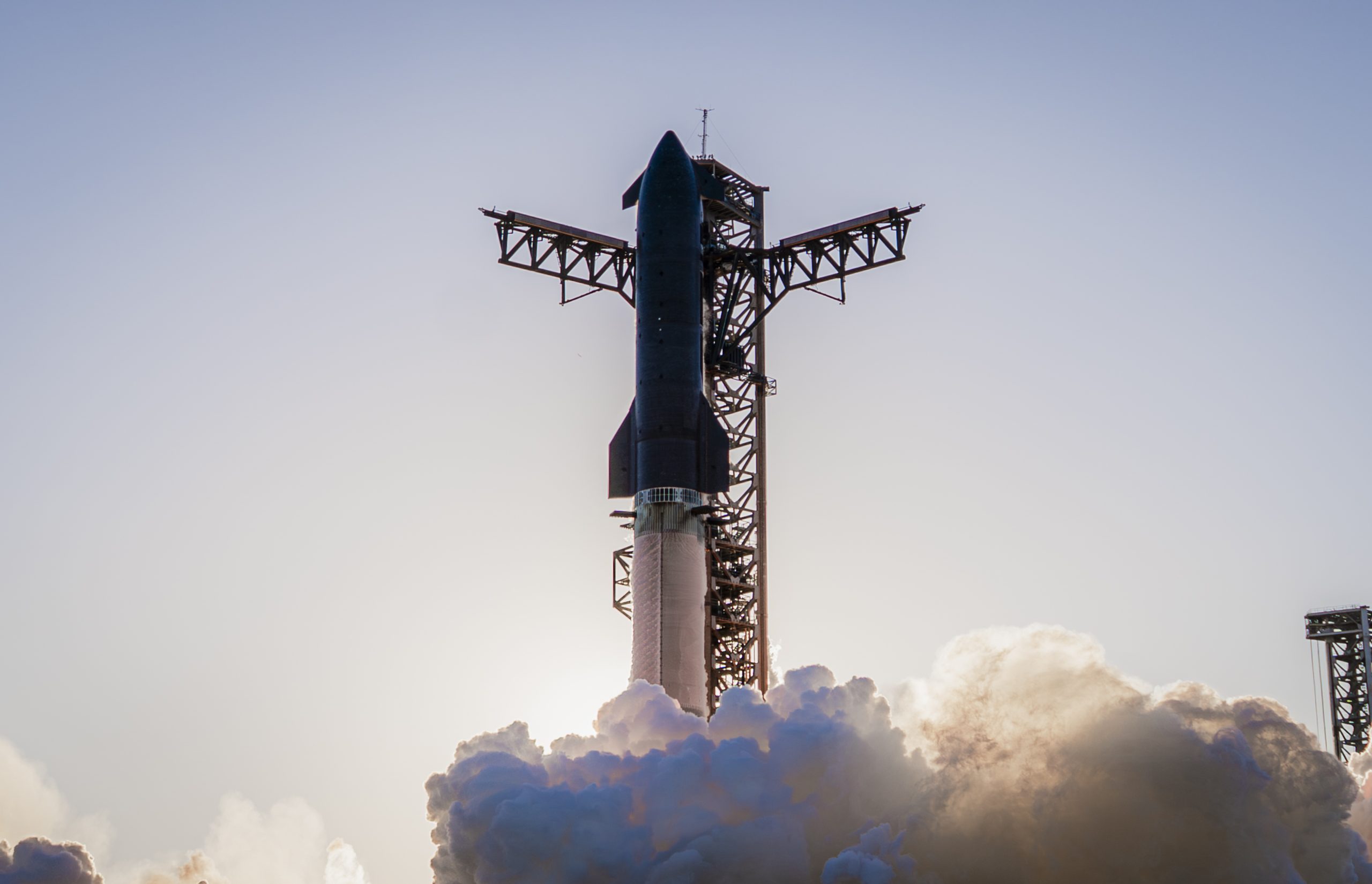
SpaceX has revealed that it has completed 49 major milestones for NASA’s Human Landing System (HLS) program, marking significant progress in the development of the Starship lunar lander that will deliver astronauts to the Moon.
The updates were detailed in SpaceX’s new blog post To the Moon and Beyond, which was recently posted on the private space company’s official website.
As noted by SpaceX, the 49 milestones that were completed by its HLS team were “tied to developing the subsystems, infrastructure, and operations” needed to safely land humans back into the lunar surface. SpaceX noted that it has only received funding on contractual milestones that have been successfully completed, the vast majority of which have been achieved on time or ahead of schedule.
Following are highlights of SpaceX’s completed milestones, as per the company’s post.
For the first time in our existence, we possess the means, technology, and, for the moment, the will to establish a permanent human presence beyond Earth. Starship is designed to make this future a reality → https://t.co/dGAZiB4rr3 pic.twitter.com/WsTg44G3oz — SpaceX (@SpaceX) October 30, 2025
- Lunar environmental control and life support and thermal control system demonstrations, using a full-scale cabin module inhabited by multiple people to test the capability to inject oxygen and nitrogen into the cabin environment and accurately manage air distribution and sanitation, along with humidity and thermal control. The test series also measured the acoustic environments inside the cabin
- Docking adapter qualification of the docking system that will link Starship and Orion in space, an androgynous SpaceX docking system capable of serving as the active system or passive system and based on the flight-proven Dragon 2 active docking system
- Landing leg drop test of a full-scale article at flight energies onto simulated lunar regolith to verify system performance and to study foot-to-regolith interaction
- Raptor lunar landing throttle test demonstrating a representative thrust profile that would allow Starship to land on the lunar surface
- Micrometeoroid and orbital debris testing of shielding, insulation, and window panels, analyzing different material stackups that will be used to protect Starship from impact hazards and harsh thermal conditions
- Landing software, sensor, and radar demonstrations testing navigation and sensing hardware and software that will be used by Starship to locate and safely descend to a precise landing site on the Moon
- Software architecture review to define the schematic of major vehicle control processes, what physical computers they will run on, and software functions for critical systems like fault detection, caution and warning alerts, and command and telemetry control
- Raptor cold start demonstrations using both sea-level and vacuum-optimized Raptor engines that are pre-chilled prior to startup to simulate the thermal conditions experienced after an extended time in space
- Integrated lunar mission operations plan review, covering how SpaceX and NASA will conduct integrated operations, develop flight rules and crew procedures, and the high-level mission operation plan
- Depot power module demonstration, testing prototype electrical power generation and distribution systems planned to be used on the propellant depot variant of Starship
- Ground segment and radio frequency (RF) communications demonstration, testing the capability to send and receive RF communications between a flight-equivalent ground station and a flight-equivalent vehicle RF system
- Elevator and airlock demonstration, which was conducted in concert with Axiom to utilize flight-representative pressurized EVA suits, to practice full operation of the crew elevator which will be used to transfer crew and cargo between Starship and the lunar surface
- Medical system demonstration covering the crew medical system on Starship and the telemedicine capability between the ground and crew
- Hardware in the loop testbed activation for the propellant transfer flight test which uses a testbed with flight representative hardware to run simulations for the upcoming propellant transfer flight test
Ultimately, SpaceX’s message is clear. With its plans for a simplified architecture, the timeframe of the first crewed lunar landing of the current century could happen sooner than expected.
Musk definitely seems determined to prove skeptics wrong, with the CEO declaring on X that Starship will be the vehicle that would pave the way for the buildout of a base on the Moon. “Starship will build Moonbase Alpha,” Musk wrote.
News
SpaceX sets the record straight on Jim Bridenstine and Artemis 3
SpaceX argued that Bridenstine’s comments should be taken with a grain of salt as he is working as a paid lobbyist for companies that are competing for NASA contracts.
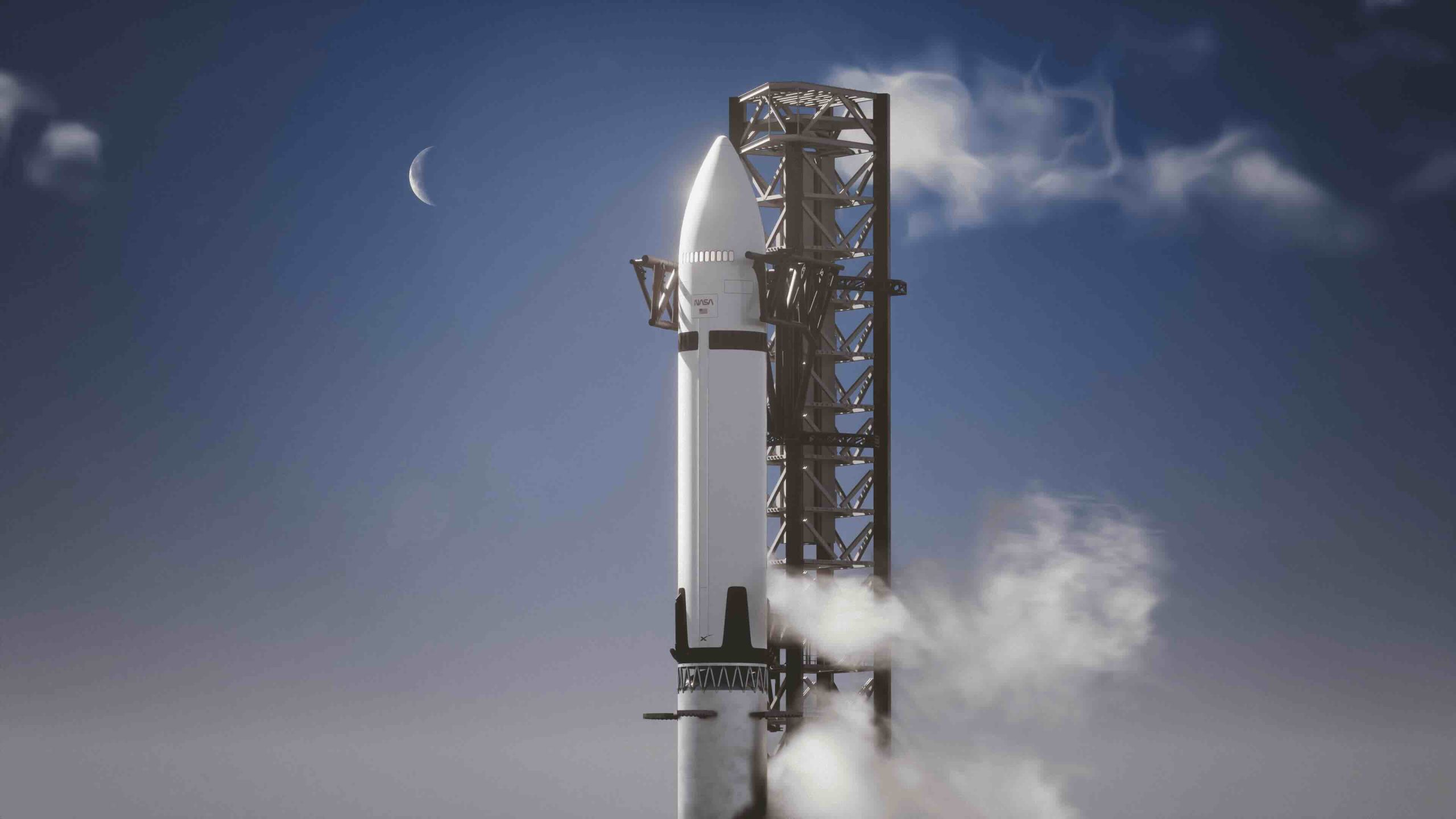
SpaceX pushed back firmly against former NASA administrator Jim Bridenstine after he questioned the agency’s reliance on Starship for the Artemis 3 Moon mission.
In a detailed thread on X, SpaceX argued that Bridenstine’s comments should be taken with a grain of salt as he is working as a paid lobbyist for companies that are competing for NASA contracts.
Bridenstine’s comments on Starship and Artemis 3
Bridenstine and fellow former NASA chief Charlie Bolden noted during a recent symposium that NASA’s current Artemis strategy is approaching zero chance of beating China to the Moon. Bridenstine expressed skepticism that NASA’s current architecture, which is expected to use Starship to transport astronauts to and from the lunar surface, could succeed in time.
“Starship is a tremendously important vehicle for the future,” Bridenstine said, as per Space News. “It’s going to deliver large mass to low Earth orbit for a long time, and it’s going to drive down costs and increase access. But if you need a moon lander, it’s going to take time.”
SpaceX responds to the former NASA administrator’s comments
In a series of posts on X, SpaceX noted that while the company is very thankful to the former NASA administrator for helping create the Artemis Program, his comments about Starship might not necessarily be coming from a place of objectivity.
SpaceX’s comments are as follows: “Like many Americans, we are thankful for Mr. Bridenstine’s service leading NASA at one point. He deserves credit for spearheading the creation of the Artemis Program. After departing NASA, he created a lobbying firm called the Artemis Group, representing a host of aerospace companies vying for NASA business.
“Mr. Bridenstine’s current campaign against Starship is either misguided or intentionally misleading. SpaceX was selected to design and develop a Human Landing System for Artemis along with Blue Origin and Dynetics during Mr. Bridenstine’s tenure as NASA Administrator.
“Starship was then selected by NASA for the Artemis III mission through fair and open competition after being identified as the best and lowest risk technical option – and the lowest price by a wide margin – by the civil servant team appointed to lead the agency’s exploration mission by Mr. Bridenstine himself.
“The decision to select Starship was confirmed repeatedly following protest and litigation from the companies not selected which delayed the start of work on the contract for many months. Mr. Bridenstine’s recent musings promoting a new landing system – going so far as to invoke the Defense Production Act – are being misreported as though they were the unbiased thoughts of a former NASA Administrator. They are not.
“To be clear, he is a paid lobbyist. He is representing his clients’ interests, and his comments should be seen for what they are – a paid lobbyist’s effort to secure billions more in government funding for his clients who are already years late and billions of dollars overbudget,” SpaceX wrote.

Elon Musk just roasted Sam Altman’s Tesla Roadster cancellation

SpaceX successfully launches 100th Starlink mission of 2025

Tesla shares updated timeframe for Cybertruck FSD V14 release


-

 News2 weeks ago
Elon Musk confirms Tesla FSD V14.2 will see widespread rollout
-

 News2 weeks ago
Tesla might be doing away with a long-included feature with its vehicles
-

 News2 weeks ago
Tesla updates fans on its plans for the Roadster
-

 Elon Musk2 weeks ago
Elon Musk: Grok 5 now has a 10% chance of becoming world’s first AGI
-

 News2 weeks ago
Tesla is ramping up its hiring for the Cybercab production team
-

 News2 weeks ago
Multiple Tesla Cybercab units spotted at Giga Texas crash test facility
-

 Elon Musk2 weeks ago
Tesla will launch driverless rides in Las Vegas, but not where you think
-

 News2 weeks ago
Tesla rolled out a new feature with FSD v14 to fix a major complaint